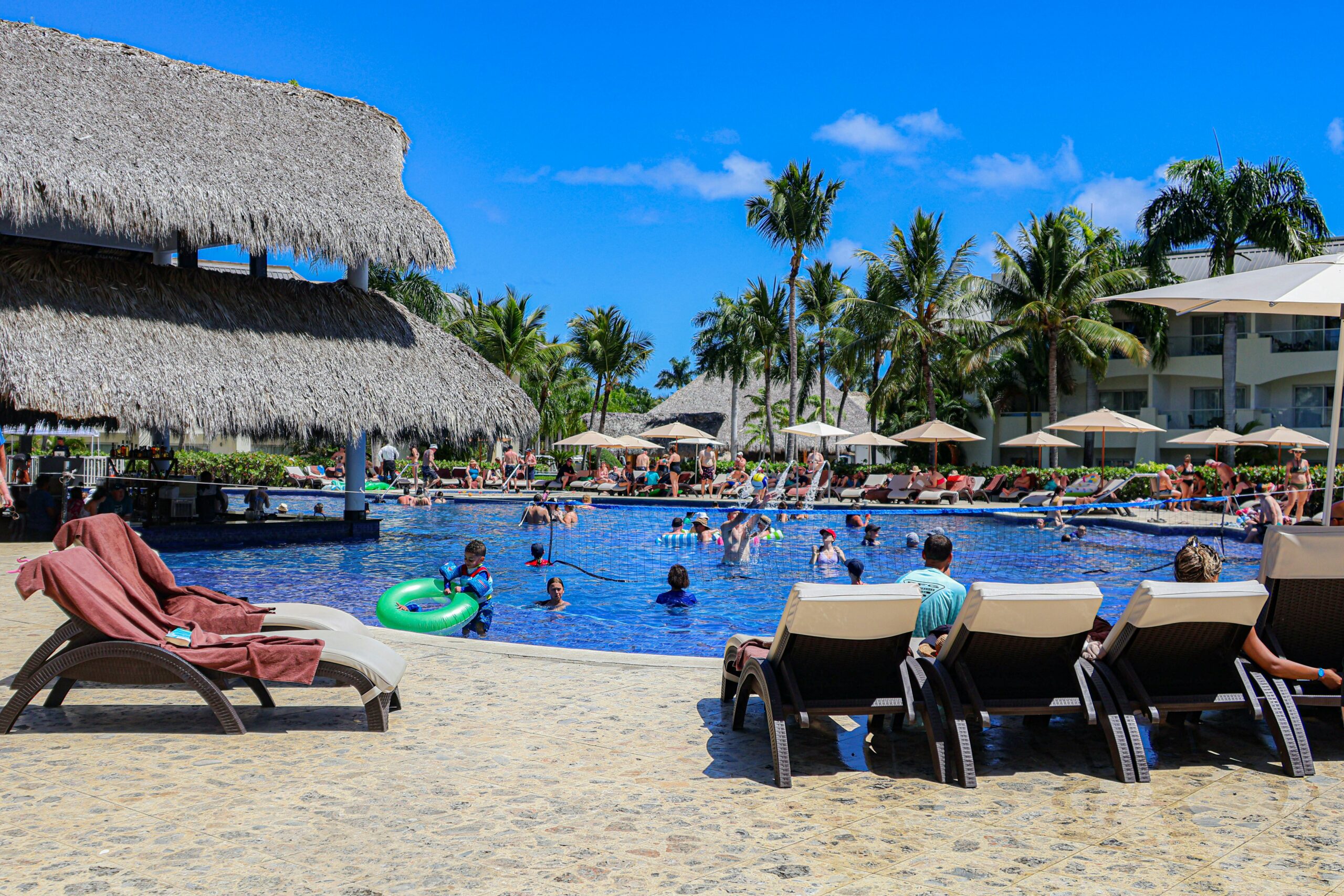



A German tourist has won nearly €1,000 in compensation after a court ruled that his family holiday in Greece was ruined by the daily scramble for sun loungers around the hotel pool.
The unnamed man took legal action after returning from a 2024 package holiday on the Greek island of Kos, where he said his family repeatedly failed to find available loungers because other guests had reserved them with towels before sunrise. According to court documents, the tourist paid more than €7,000 for the trip for himself, his wife and their two children.
The Hanover district court awarded the family €986.70 in compensation, ruling that the holiday package had been “defective” because the hotel failed to provide reasonable access to poolside seating. The court also found that the German tour operator bore responsibility for ensuring guests could properly use the facilities advertised as part of the holiday.
The tourist told the court he woke up at 6 am every morning in an attempt to secure loungers, but said most had already been claimed with towels left by other guests. He estimated that he spent around 20 minutes each day searching for somewhere for his family to sit, while at times his children were forced to lie on the ground instead.
Although the hotel had rules prohibiting guests from reserving loungers with towels, the man argued that staff failed to enforce them. The tour company initially offered a partial refund of €350, but the court concluded that amount did not sufficiently compensate the family for the disruption to their holiday.
@sophiec7 Running for a sun lounger… he understood the assignment 🤩🤣 #foryourpage #fyp #tenerife🇮🇨 #loscristianos #paradiseparkhoteltenerife ♬ sonido original – Vibes by Ley
In its ruling, the court said the operator should have ensured there was a “reasonable” ratio of loungers to guests and should not have left holidaymakers to resolve disputes themselves. The decision is being seen as an unusual legal intervention in what many European tourists jokingly refer to as the “sunbed wars” or “towel wars” — the fiercely competitive race to claim poolside loungers at holiday resorts.
The case has attracted widespread attention in Germany and beyond, partly because Germans have long been stereotyped as enthusiastic participants in the towel-reserving tradition. Online reactions ranged from amusement to frustration at the practice. In one Reddit discussion about the ruling, a commenter wrote that hotels should remove towels left unattended for too long, calling it “the only way to make this work”. Another user described towel reserving as “insufferable behaviour on holidays”.
Viral videos from resorts in Spain and Tenerife last summer showed tourists sprinting for loungers as soon as pool areas opened, while some Spanish destinations have threatened fines for guests who reserve sunbeds for hours without using them.
@_jessicamai Aaand they’re off… DAY 2 SUNBED WARS #holiday #paradiseparkhotel #sunbedwars #fyp ♬ original sound – Jess
Many hotels attempt to manage the problem by introducing rules stating that towels left unattended on sun loungers for 30 to 60 minutes will be removed by staff. In practice, however, enforcement is often inconsistent, creating confusion and arguments among guests.
Tourists frequently complain that it is unclear how hotels determine whether a lounger is genuinely abandoned or simply temporarily unoccupied while guests swim, eat breakfast or return briefly to their rooms. In some resorts, staff strictly monitor pool areas and remove towels after a set period, while in others, the rules exist largely on paper and are rarely enforced.
@robertasfitness They should do this everywhere 🙌🏽#tenerife #sunbeds #tenerifecanaryisland ♬ Legends Are Made – Sam Tinnesz
The dispute reflects growing tensions at popular European holiday destinations as resorts struggle to manage overcrowding during peak travel seasons.
Amid escalating tensions in the Middle East, many European travellers are reconsidering long-haul holidays in favour of staycations or trips to neighbouring destinations such as Spain, Portugal and Greece, further intensifying concerns over overcrowding and the strain on tourist infrastructure.
The shift also creates challenges for the aviation sector, as demand for regional travel increasingly outweighs interest in long-haul routes.
A recent survey found that 82% of Europeans plan to travel this spring and summer — the highest level recorded since 2020. However, nearly 90% said they intend to remain within Europe, highlighting how rising costs, geopolitical uncertainty and concerns over air travel are reshaping holiday habits and adding pressure to already overcrowded Mediterranean destinations.