

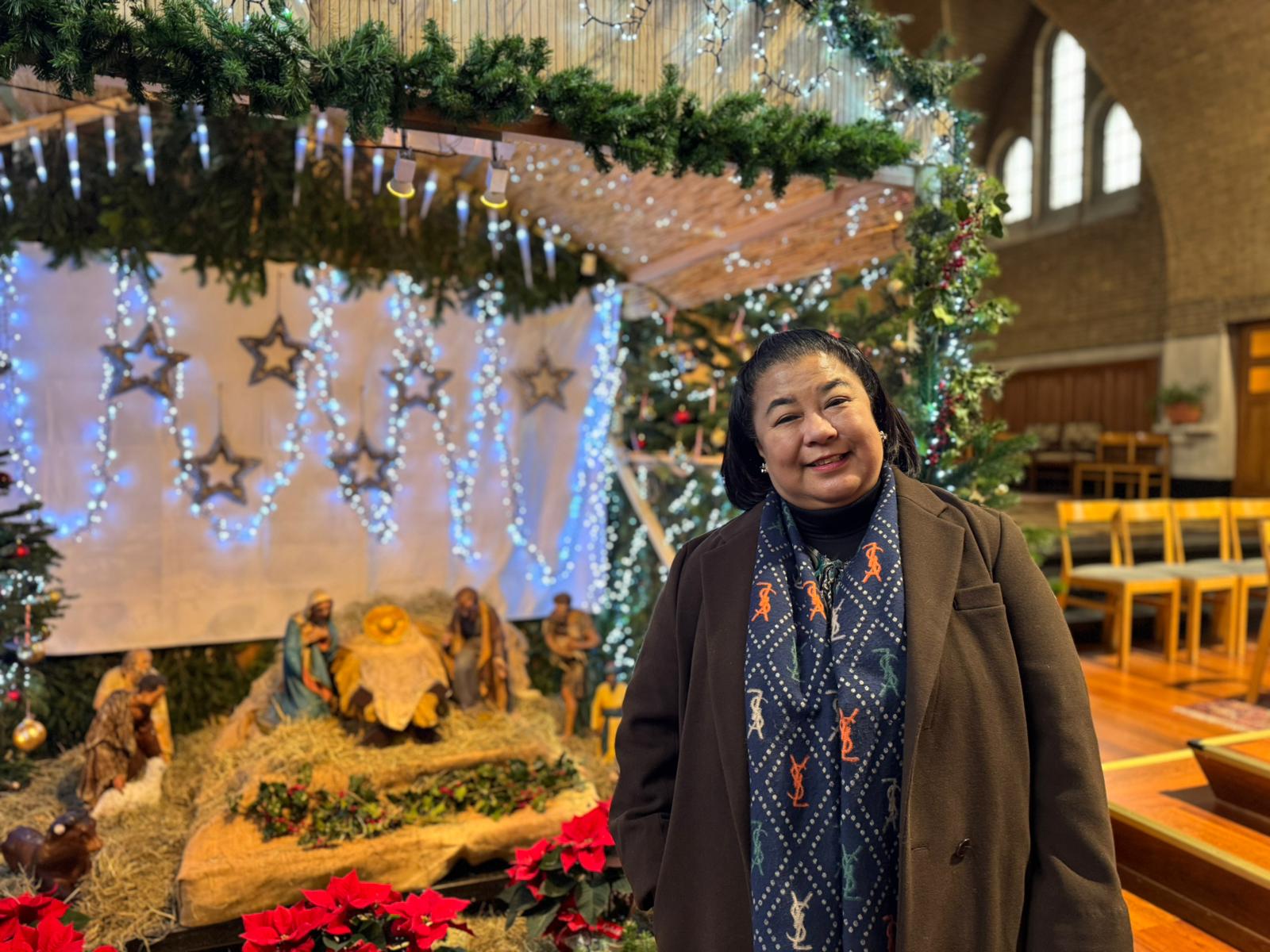
Last Sunday, I found myself standing inside the Église Sainte Marie Mère de Dieu in Brussels, surrounded by warm smiles, glowing lights, and the unmistakable feeling that Christmas had already fully arrived. It was not just another festive Mass. It was a moment of connection with a community for whom Christmas is not confined to a few days in December, but stretches across months.
From the moment I entered the church, the atmosphere felt different. There was music, colour, and an extraordinary sense of togetherness. Foreign guests were welcomed as naturally as family members. After the Mass, an a cappella concert followed, performed by Song Weavers Philippines, a vocal ensemble under the umbrella of the renowned Philippine Madrigal Singers. Their harmonies filled the church with joy and emotion, at times deeply moving, at times uplifting, always sincere.
Addressing the audience, Ambassador Jaime Victor B. Ledda captured the spirit of the evening with a simple yet telling remark: “The Philippines has the longest Christmas celebration in the world.” It was more than a statement. It was a reflection of lived tradition.
A Christmas that begins in September
In the Philippines, Christmas does not wait for December. It begins with the so-called Ber months of September, October, November, and December. As early as September, Christmas songs start playing in shopping centres, star-shaped lanterns known as parols appear in homes and streets, and a quiet sense of anticipation begins to build.
This extended festive season is rooted in faith, history, and community. Catholicism, introduced during centuries of Spanish colonial influence, blended naturally with Filipino values centred on family and togetherness. The result is a Christmas season unlike any other, stretching from early September until well after the New Year.

Simbang Gabi and spiritual preparation
At the heart of the Filipino Christmas lies Simbang Gabi, a novena of nine dawn Masses beginning on 16 December and culminating on Christmas Eve. Also known as Misa de Gallo, these early morning services start as early as four or five o’clock, a tradition dating back to colonial times when farmers needed to attend Mass before heading to the fields.
Churches during Simbang Gabi become vibrant community spaces, filled with light, music, and conversation. Outside, the scent of traditional rice cakes fills the air. Puto Bumbong, made from purple glutinous rice steamed in bamboo tubes, and Bibingka, baked in clay pots lined with banana leaves, are an essential part of the experience.
There is also a popular belief that completing all nine Masses may bring a special blessing. Whether or not one believes it, the shared commitment and sense of community remain powerful.
Music that carries tradition across borders
The Brussels concert offered a vivid illustration of how Filipino traditions travel wherever the community settles. Song Weavers Philippines is composed of 14 singers capable of producing more than 25 different vocal parts, performing a cappella entirely. Their European tour has been bringing Filipino music and identity to audiences across the continent.
Airine Abuyuan Villaroman, who was responsible for bringing the group to Brussels, explained how such initiatives came about. “This has been my husband’s and my project since 2003,” she said. “When Filipino artists are in Europe, we host them, organise concerts and usually ask for donations so they can continue supporting projects in the Philippines, such as music education and voice training.”
Their repertoire in Brussels included Christmas carols, classical pieces, and religious music, reflecting the diversity of Filipino musical heritage.
A Christmas that never really ends
For Airine, the idea of the world’s longest Christmas is deeply personal. “I grew up opening Christmas lights in my own home starting on the first of September,” she recalled. “When we moved to Belgium, we kept that tradition. My husband puts out Christmas lights every year from September until after the Three Kings in January.”
She added with a smile that their home had once been featured in the local newsletter for being the earliest decorated house. “We remove everything only after the Three Kings. That is when Christmas really ends for us.”
From Noche Buena to Media Noche
Christmas Eve culminates in Noche Buena, the traditional midnight feast shared after Mass. Families gather around tables filled with dishes reflecting both Spanish influence and local flavours. Lechon, hamon, queso de bola, leche flan, and fruit salads are common, enjoyed late into the night.
The celebrations continue into the New Year with Media Noche, another midnight feast welcoming prosperity and good fortune. Tables are often decorated with round fruits symbolising abundance for each month of the coming year, while noise, fireworks, and laughter are believed to drive away bad spirits.
A Christmas that welcomes everyone
What stood out most during that Sunday in Brussels was not only the beauty of the music or the richness of the traditions, but the openness of the Filipino community. The Filipino Christmas is expansive by nature. It welcomes neighbours, friends, and strangers alike.
From dawn Masses to midnight feasts, from lanterns glowing in September to decorations taken down after the Three Kings, Christmas in the Philippines is not measured in days but in shared moments. It is long because it makes space for faith, joy, and human connection.
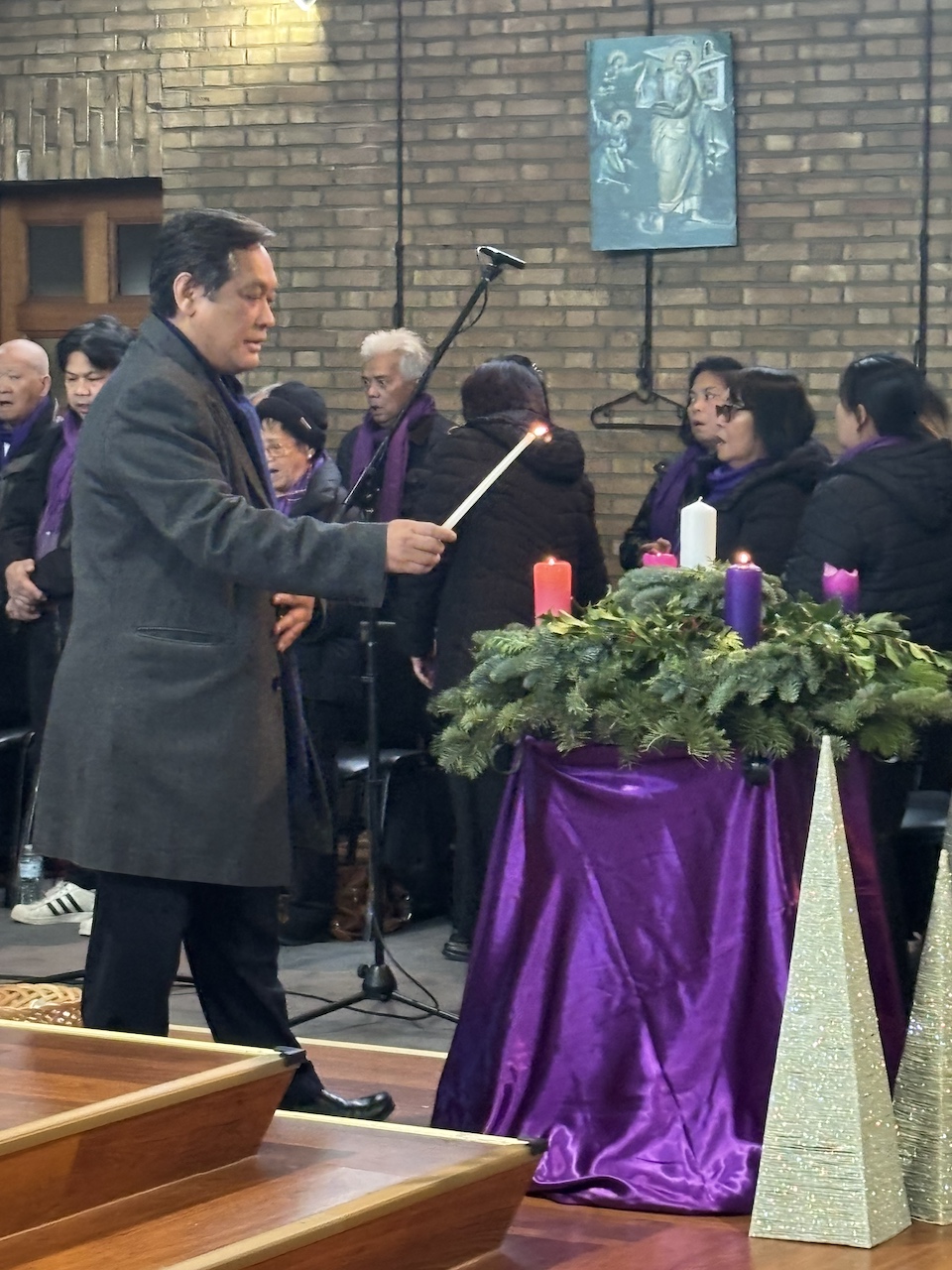
Standing in a Brussels church, far from Manila yet deeply connected to its spirit, it became clear that Christmas in the Philippines is more than a celebration. It is a way of life.