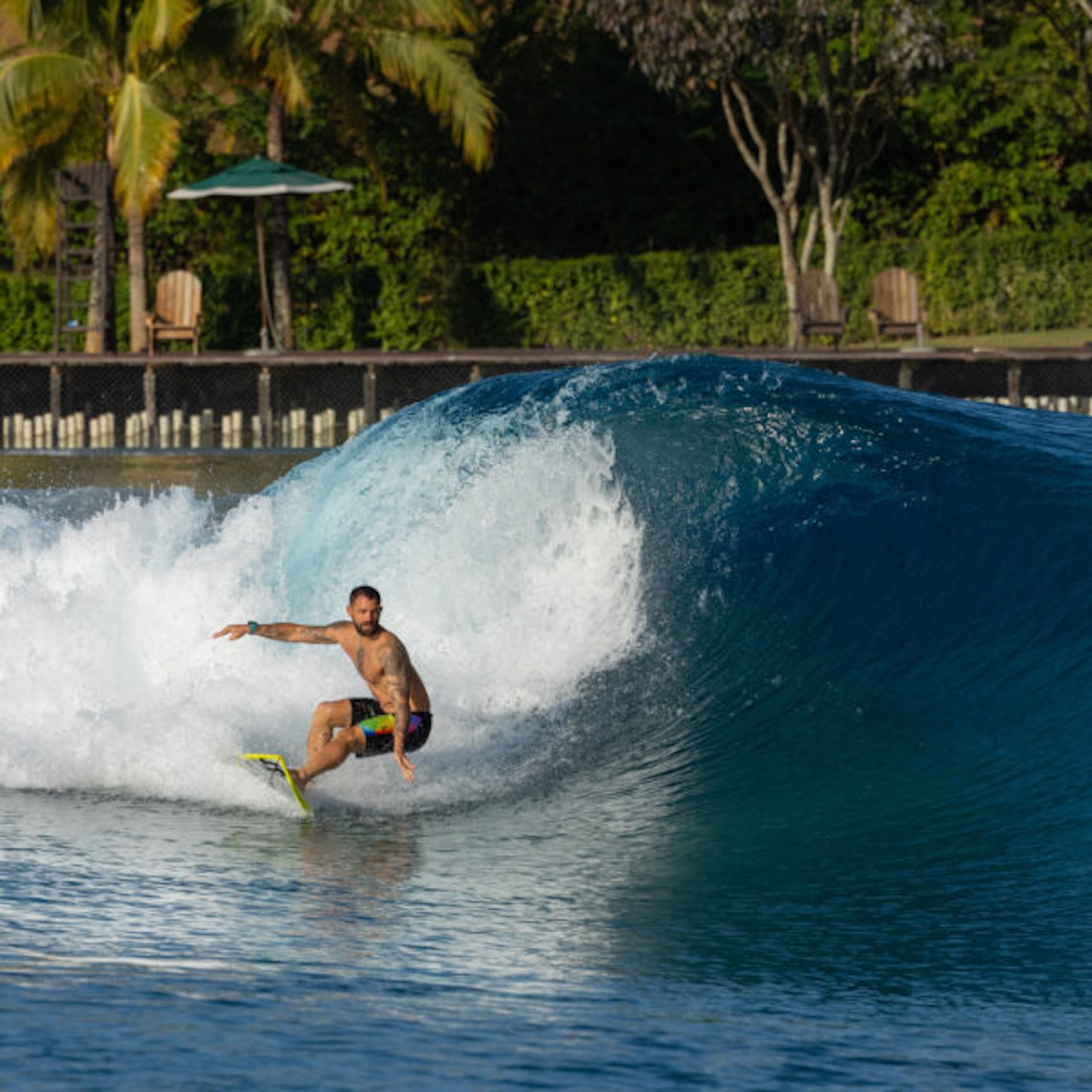


China’s first large-scale surf resort opened its doors in November in Wanning, along the Hainan coastal scenic road, an area often described as China’s “surfing paradise.”
Developed by China Tourism Group (CTG), the flagship Riyue Bay Surf Resort is one of four signature coastal lifestyle projects designed to establish Hainan as a global leisure destination. Wanning boasts 109 kilometres of coastline alone and has become a kind of “spiritual home” for China’s growing surfing community.
Spread across 10 hectares, the resort is currently the only one in China aiming to combine world-class, reliable surfing conditions with a contemporary lifestyle offering. It caters to all levels, with four waves of varying strength designed for everyone from beginners to professional surfers.
Interest in surfing in China surged in 2021 when the sport was introduced to the Olympics in Tokyo. That same year, China began training its first generation of competitive surfers in state-run sports academies.
This turning point is captured in Surfnation, a documentary following teenage surfers Alex and Lolo as they navigate adolescence, societal expectations, and a subculture that challenges traditional life paths.
“In China, our parents are pretty traditional: study, find a job, start a family,” says 17-year-old Yingying in the film. “We surfers don’t think that way. We don’t want a boring life.”
Beyond natural waves, the resort offers a purpose-built surf ecosystem. At its centre is SURFLAND, China’s first artificial wave pool, which is powered by PerfectSwell pneumatic technology developed by the US company American Wave Machines. This system can generate 23 different wave types ranging from 0.5 to 2.7 metres in height, with each wave lasting up to 18 seconds and occurring every six seconds. The waves can be adjusted to suit different skill levels.
In the evenings, the pool transforms from a training ground into a social hub, reflecting the resort’s vision of blending sport and lifestyle.
The wider resort is organised into four surf-inspired zones – Heavy Wave, Medium Wave, Light Wave, and Gentle Wave – to create a year-round destination integrating sport, accommodation, retail, and entertainment.
Two on-site hotels anchor the development: the Yue Chao Surf-Themed Hotel and the Yu Yue Designer Hotel. Together, they offer 132 rooms inspired by Hainan’s coastal landscape and aimed at surfers and leisure travellers seeking a relaxed, design-led “sleep by the sea” experience. Dining and nightlife are concentrated along the lively X-LIVIN Street promenade, which features cafés, international and Southeast Asian restaurants, live music venues, and a beachfront club.
Beyond surfing, Hainan already offers a wide range of other outdoor activities and eco-conscious experiences in the region’s national parks, protected reserves, and heritage sites. Riyue Bay is tapping into the growing demand for active travel, hoping to attract not only Chinese visitors but also regional travellers from the Asia-Pacific area.
The resort is easily accessible by road and air. It is located around 60 kilometres from Haikou and 80 kilometres from Sanya, both of which are served by international airports and are connected to the resort via hotel shuttle services.
Whether Riyue Bay will become a must-stop destination for international surfers remains to be seen. However, with the necessary infrastructure in place, state support secured, and a new generation already riding its first waves, it is clear that China is betting on surf culture finding a long-term home on its southern shores.