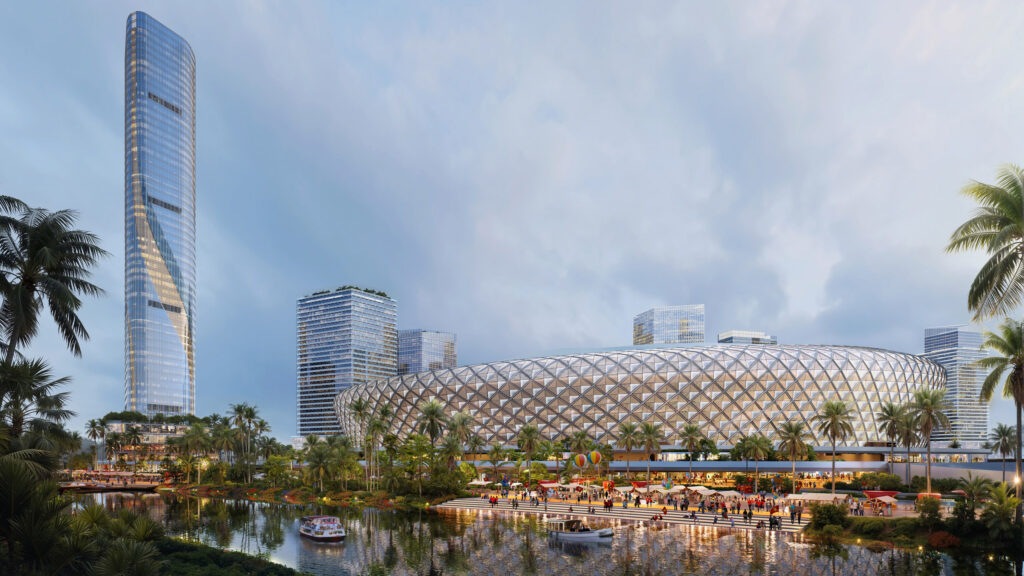
Foster + Partners has unveiled new images of the China Merchants Bank headquarters in Shenzhen, a skyscraper that already dominates the city’s skyline ahead of its scheduled completion later this year.
The 388-metre-high skyscraper is designed to blend sustainable development with the surrounding cityscape. It has already received an Award of Excellence from the Council on Tall Buildings and Urban Habitat, for its spectacular South façade.
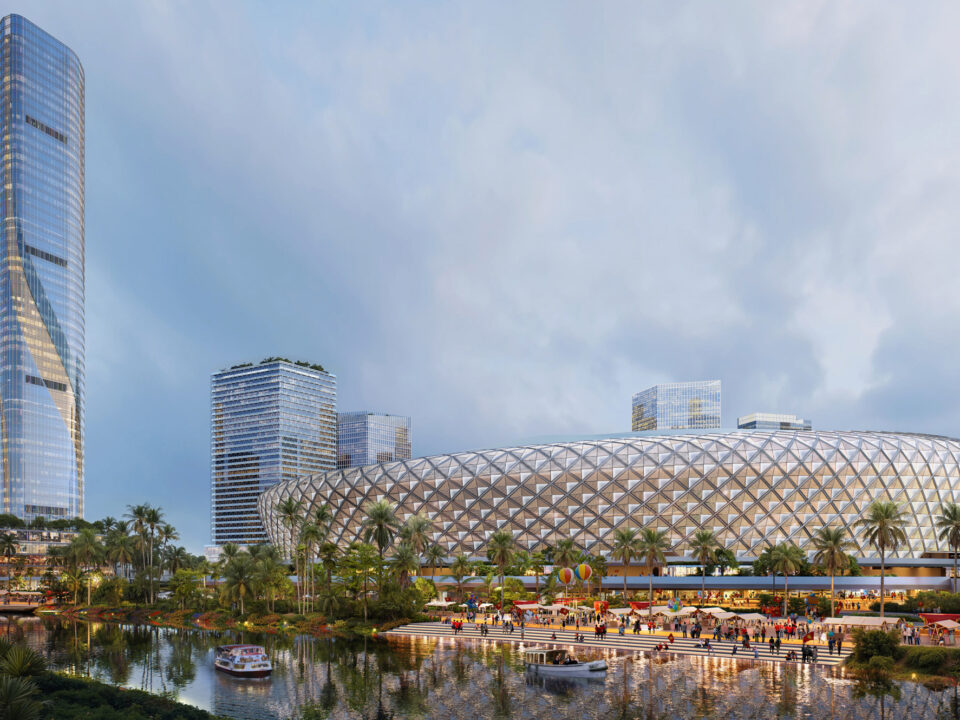
The latest images released by the British architecture studio reveal a striking tessellated pattern on the south façade, formed by triangular glass panels arranged at varying angles. Grant Brooker, Head of Studio at Foster + Partners, explained that the panels are ‘cut to reflect the light; they glisten in the sun and reflect movement in the sky above them. We want to capture the warmth of sunrise and sunset on the building’s surface, so that the appearance of the tower is constantly changing and never appears the same way twice’.
Lights installed along the vertical lines of the façade accentuate the structure’s geometry at night, creating a shimmering effect. The images also highlight the green terraces and rooftop gardens seamlessly integrated into the design.
The tower’s core is made of concrete. Its north façade features a rectilinear glass form inspired by natural rock formations. The exterior combines glass and stainless steel, a practical choice for Shenzhen’s humid subtropical climate.

The six cylindrical towers of the tessellated southern façade create a dynamic honeycomb pattern during the day and transforms into a sea of glittering diamonds at night. The design is inspired by traditional Chinese paper folding techniques.
Always aware of the importance of creating bonds between urban and nature, the triangular panels are fixed at different predefined angles to ensure the best possible views of nearby Shenzhen Bay.
The paper-fold design of the south façade incorporates double-height atria, green terraces and rooftop gardens, subtly woven into the building’s design, creating informal breakout spaces where employees can take mini-breaks and reconnect with nature.

Great care has been taken to integrate intelligent technologies that balance solar and thermal loads, optimise daylight use, and minimise energy consumption. The building is designed to improve indoor air quality and prioritises natural ventilation and passive systems – such as solar shading and the maximisation of natural light – to reduce reliance on energy-intensive active systems like air conditioning.
The building also incorporates the ‘sponge city’ concept, which consists of on-site rainwater collection and advanced water system management to optimise water usage, reduce runoff, and improve urban water resilience.
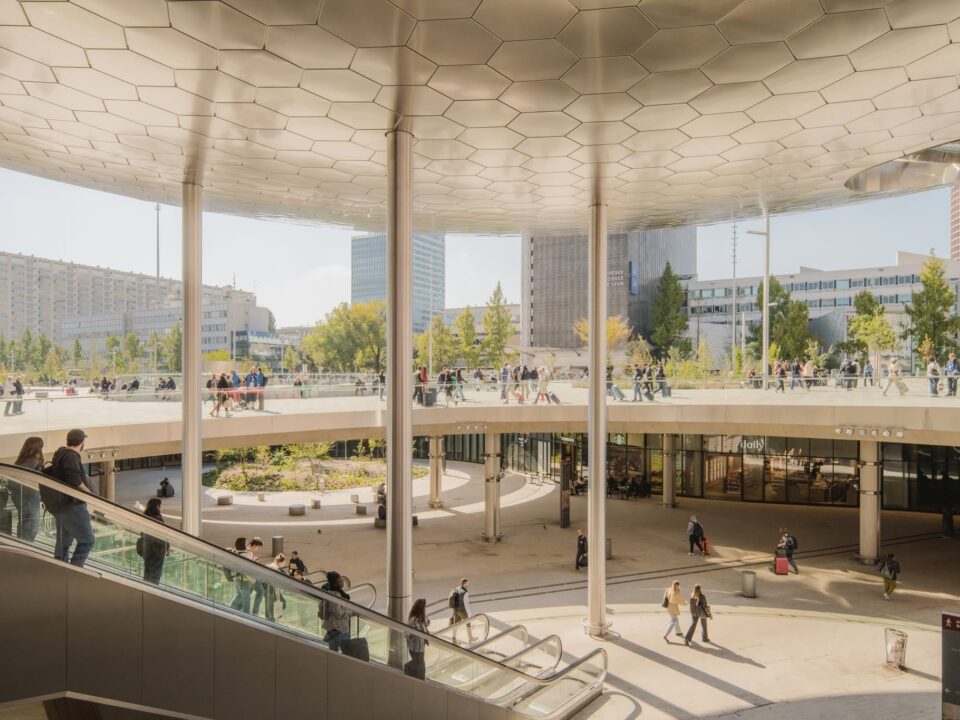
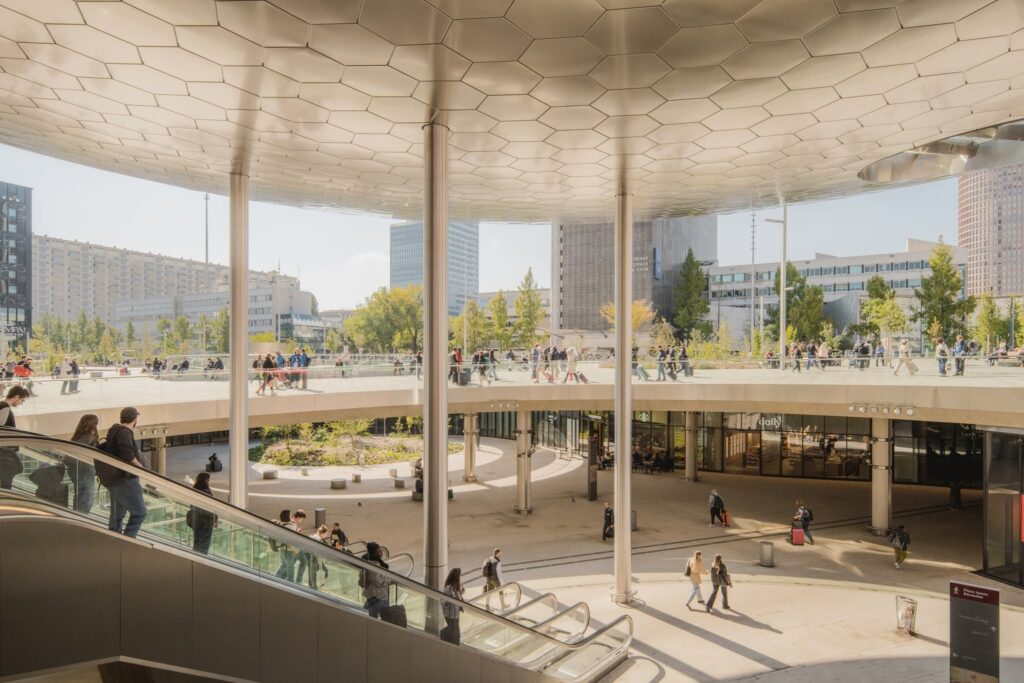
The ground floor features a stainless steel ceiling, stone walls, water features and greenery, skilfully blending the city and nature.

Set within a larger mixed-use development, the high-rise building is a part of a new urban hub complete with commercial spaces, cultural centres, offices, a hotel and a conference centre. It connects seamlessly to the local public park which extends over two city squares, where visitors can find more shops and restaurants in lush green surroundings.
Once a peaceful fishing village, Shenzhen has over the past four decades transformed itself into a technology centre into one of China’s most innovative technology hub, earning the nickname ‘China’s Silicon Valley’. The city continues to attract high-profile architectural projects, with new commissions awarded to international firms such as MVRDV and Ole Scheeren.

This is not Foster + Partners venture into supertall skyscrapers. The British firm, founded in 1967 by Norman Foster, has designed other landmark supertall buildings such as One Bloor West in Toronto, the first supertall skyscraper in Canada, and 270 Park Avenue, JPMorgan Chase Headquarters in New York.