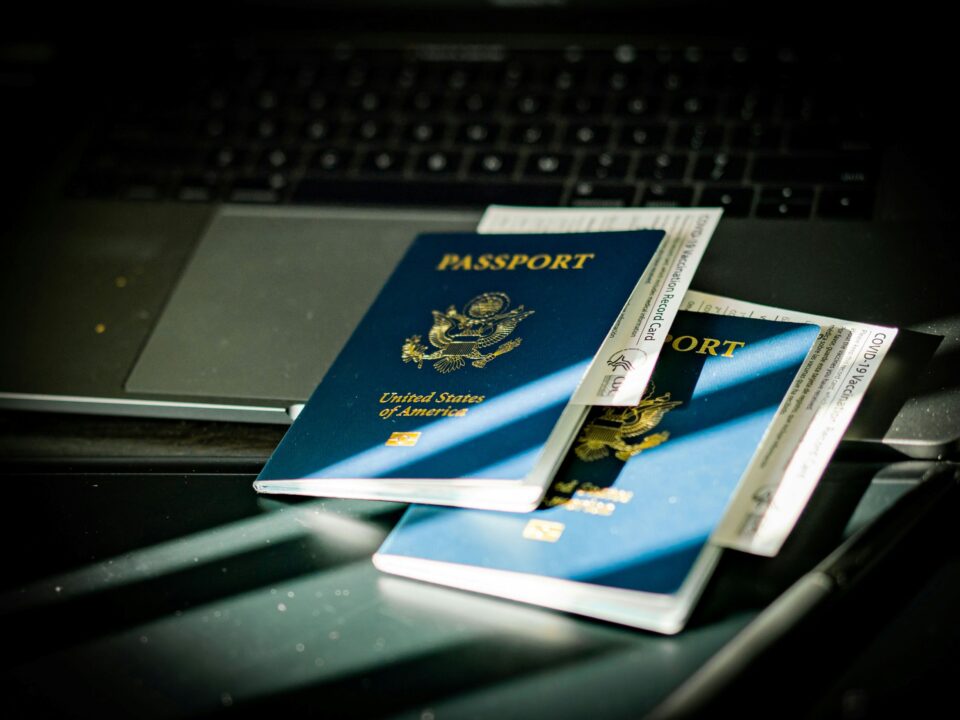
The power of the US passport has been steadily dwindling for some time, showing a shift in global mobility. Asian countries have taken over the top of the ranking instead.
Based on how many countries a traveller can visit without needing a visa, London-based firm specialising in citizenship and residency consulting, Henley & Partners, has been analysing the strength of passports across the world for 20 years, based on information from the International Air Transport Association. The Henley Passport Index translates those data into a list, with the world’s most powerful passports appearing at the top.
Top 12 world’s most powerful passports
- Singapore (193 destinations)
- South Korea (190)
- Japan (189)
- Germany, Italy, Luxembourg, Spain, Switzerland (188)
- Austria, Belgium, Denmark, Finland, France, Ireland, Netherlands (187)
- Greece, Hungary, New Zealand, Norway, Portugal, Sweden (186)
- Australia, Czech Republic, Malta, Poland (185)
- Croatia, Estonia, Slovakia, Slovenia, United Arab Emirates, United Kingdom (184)
- Canada (183)
- Latvia, Liechtenstein (182)
- Iceland, Lithuania (181)
- USA, Malaysia (180)
Once unrivalled at No.1 in 2014, the American passport has now slumped to 12ᵗʰ place.
— Henley & Partners (@HenleyPartners) October 14, 2025
Explore the updated index and find out where your passport ranks: https://t.co/6UItfxlYJF pic.twitter.com/07LCOYvOQe
Travel policy and reciprocity
The US has long been one of the top contenders – standing in the first spot eleven years ago in 2014 – but has been dwindling ever since. In 2024, the US stood seventh worldwide, and in July 2025, it went down to the tenth spot. At the time of writing, on 17 October 2025, they are occupying the 12th spot in the list.
“The declining strength of the US passport over the past decade is more than just a reshuffle in rankings – it signals a fundamental shift in global mobility and soft power dynamics. Nations that embrace openness and cooperation are surging ahead, while those resting on past privilege are being left behind”, says Christian H Kaelin, chair of Henley & Partners and creator of the index.
World’s most powerful passports for 2025 🪪✈️
— Travel Tomorrow (@TravelTomorrowX) January 31, 2025
📸 @BuscardiniPR @HenleyPartners #passport #visa #visafree #travel #tourism pic.twitter.com/LaYAEXYoYR
According to Henley & Partners, the stricter US immigration and travel policies under the Trump administration are the main reason for the stark decline. Moreover, the firm notes how reciprocity plays an important role in a country’s rankings. Some countries, such as the US, Canada, and New Zealand, offer their citizens a large amount of travel freedom, but don’t apply the same rule for those entering the country. In the case of the US, passport holders are allowed visa-free access to 180 destinations, yet nationals from just 46 countries can enter the US without a visa. Overall, countries with so little reciprocity saw their passport strength stagnate or even decline over recent years, according to the company.
While the US passport still holds a certain amount of power, Henley & Partners notes an unprecedented surge in demand for alternative residence and citizenship options. Americans have for example, became the largest group of applicants for investment migration programs in 2025.
“Faced with unprecedented volatility, investors and wealthy American families are adopting a strategy of geopolitical arbitrage to acquire additional residence and citizenship options. They are hedging against jurisdictional risk and leveraging differences across countries to optimise personal, financial, and lifestyle outcomes”, states Group Head of Private Clients at Henley & Partners, Dominic Volek.
Professor Peter J. Spiro of Temple University Law School in Philadelphia confirms that tendency is set to continue over the coming years. Dual citizenship might thus indeed become the new American dream.