


Europe’s skies recorded their busiest summer on record in 2026, despite disruption linked to the war in the Middle East, according to new data from the European Organisation for the Safety of Air Navigation (Eurocontrol).
Between 1 June and 31 August, the European aviation network handled an average of 35,959 flights per day, up 2.4% compared with summer 2025. Traffic reached an all-time peak on Friday, 10 July, when 37,640 flights crossed the network in a single day.
Overall, 66 all-time daily traffic records were set during the summer, including records registered by 11 airlines or airline groups, 16 airports, 24 area control centres and 14 countries.
The increase came despite the continuing Middle East conflict, which significantly altered traffic flows across Europe. Earlier in the year, Eurocontrol estimated that the conflict had reduced flights between Europe and the Middle East by 59%, while around 1,150 flights per day were affected by rerouting to avoid conflict zones and closed airspace.
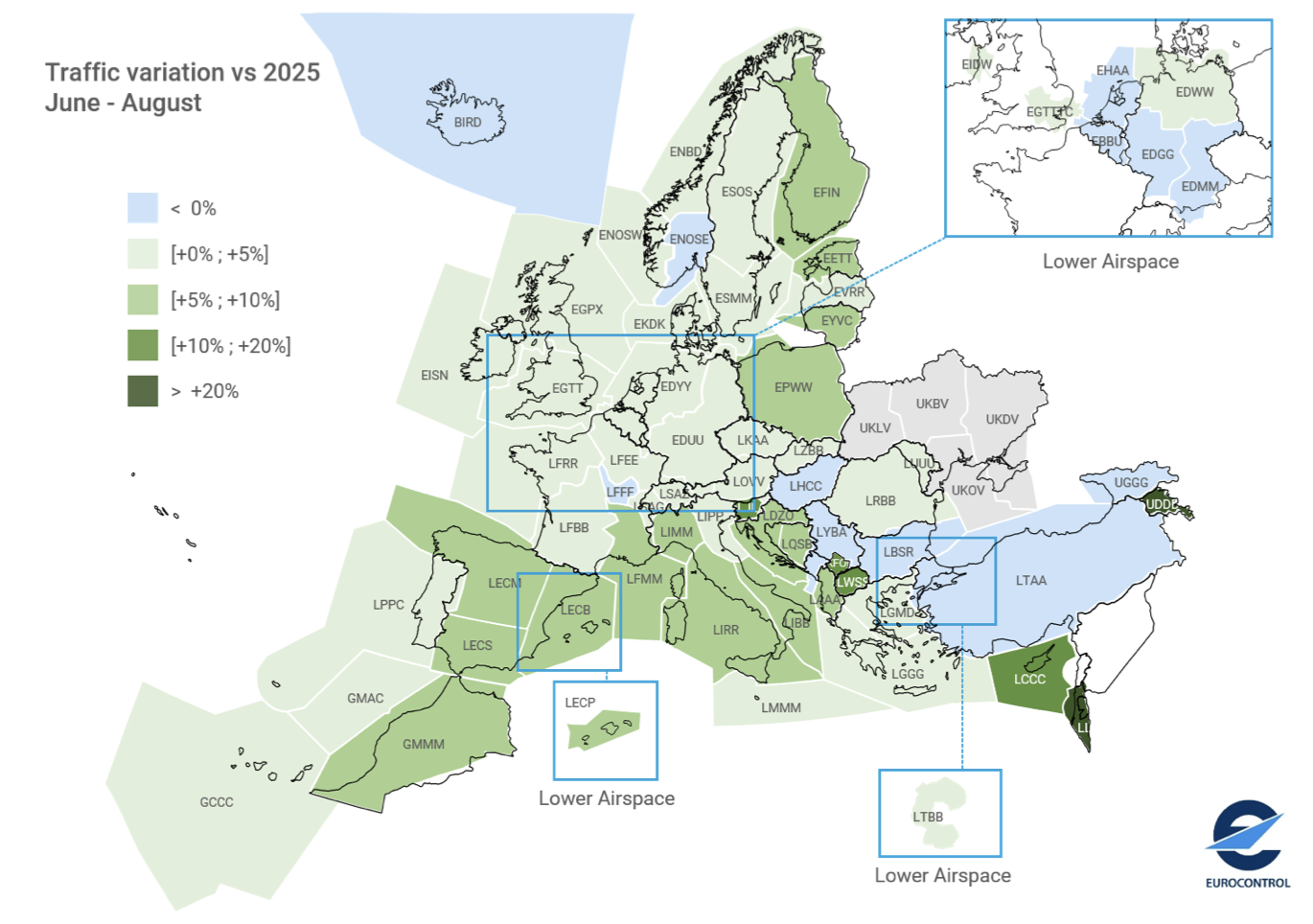
During the summer, those changes continued to affect the distribution of traffic across the continent. Eurocontrol reported lower traffic in Bulgaria, Hungary, Romania and Türkiye, while Albania, Croatia, Cyprus, Greece, Montenegro, North Macedonia, Serbia and Slovenia recorded strong increases. Traffic also continued to grow in south-western Europe.
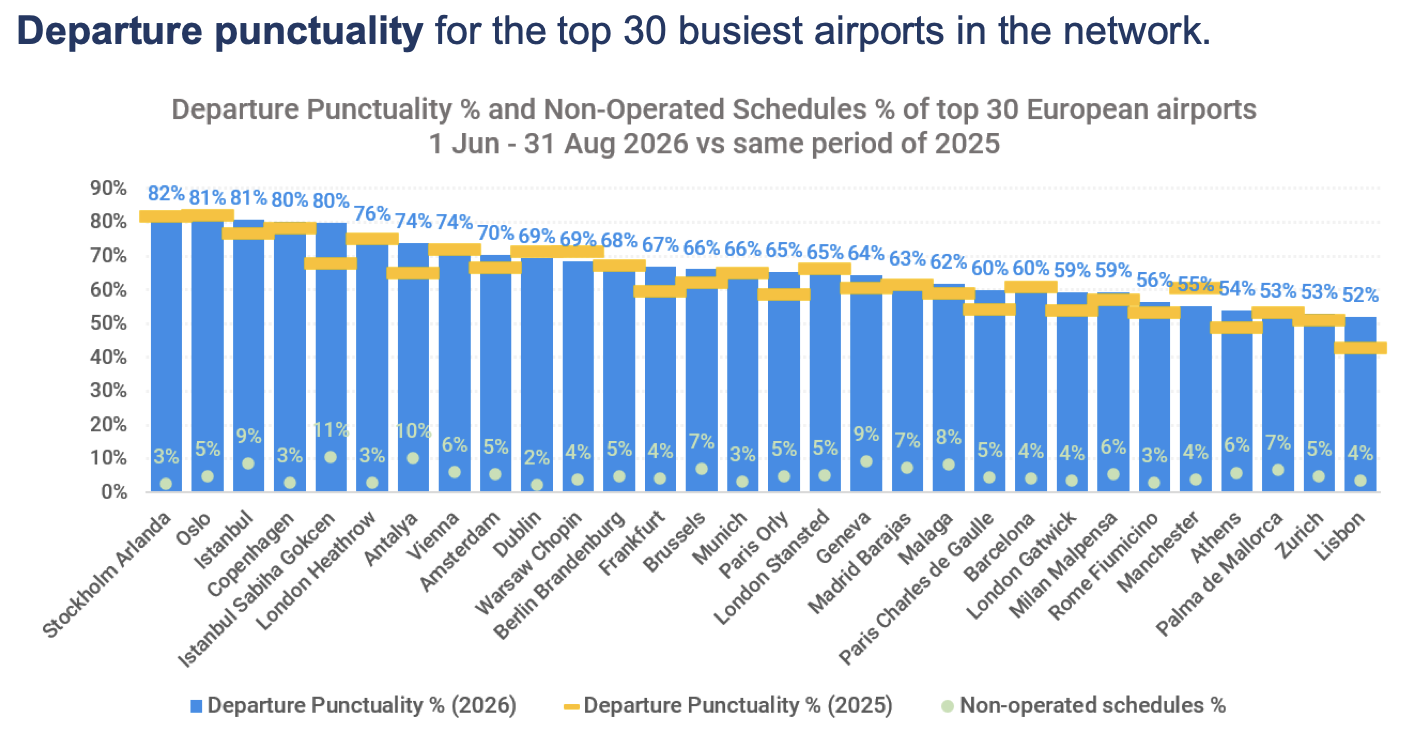
Despite the record number of flights, operational performance improved compared with last summer. Arrival punctuality reached 72.6%, an increase of 1.2 percentage points year-on-year, while air traffic flow management (ATFM) delays fell by 17% to an average of 3.27 minutes per flight.
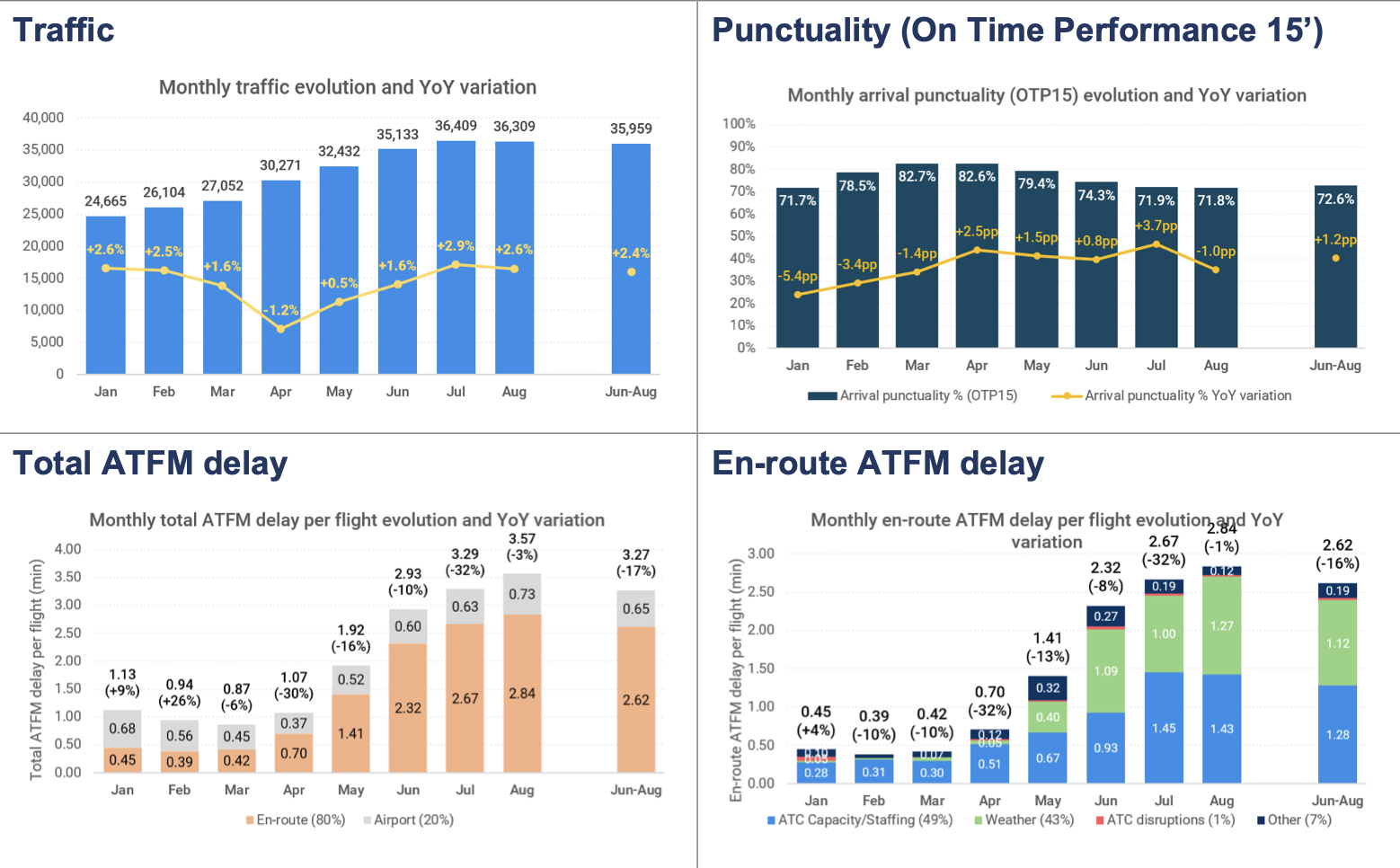
However, around 681,000 flights were still delayed by ATFM restrictions over the summer, equivalent to approximately 7,400 flights per day, or 21% of all flights. Capacity and staffing issues accounted for 49% of en-route ATFM delays, while severe convective weather was responsible for 43%. Industrial action represented just 1%.
France accounted for 32% of delays linked to air traffic management problems, while Greece’s aviation system also came under significant pressure as record passenger numbers and increased traffic pushed air traffic control capacity to its limits.
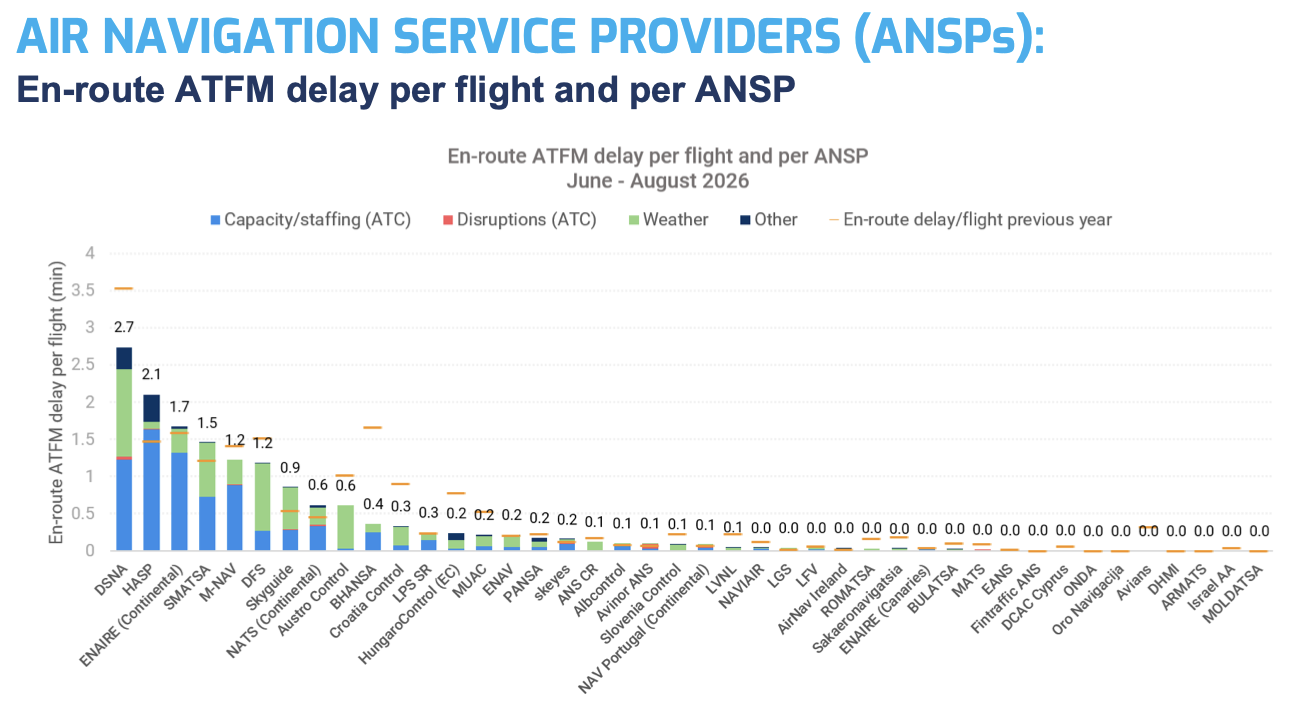
Eurocontrol said 45 of Europe’s 68 area control centres are currently on track to meet the European capacity target by the end of 2026. Another 10 remain on track but continue to be affected by adverse weather and the Middle East crisis, while 13 are expected to miss the target.
Traffic growth was particularly strong across southeastern Europe, including Albania, Croatia, Cyprus, Greece, Montenegro, North Macedonia, Serbia and Slovenia, alongside continued growth in southwest Europe. Overall, 14 countries recorded their highest-ever daily traffic levels for arrivals and departures during the summer, with Armenia, Georgia, Ireland, Italy, Moldova, Portugal, Slovakia, Spain and Türkiye among those setting new records.
Several airlines and airline groups also set traffic records, among them Aegean, Air Serbia, easyJet, Jet2.com, Pegasus, Royal Air Maroc, Ryanair, Sky Express, SunExpress, Turkish Airlines and Wizz Air.
The organisation is now reviewing the lessons from the record-breaking season as it prepares for summer 2027, with a focus on network planning, staffing, airspace modernisation and increasing air traffic management capacity.