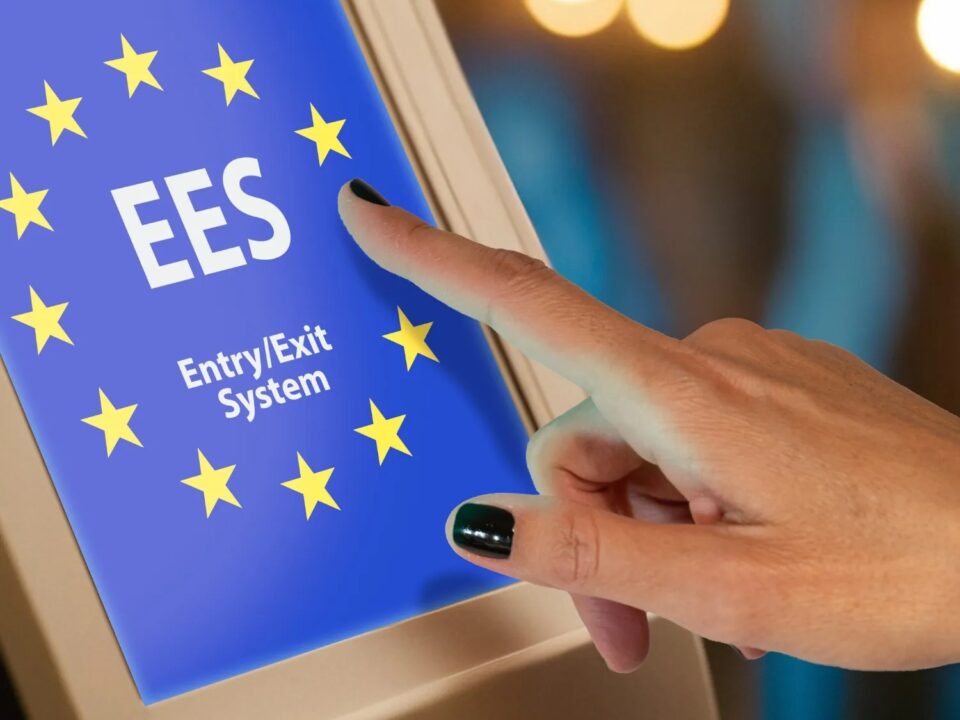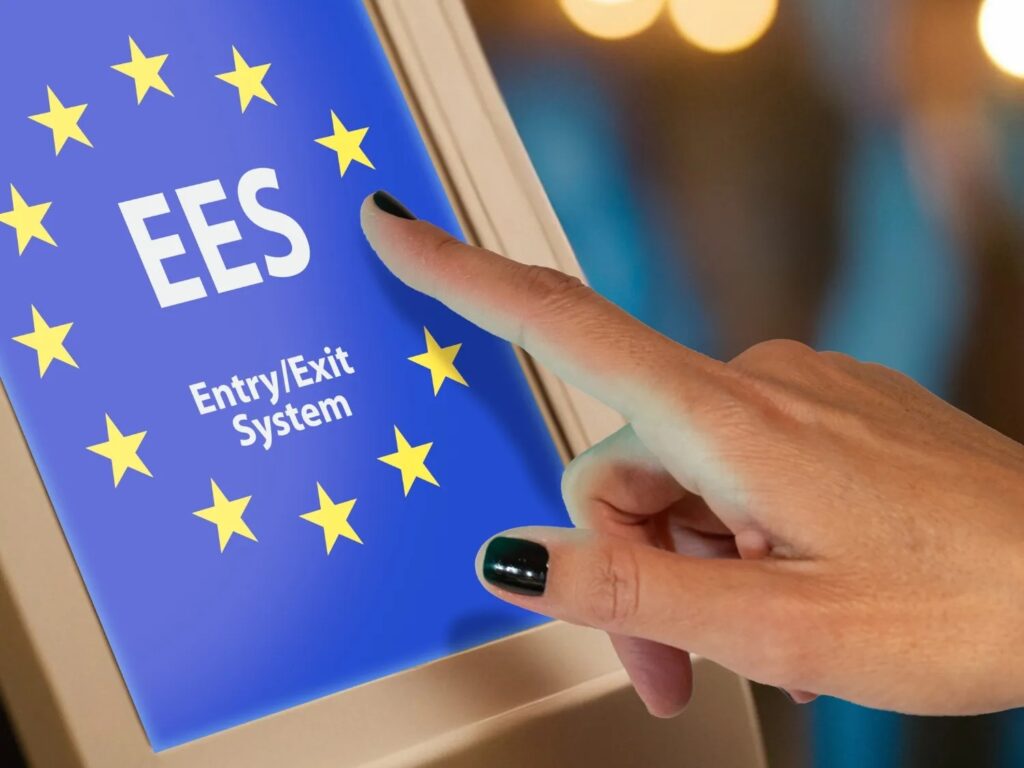

Half a year into the European Union’s phased rollout of digital border controls, and after question marks over travel delays blamed on its implementation, what is the current situation facing arrivals to and departures from the bloc, and what have we learned?
The launch of the so-called Entry/Exit System (or EES) finally began after a series of delays in October 2025, and was designed to take place over six months to be fully operational by 10 April 2025.
🌍✈️ Planning to #TravelToEurope?
— EU Home Affairs (@EUHomeAffairs) April 7, 2026
⁰From 10 April 2026, non-EU nationals traveling for a short stay will be recorded in the Entry/Exit System (EES) at all external borders of Schengen countries. ⁰⁰🎥 Watch the video to see how the EES works. ⁰⁰🔗 https://t.co/WkkeBuYFy4 pic.twitter.com/4JMI9mRJAU
Now a mandatory part of entering the bloc, it eliminates the need for manual passport stamping at borders, instead gathering biometric data from non-European, third-country arrivals to any of the 29 nations that are part of the Schengen Zone. It is free to use and applicable to those without a residence permit or long-stay visa for stays of up to 90 days within any 180-day period.
| Austria | Denmark | Greece | Liechtenstein | Norway | Slovenia |
| Belgium | Estonia | Hungary | Lithuania | Poland | Spain |
| Bulgaria | Finland | Iceland | Luxembourg | Portugal | Sweden |
| Croatia | France | Italy | Malta | Romania | Switzerland |
| Czech Republic | Germany | Latvia | Netherlands | Slovakia |
The long-term vision is to make EU immigration processes and the tracking of third country arrivals and departures more efficient and seamless, and to improve security, by storing and sharing data digitally. That’s because once people have registered their information at the border, they will not have to do so again, since it is saved and should pass a quick verification whenever and wherever they leave and come back. Those with biometric passports should be able to use them at automated checkpoints.
I flew to PORTO to test out EES 🛂 The new border system for travel to Europe! But did it all go to plan?! 😬 pic.twitter.com/ziYZe5BivT
— Holiday Expert (@cheapholidayexp) April 13, 2026
However, the first time arrivals register for EES, they need to provide a facial image, fingerprints, and their passport information, as well as registering their entry and planned exit dates. We now know that completing all these steps at the border takes time, and travellers should allow plenty of it to ensure they do not miss flights or connections. Despite extra infrastructure, such as dedicated EES kiosks and tablet registration, long queues developed at some border points over the rollout period, raising concerns from travel industry stakeholders over the system’s impact on airport waiting times and ensuing disruption.
One important point to note is that those delays occurred over the winter season and during the system’s phased introduction, when only limited percentages of arrivals were required to go through EES, and when airport authorities had the option to suspend EES registrations if operational problems were developing. With the system now obligatory for all, and with the high summer travel season ahead, there could be further increased delays. Airport operator FMG has flagged that if only 10 % of its kiosks go offline during peak demand, queuing times could reach 90 minutes.
However, we also know there are two bits of good news emerging. The first is that an app is on its way that should make it possible, for arrivals to gain time by pre-registering their EES data in advance. It can already be accessed up to 72 hours ahead of arrival in Portugal and Sweden, generating a QR code for use at self-service kiosks at hubs. Before entering Sweden, it can be used to upload passport data, the facial image, and the entry questionnaire, while in Portugal, only the entry questionnaire can be completed.
The second positive note is that the phased EES rollout has allowed lessons to be learned about the technology, about staffing, and about managing flows through busy air hubs and ports. At the Port of Dover on the UK’s south coast, for instance, separate lanes are in use for those who need to complete EES steps. At Lisbon’s Humberto Delgado Airport, overwhelmed staff were reinforced by the National Republican Guard and Public Security Police (PSP) officers.
With the trial period theoretically over, those lessons will need to be applied across all crossing points in the 29 countries operating EES. As Raluca Marian, Advocacy Director for the International Road Transport Union (IRU), has noted: “The focus now should be on smooth, coordinated implementation that supports both border management objectives and efficient transport operations.” Part of that coordinated approach involves operators themselves. Lufthansa and Eurowings, for example, are now deploying ground agents to remind non-EU passengers to pre-register on the mobile app.
In practice, we know too that mitigations will remain temporarily in place. The European Commission has signalled that it will continue to permit flexibility on EES checks to help streamline operational pinch points until September 2026.
Meanwhile, early analyses of EU reporting by Pax Global Media, indicate the system has so far recorded 52 million crossings, identified nearly 700 travellers as security risks, and refused entry to over 27,000 people. It is also offering benefits to multinational employers, such as better visibility of staff days spent in Schengen thanks to the downloadability of raw EES data.