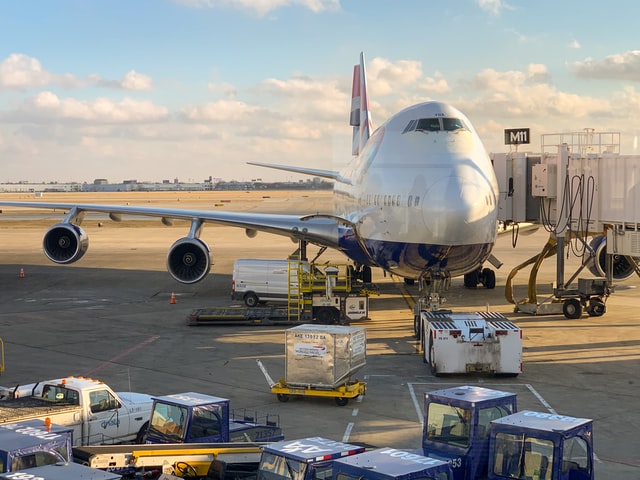

Starting from 27 July 2025, direct flights will be installed between Moscow in Russia and the North Korean capital Pyongyang. According to the Association of Tour Operators of Russia (ATOR), flights will operate twice a week.
Until now, only one direct air route existed between Russia and North Korea. That connection was assured by North Korea’s Air Koryo, which operates flights between Pyongyang and the Russian city of Vladivostok twice a week. While the route had been out of use for three years until August 2023 due to the Covid-19 pandemic, at the time, Russia’s civil aviation authority Rosaviatsia, encouraged other Russian airlines such as Aeroflot and Aurora to start establishing direct flights between both countries after a meeting with the North Korean aviation industry.
After an application by charter airline Nordwind in June 2025, Rosaviatsia has now issued a license for the airline to start operating flights between Moscow and Pyongyang. According to the flight schedule of Moscow’s Sheremetyevo International Airport, those flights should start on 27 July 2025.
While direct air connections between both countries have been sparse, there are other ways in which to travel between both countries fairly easily. Since 17 June 2025, after a five-year suspension due to the pandemic, Russian Railways reinstated a passenger train service between Moscow and Pyongyang. The connection will run twice a month and is known as the world’s longest direct rail route, as it spans over 10,000 kilometres and takes eight days to complete. Another service, running once a month and connecting Pyongyang with the Russian city of Khabarovsk, started on 19 June 2025.
A close relationship
Since the start of the Russian invasion of Ukraine in 2022, relationships between Russia and North Korea have been flourishing. Not only have Russian officials been making visits to North Korea on multiple occasions, but they also signed a mutual defence pact when President Vladimir Putin visited Pyongyang in 2024. Moreover, according to the US officials and their allies, Pyongyang would be supplying Russia with artillery and ballistic missiles for the war, an accusation both parties deny.
The close relations between Russia and North Korea are also highlighted by their approach to tourism. Since the beginning of 2024, North Korea has partly reopened its borders to foreigners for the first time since the start of the pandemic, focusing on Russian visitors instead of the Chinese, as everyone expected. Moreover, during the recent opening of North Korea’s new 4 kilometre-long beach resort at Wonsan-Kalma, the Russian Ambassador Alexander Matsegora was one of the few people present aside from Kim Jong Un, once again marking the close ties between both countries.