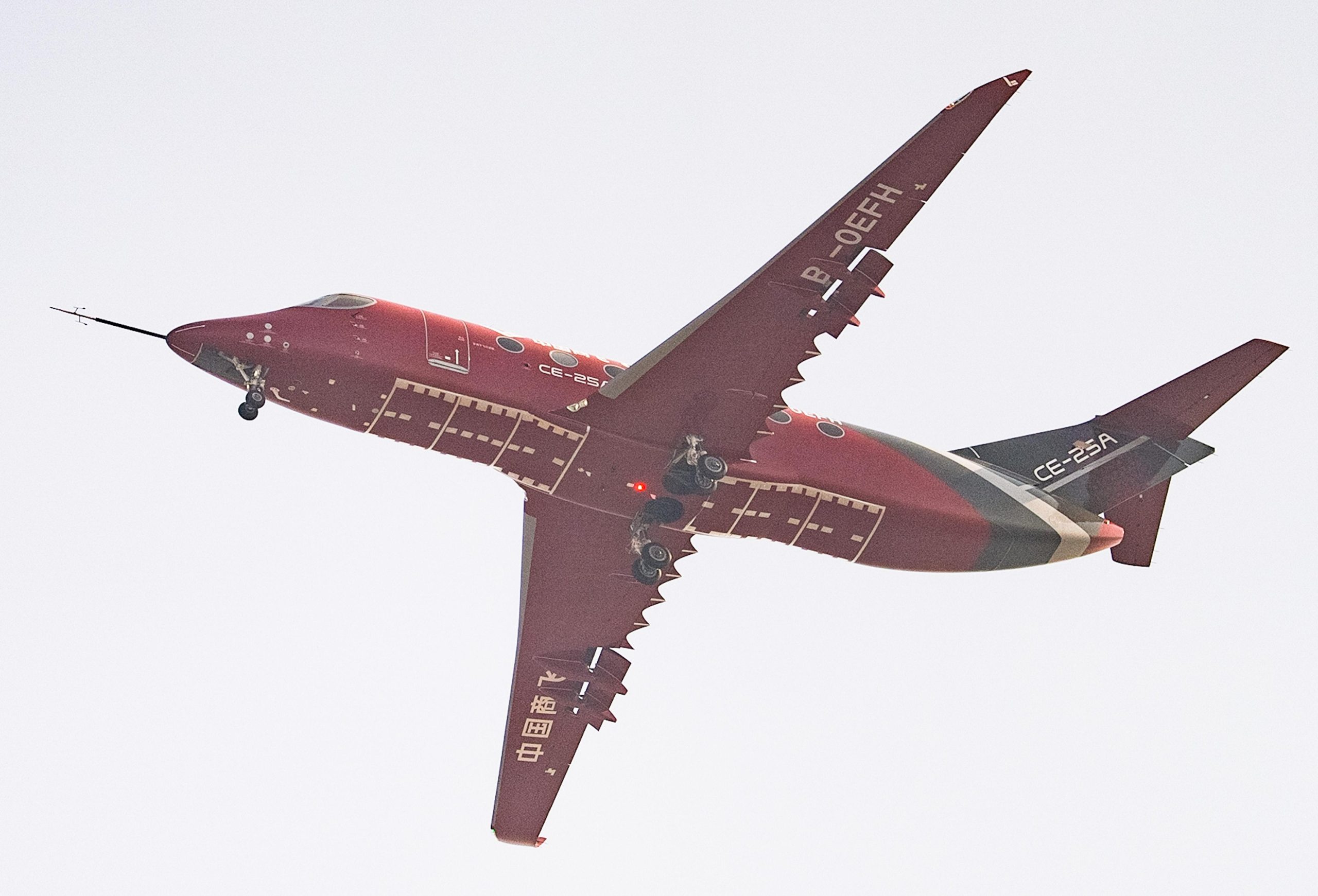



China’s first crewed test flight of an electric passenger plane was a success, according to state media.
The bright red CE-25A, developed by the Commercial Aircraft Corporation of China (COMAC), took off on Saturday, 14 November, and flew over Binzhou, in eastern China’s Shandong Province.
The CE-25A uses electric ducted-fan propulsion, with ten fans mounted above the wings (five on each side), giving the commuter plane a futuristic, insect-like appearance. The C in its name stands for China and COMAC, the E stands for electric propulsion, and 25 refers to China’s Part 25 airworthiness standard, while the A signifies that it is the first in the series.
Two pilots and a flight test engineer were on board the 10-tonne aircraft. It stayed airborne for 16 minutes and 38 seconds, covering a distance of about 60.4 kilometres.
The entire test lasted just under an hour, at 57 minutes and 46 seconds.
The aircraft’s first test flight took place on 2 February, but it was unmanned. The development team appeared satisfied with the results, reporting that all systems had “operated normally” and all performance indicators had met expectations.
Designed to serve short inter-city routes, the “e-plane” can carry up to 19 passengers. It has a cruising speed of 300 kilometres per hour, a cruising altitude of 2,400 metres and a range of 400 kilometres.
China’s first domestically developed 10-metric-ton-class electric commercial #aircraft, the CE-25A, completed its first piloted test flight in Binzhou, Shandong province, on Saturday, marking another milestone in the development of electric aircraft for short-haul commercial travel. https://t.co/25k9JcKukP
— China Daily (@ChinaDaily) November 14, 2026
COMAC collaborated with Contemporary Amperex Technology Co. (CATL), one of the world’s leading battery manufacturers, and Shanghai Jiao Tong University, among other partners, to develop the aircraft.
The plane has now successfully completed 19 unmanned tests and its first crewed flight. The Civil Aviation Administration of China (CAAC) has accepted its application for type certification, representing a significant milestone on the path to entering commercial service. However, regulatory approval has yet to be granted.
This successful flight is a significant milestone in China’s efforts to develop electric aviation.
The country has been making considerable efforts to strengthen its aviation industry and establish itself as a major player in the field. Alongside developing new aircraft, China is reducing its reliance on Western suppliers for its C919 passenger jet by encouraging local companies to develop alternatives for components such as sealants, rubber, paints and bolts.
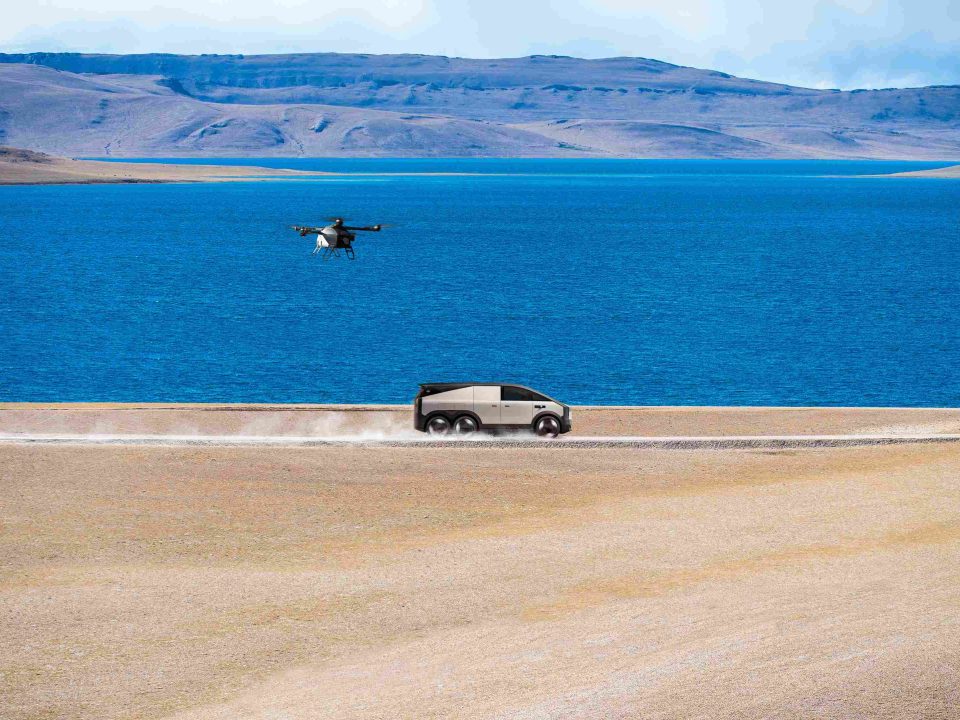
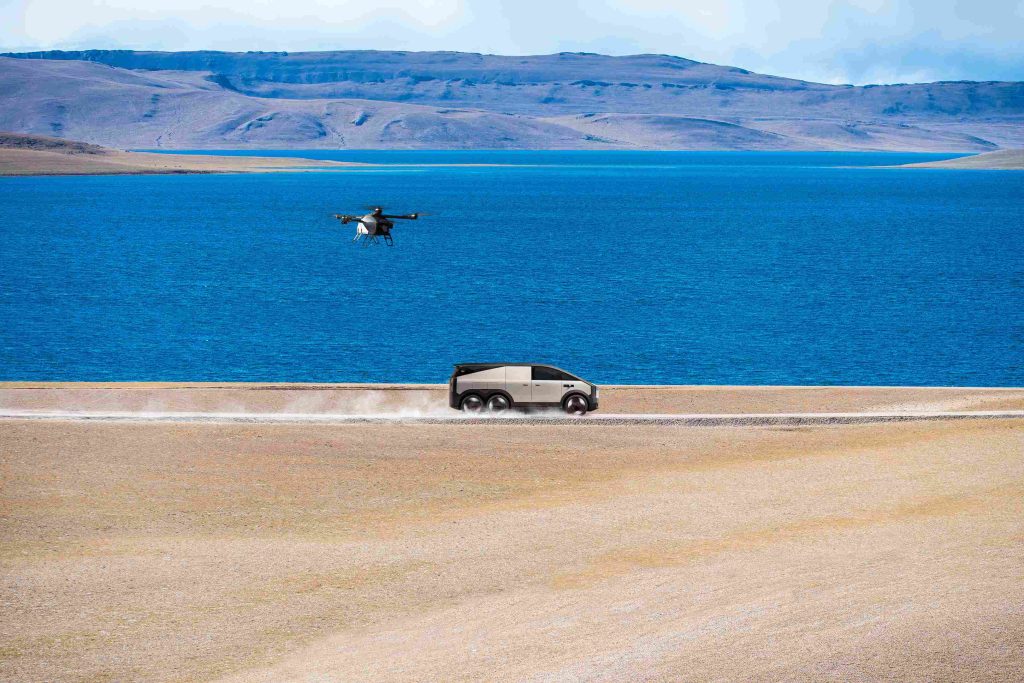
The country’s ambitions extend beyond conventional aircraft, as it is also developing flying cars. Prototypes of these vehicles, which are designed to operate both on the road and in the air, are currently being tested. It is important to note that this technology is distinct from that used in conventional electric passenger aircraft.
China is not alone in developing electric passenger aircraft. In Europe, the Swedish company Heart Aerospace recently unveiled the ES-36: a 36-seat hybrid-electric regional plane designed to fly 200 kilometres on battery power alone. It is planned to enter service in 2031.
Meanwhile, Dutch researchers have called on European authorities to introduce legislation to accelerate the transition to electric aviation and prepare the necessary infrastructure.