


From 1 January 2027, Belgium will introduce a nationwide ban on smoking and vaping on public terraces and in designated smoking rooms. The decision, confirmed by the federal government on 12 September, represents another major step in the country’s long-term anti-smoking strategy.
The ban will cover not only restaurant and café terraces but also smoking rooms in airports, hospitality establishments and venues that cater specifically to smokers, such as cigar clubs and shisha bars. The measure was originally scheduled to come into force in 2026, but the government delayed its entry into effect by one year to give the hospitality industry and other sectors time to adapt.
Protecting public health
Health Minister Frank Vandenbroucke said the new restrictions are aimed at protecting both children and adults from involuntary exposure to tobacco smoke and e-cigarette vapour.
“Protecting people’s health and creating a healthy environment for everyone is what matters to us,” he said. “With these measures, we prevent children and adults from involuntarily inhaling harmful cigarette smoke and ensure that people are not tempted to light up a cigarette.”
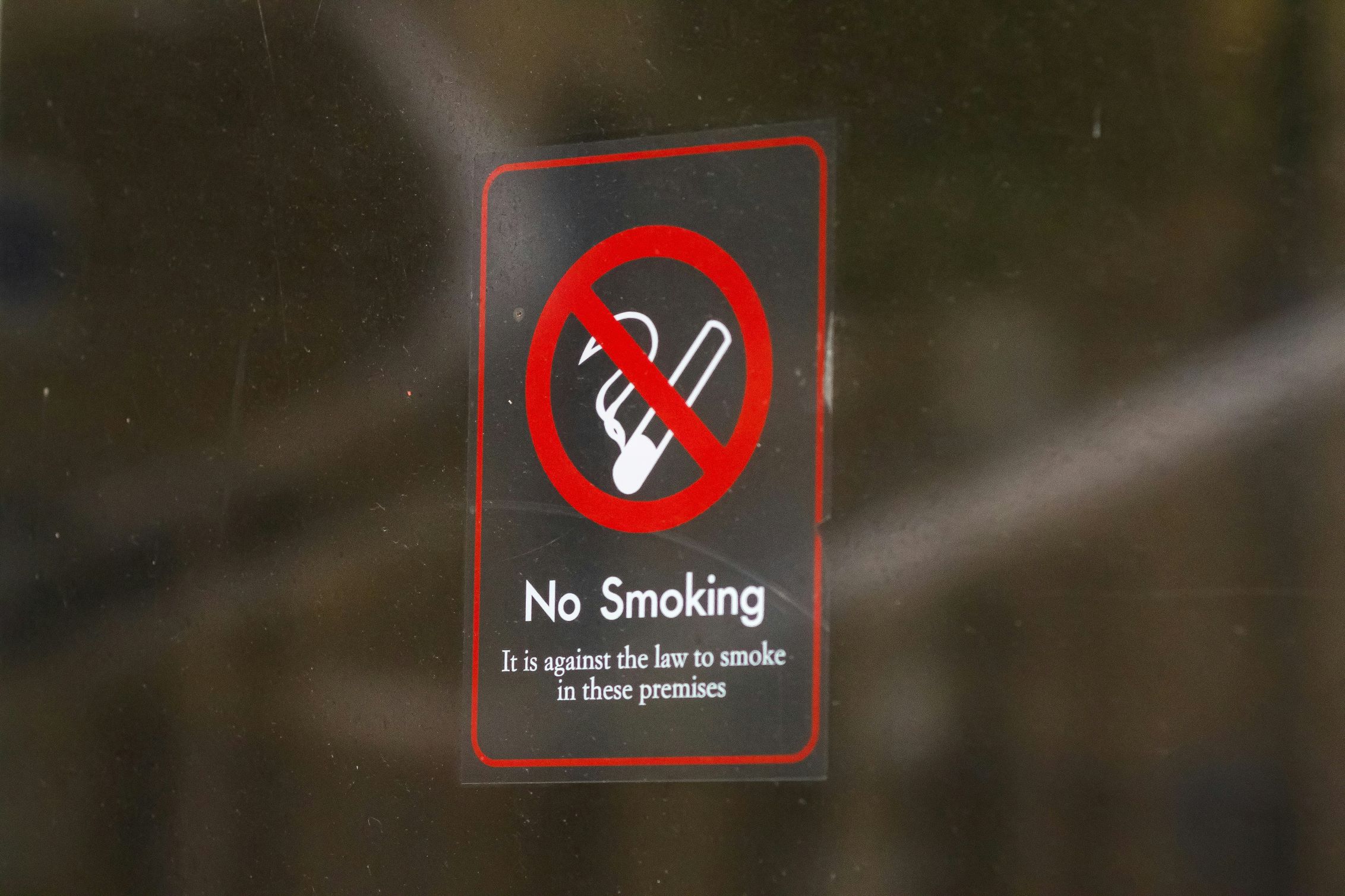
Establishments will be required to display clear signage informing customers of the ban. They will also have to actively discourage smoking by addressing customers who light up. Failure to provide sufficient signage or turning a blind eye to violations could result in penalties. Even placing items that may encourage smoking, such as ashtrays, could leave operators liable.

Smoking in decline, vaping on the rise
According to the most recent Sciensano Health Survey, 17.6% of the Belgian population currently smokes, with 12.8% doing so daily. This marks a modest decline compared to 2018, when 19.4% of the population smoked and 15.4% did so daily.
However, e-cigarettes are becoming increasingly popular, particularly among younger people. In 2023 and 2024, 21.7% of the Belgian population reported having tried an e-cigarette at least once. The rise of vaping has presented fresh challenges for public health authorities, with growing concerns about long-term health effects and the attractiveness of flavoured products for young people.
Part of a wider anti-smoking plan
As reported by Travel Tomorrow, Belgium has been gradually tightening its tobacco legislation in recent years. In December 2022, the federal government defined the main points of an ambitious anti-smoking plan. From January 2025, smoking will be prohibited in certain open-air public spaces such as amusement parks, zoos, children’s farms during activities and playgrounds.
The government also announced plans to reduce points of sale. Cigarette vending machines will be banned from 2024, while the sale of tobacco at bars, cafés and festivals is expected to be prohibited from 2025. The sale of tobacco in supermarkets will be phased out entirely by 2028.
According to the Foundation Against Cancer, smoking remains one of the leading causes of preventable death in Belgium, killing around 40 people every day, or roughly 14,000 per year. In addition, some 300,000 Belgians are living with smoking-related illnesses. These figures highlight the urgency of the government’s plan to achieve a smoke-free generation.
The cost of smoking
The financial burden of smoking has also been targeted. The Belgian federal government has approved a series of tax increases on tobacco products. Between 2020 and 2024, the price of a pack of 20 cigarettes rose by nearly 60%, while the cost of loose tobacco increased by more than 90%. The price of e-cigarettes has also gone up.
By making smoking more expensive and less convenient, the government hopes to reduce smoking prevalence significantly. The official target is to bring daily tobacco use down to 10% of the population by 2028, and to just 5% by 2040.
Countries around the world 🌍 are raising taxes on harmful products like tobacco, alcohol & sugary drinks.
— World Health Organization (WHO) (@WHO) July 3, 2025
To accelerate progress, WHO launches the ‘3 by 35’ initiative, helping governments:
– Cut more consumption
– Raise more revenue
– Save more lives
Learn more… pic.twitter.com/RM9kN3KLPN
Restrictions on visibility and access
Visibility and access have been another focus of the anti-smoking plan. From 2025, supermarkets and festivals will not be allowed to sell tobacco products, while shops will be prohibited from displaying cigarettes, vapes and other smoking paraphernalia. Tighter advertising rules are also planned. Retailers will be required to ask for proof of age from any buyer who looks under 25, with strict enforcement and heavy fines promised for breaches.
Additional restrictions on smoking in public spaces are also on the horizon. By 2025, amusement parks, playgrounds, sports grounds and zoos will all become smoke-free zones. Smokers will also be required to stand at least 10 metres away from hospitals, libraries and schools before lighting up.
Reactions and challenges
The extension of the smoking ban to terraces has drawn criticism from parts of the hospitality industry, which argue that outdoor smoking areas provide a compromise between smokers and non-smokers. Industry representatives have warned that enforcing the ban may place an additional burden on staff, who will be required to confront customers who ignore the rules.
Nevertheless, health experts and campaigners have broadly welcomed the decision, noting that smoke does not respect boundaries and that exposure on terraces can be just as harmful as indoors. They argue that consistent rules are easier to enforce and send a clear message about the risks of smoking.
The delay of the terrace ban until 2027, rather than 2026 as initially planned, reflects the government’s attempt to balance public health priorities with the realities faced by businesses. The coming years will be crucial in preparing both hospitality operators and the public for the transition.
A step towards a smoke-free generation in the EU
Belgium’s efforts form part of a wider European movement towards stricter tobacco regulation. Countries such as the Netherlands, Spain and France have all taken similar steps in recent years, introducing tighter rules on smoking in public spaces, raising taxes, and restricting sales in order to discourage new generations from taking up the habit.
For Belgium, the combination of higher prices, reduced visibility, fewer points of sale and stricter rules on where smoking is permitted represents one of the most comprehensive anti-tobacco strategies in Europe.
If successful, the measures could help the country meet its ambitious targets and contribute to the EU’s broader vision of a smoke-free generation. For now, the government insists that the health benefits outweigh the inconvenience. As Minister Vandenbroucke noted, preventing involuntary exposure to smoke and creating healthier environments are at the heart of the plan.