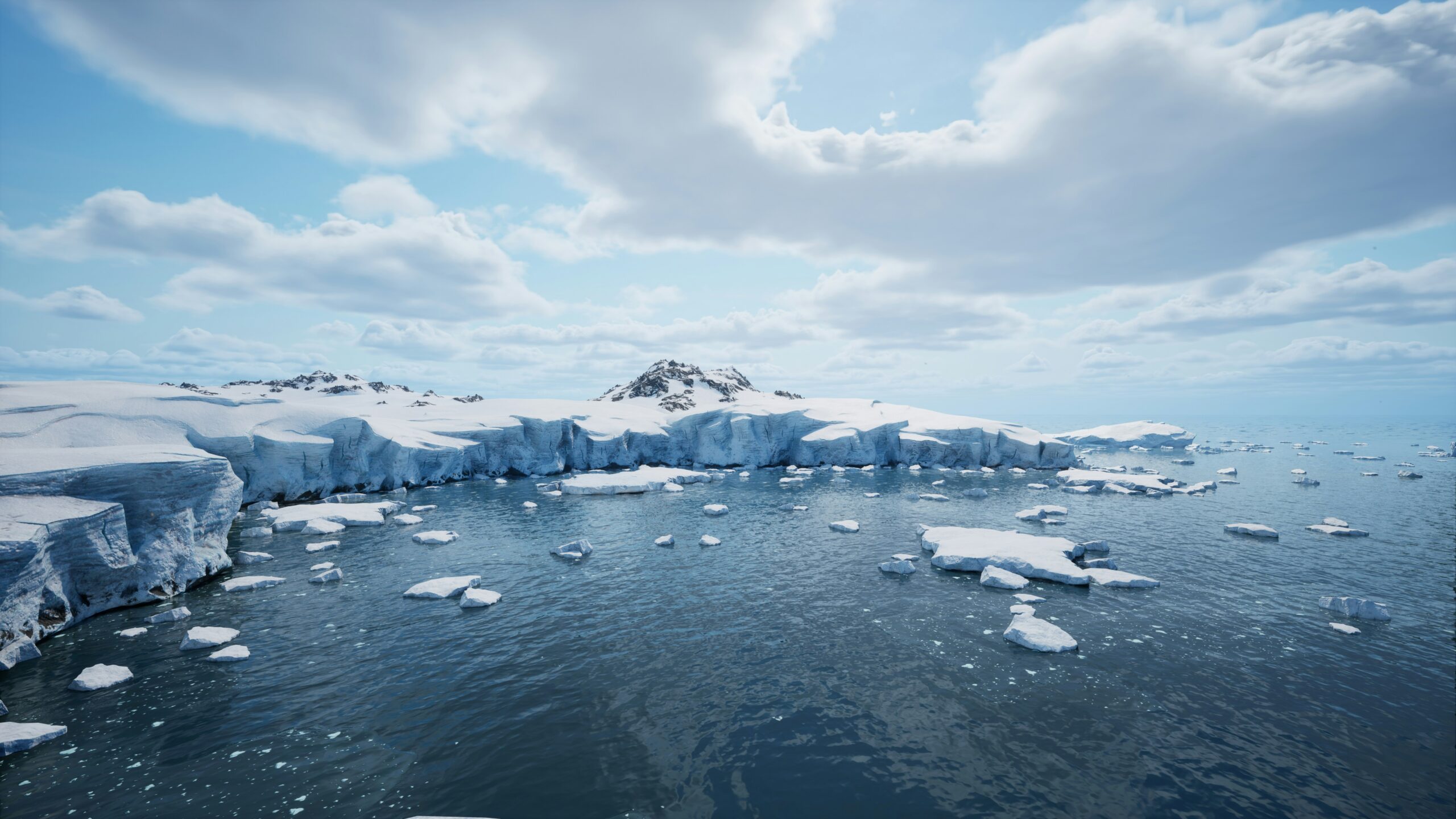



Sea ice in Antarctica has dropped to its third-ever lowest level, marking the fourth consecutive year of record lows in what scientists fear could be a sign of a system that “is changing faster than we are understanding it.”
The continent’s ice has retreated a million square kilometres from the long-term maximum average observed since 1979. That’s an area of ice double the size of Spain that has not been seen this year, as of 14 September.
Antarctica’s sea ice area varies hugely across the year. It melts over the summer hitting less than two million square km in recent years, and “grows” back during the winter, hitting around 17 million square km this September.
But with the lowest levels of sea ice ever recorded all occurring in the last four years, researchers believe a climate behaviour pattern may have breached. “The past four winters have had the lowest sea ice maximum on record – that’s a very clear indication of a system that has changed,” said Dr Ariaan Purich, a Southern Ocean expert at Monash University in Melbourne.
“This is not a one-off event any more. The sea ice is no longer covering the same extent of ocean that it used to. We are seeing low winter after low winter and that suggests the sea ice is behaving differently because we have warmed our climate. This is not a future problem. It’s a now problem,” Purich added.
Arctic sea ice extent has reached its minimum for the year, landing at 10th lowest with 2008, 2010, and 2025. Antarctic sea ice may have topped out at 3rd lowest maximum in the satellite record. A full analysis will come out in early Oct from Sea Ice Today:https://t.co/WGlwLdQKsy pic.twitter.com/TqXkKYP0n9
— National Snow and Ice Data Center (@NSIDC) September 23, 2026
A heatwave brought temperatures 20C above Antarctic norms this summer, with large areas of open water where sea ice should have been growing in August, and winds linked to El Niño climate cycle partly blamed for churning the waters and contributing to melt.
The consequences of reduced Antarctic sea ice could be a loss of habitats for krill and algae—creatures essential to the food chain that supports sea species such as penguins. But that’s not all. Researchers also point to the way ice shelves hold back glaciers that could raise global sea levels by as much as 58 metres if they advance, causing catastrophes for the one billion humans that reside in coastal communities around the world.
Dr Will Hobbs, Antarctic sea ice expert at the University of Tasmania, said the situation could become “really worrying” and noted that while numbers are still being crunched, “the system is changing faster than we are understanding it.”
🧊 Europa desde la última Edad de Hielo hasta la actualidad
— Cartografía Digital (@digimaps) September 28, 2026
Reconstrucción de un modelo de las capas de hielo y las costas de Europa durante los últimos 26.000 años, elaborada a partir de datos abiertos de elevación, batimetría y modelos de hielo.https://t.co/vGcxOMI8b5 pic.twitter.com/sX1ZVTodWH
An international project called the Ice Sheet Model Intercomparison Project, or ISMIP6, has built an archive of Antarctic simulations that show the region will lose more ice than it gains this century, even if human-driven warming is kept within 1.5 C thresholds. A continued high emissions scenario, the team said, could lead to permanent flooding in the homes of 10 million people by 2100.