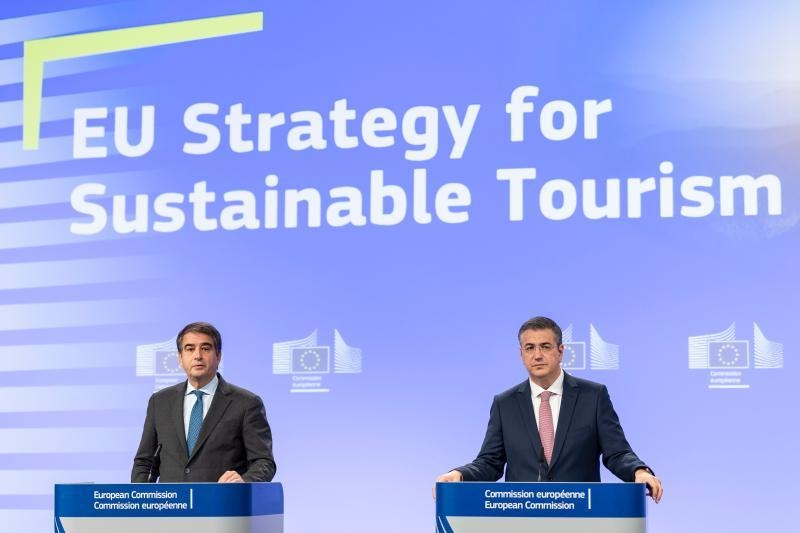



The European Commission adopted its first EU Sustainable Tourism Strategy on 4 November 2026, setting out a common approach to strengthening tourism businesses, managing pressure on destinations and ensuring that the benefits of travel reach more communities throughout the year.
The new strategy brings together initiatives covering skills, digitalisation, investment, connectivity and crisis preparedness. Its central ambition is to maintain Europe’s position as the world’s leading tourism destination while giving greater weight to the value tourism creates for residents, workers and businesses.
The economic stakes are substantial. According to the Commission, tourism contributes around 10% of the EU’s gross value added, supports more than 20 million jobs and encompasses five million businesses, 99% of them small and medium-sized enterprises. Yet the sector faces overlapping pressures, from labour shortages and climate change to geopolitical instability and uneven visitor flows.
“Tourism is one of Europe’s greatest strategic economic assets,” said Apostolos Tzitzikostas, Commissioner for Sustainable Transport and Tourism. With the strategy, he said, the Commission is giving the sector the recognition it deserves on the EU policy agenda and bringing businesses, destinations and public authorities around a common vision.
From a shared ambition to a European framework
The much-awaited strategy arrives after its presentation was postponed several times throughout 2026. Initially expected in the spring, its adoption on 4 November marks the culmination of a lengthy period of consultation and political preparation.
At a European Parliament conference in December 2025, Tzitzikostas outlined the ambition for a common European tourism strategy, identifying Europe’s global competitiveness, benefits for local communities and investment in innovation as core priorities.
Those themes now form part of a broader framework organised around three main pillars: competitiveness, sustainability and resilience, and Europe’s international positioning. Investment, governance and transport connectivity support the approach across all three.
🇪🇺🧳 Today marks an important milestone for European tourism. For the first time, Europe is putting forward a unified EU Strategy for Sustainable Tourism, recognising tourism as a strategic pillar of our economy and placing it firmly at the heart of the EU policy agenda. It is a step towards giving the sector the recognition, support and strategic direction it deserves. Tourism drives growth, creates millions of jobs and supports businesses and communities across Europe, with SMEs at the heart of its strength and competitiveness. With this strategy, we are setting a shared vision for a more competitive, sustainable and resilient European tourism sector, one that creates opportunities, empowers local communities and ensures that the benefits of tourism are shared by citizens across Europe. #EUTourism 👉https://t.co/V59oITMRmo
— Apostolos Tzitzikostas (@tzitzikostas) November 4, 2026
The strategy builds on existing work, including the Transition Pathway for Tourism and the European Agenda for Tourism 2030. Its adoption establishes a shared direction, while the academies, networks and management tools it proposes will require further implementation.
Tourism remains primarily the responsibility of national, regional and local authorities. The Commission’s questions and answers clarify that the strategy does not harmonise national laws or frameworks. Instead, it seeks to improve coordination where cooperation across borders can deliver practical benefits.
Measuring value beyond visitor numbers
One of the strategy’s most consequential elements is its emphasis on balanced tourism. Presenting the initiative, Tzitzikostas said that just 13% of European regions account for half of all nights spent in Europe, illustrating how unevenly demand is distributed.
For destinations experiencing intense seasonal pressure, growth can bring difficult trade-offs involving infrastructure, natural resources, housing and residents’ quality of life. Elsewhere, communities with tourism potential struggle to attract visitors or sustain businesses outside a short peak season.
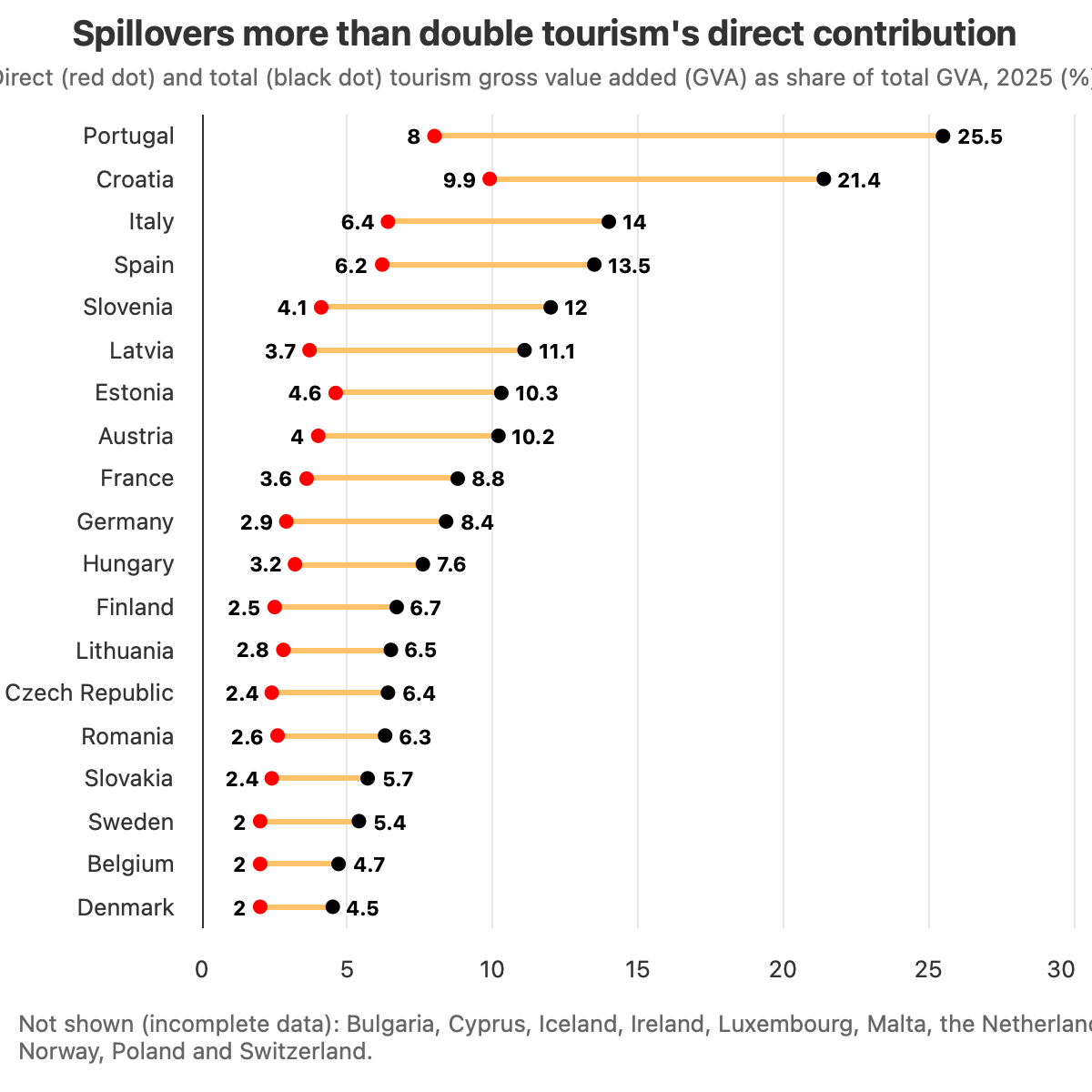
Tourism’s economic impact goes beyond what visitors spend. Our new estimates captures its wider contribution: in 2025, tourism accounted for 10.1% of GVA on average across the EU countries covered – nearly 2.5 times its direct contribution. More https://t.co/yko5YqBunx https://t.co/T7vgDtmeKV
— EU Joint Research Centre (@EU_JRC) November 4, 2026
The Commission plans an EU Model for Tourism Management, a proposed Council recommendation and a Toolbox for Balanced Tourism. These are intended to help destinations manage visitor flows, encourage travel throughout the year and spread activity towards places receiving fewer visitors.
“Our objective is not simply to attract more tourists to the same destinations,” Executive Vice-President for Cohesion and Reforms Raffaele Fitto said during the presentation. “It is to create more value and spread the benefits of tourism more widely.”
That approach connects tourism policy to territorial development. Fitto argued that stronger local businesses, better services and employment opportunities can help people build their futures in their own communities, including rural, island, coastal and mountain regions.
Skills, data and simpler rules for businesses
For tourism businesses, the strategy promises support with some of their most persistent operational challenges. An EU Tourism Academy will help develop training, attract talent and strengthen the skills needed for the sector’s clean and digital transitions.
The planned EU Tourism Observatory and Common European Tourism Data Space are intended to improve access to information for businesses, destinations and policymakers. Better use of data and artificial intelligence could support decisions on visitor demand, services and destination management.
An EU Simplification Initiative for Tourism will examine unnecessary administrative burdens, with Member States and the industry involved in the work. The Commission also envisages guidance, technical assistance and support for investment.
HOTREC, representing Europe’s hotels, restaurants, bars and cafés, welcomed the strategy’s emphasis on simplification, skills and fair digital markets. However, it stressed that implementation must reflect an industry dominated by small businesses and micro-enterprises.
“Europe’s hospitality businesses need practical support, not additional complexity,” said Marie Audren, HOTREC’s Director General. She called on Member States to prioritise tourism investment and make funding easier to access through simpler procedures, clear information and tailored assistance.
HOTREC also welcomed recognition of the need for fair commercial practices by online booking platforms and effective enforcement of the Digital Markets Act and Digital Services Act. It cautioned against duplicating established national systems and sector initiatives, particularly in accommodation classification.
Connectivity becomes part of destination management
The strategy treats transport as essential to both competitiveness and a more balanced distribution of visitors. Better links can help destinations outside established hotspots attract demand, while fragmented journeys can limit the appeal of European routes.
Tzitzikostas highlighted work on multimodal travel, cross-border car rentals and the possible interoperability of local transport ticketing systems. He also announced a renewed aviation strategy for 2027, with particular attention to the connectivity needs of islands and remote and coastal regions.
ECTAA, representing European travel agents and tour operators, welcomed the framework’s focus on balanced visitor flows, connectivity, data, modernised VAT rules and skills. Its response also highlighted the role of travel intermediaries in guiding demand towards lesser-known destinations and travel outside peak periods.
Airports, meanwhile, raised an immediate concern about the gap between the ambition for seamless journeys and travellers’ experience at external borders. ACI EUROPE Director General Olivier Jankovec welcomed recognition of the relationship between aviation and tourism, but called for urgent action on the Schengen Entry/Exit System.
“There can be no truly effective strategy for seamless travel and a competitive, welcoming tourism sector without tackling the very real disruption and hardship that the EES is currently causing to travellers,” he said.
ACI EUROPE reiterated its call for structural solutions, referring to the six-point plan presented jointly with Airlines for Europe and the International Air Transport Association.
Cycling organisations welcome recognition but seek concrete action
The European Cyclists’ Federation welcomed the inclusion of cycling tourism and EuroVelo, alongside recognition of active mobility’s contribution to sustainable tourism. It nevertheless argued that the framework needs more concrete commitments.
In its assessment of the strategy, ECF said proposals for a European economic impact study on cycling tourism and an improved digital ecosystem for promoting Europe as a cycling destination had not been included.
The federation sees cycling and active tourism as opportunities to extend the season, support regional development and distribute spending more widely. Its response underlines a broader question for implementation: how recognition in a policy framework will translate into funded projects and usable services.
Regions gain a stronger place in tourism policy
The European Regions Research and Innovation Network, ERRIN, highlighted the strategy’s recognition of regions as central actors in destination management, resilience planning and tourism governance.
For regional authorities, the proposed management model, balanced tourism toolbox and EU Tourism Alliance offer opportunities to shape implementation around local circumstances. ERRIN also identified potential support for investments in innovation, digitalisation, skills and climate resilience.
The Commission will establish the EU Tourism Alliance to bring together public authorities, industry and other stakeholders. Tzitzikostas said it would help coordinate implementation and improve coherence between existing cooperation structures.
Funding will remain a central test. According to the Commissioner’s presentation, tourism is expected to benefit from an estimated €18 billion in EU support across the 2021–2027 programming period. This represents support through existing programmes rather than a newly announced standalone tourism fund.
Future investment will depend partly on the next EU budget and the design of national and regional priorities. For businesses and destinations, the practical challenge will be turning a range of available instruments into accessible support.
Promoting Europe while preparing for future shocks
International outreach remains another major component. Through Destination Europe, the Commission wants a more coherent presentation of Europe’s tourism offering that complements national and regional identities and gives greater visibility to lesser-known places.
Tzitzikostas announced plans to deepen tourism dialogues with partners including Japan, India and Gulf countries. He also said a new cooperation framework with UN Tourism would be signed by the end of 2026 to advance competitiveness, sustainability and resilience.
The new EU Sustainable Tourism Strategy brings measures for coastal communities and islands. A #EUOceanPact deliverable, it aims to: 🏝️ Improve connectivity ⛴️Launch a dialogue on cruise tourism 🌿Support balanced tourism More: https://t.co/pEzZhj0KLW #DestinationEurope https://t.co/EkxLBSEZCe
— EU Maritime & Fish (@EU_MARE) November 4, 2026
New European Capitals of Tourism Awards will recognise destinations developing sustainable, balanced and innovative approaches. Alongside promotion, an EU Tourism Crisis Coordination Network is intended to strengthen preparedness for disruptions affecting destinations and businesses.
The industry’s early responses show broad support for a common European direction, accompanied by clear expectations about delivery. Hospitality businesses want simpler access to investment, airports want functioning borders, cycling organisations want concrete measures and regions want tools they can adapt locally.
The strategy gives these demands a shared policy framework. Its impact will depend on whether that framework produces better conditions for workers and businesses, more manageable visitor flows and lasting benefits for the communities that welcome travellers.