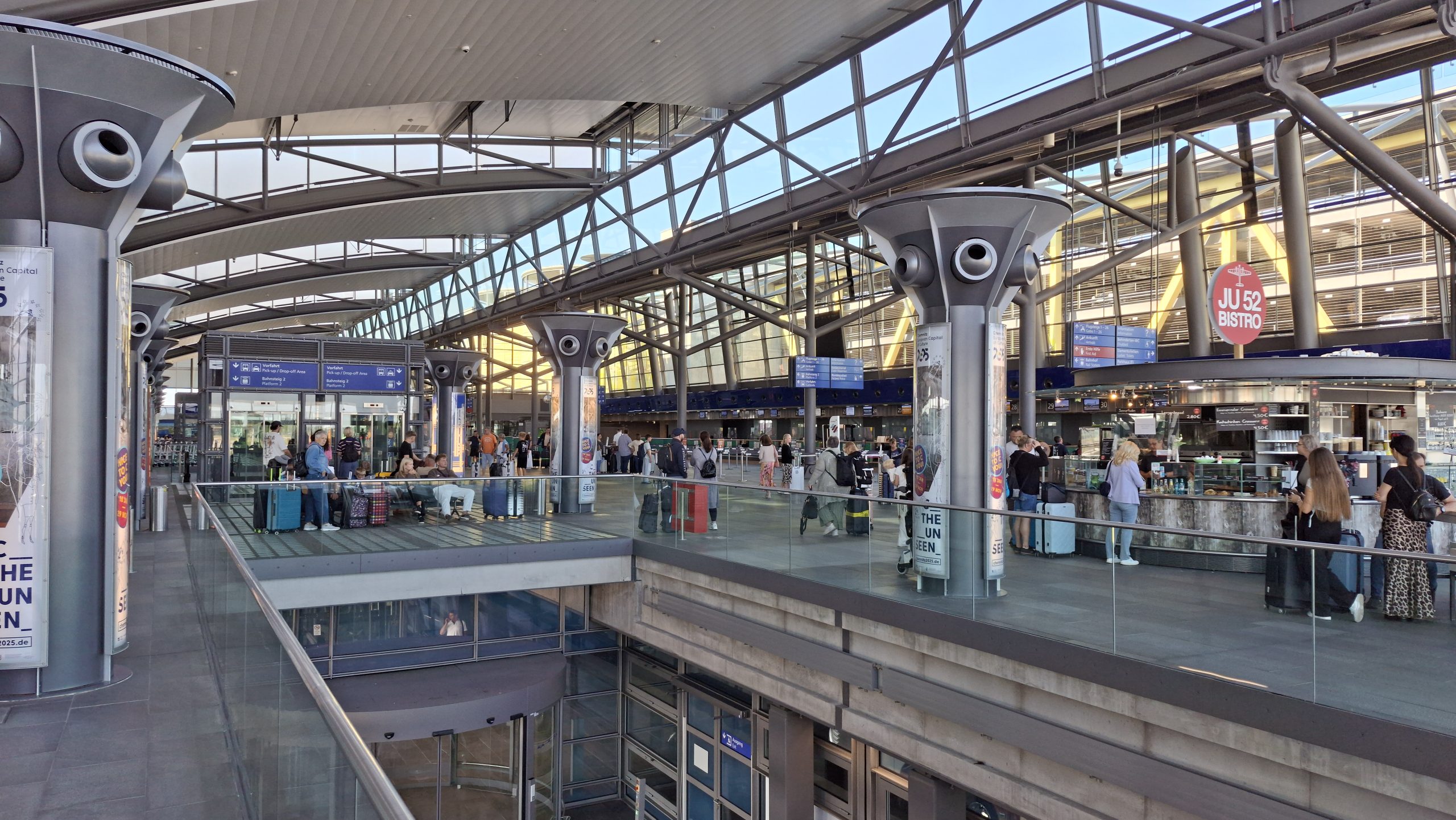



Concerns are mounting over the protection of European aviation infrastructure and other critical installations, after another incursion into Leipzig/Halle Airport, Germany, where a number of Russian aircraft have been grounded since the start of the war in Ukraine in 2022.
The incident involved a perimeter fence breach overnight on 17 October 2026, prompting a temporary suspension of operations in the northern section of the strategic east German cargo hub. An airport spokesperson said air traffic operations had been unaffected, and any disruption is reported to have been minimal, with, for example, an Amazon cargo plane forced to use the southern runway instead of the north.
Other reassurances were also issued. After a search by federal police and regional officers from Saxony state officers, authorities later said: “It is highly likely that a vehicle drove through the fence. However, a search of the airport grounds found neither a vehicle nor any unauthorised individuals.” Later, other outlets reported the incident had been caused by a learner driver.
🚨 BREAKING: Unknown individuals ram fence near Russian cargo planes at Leipzig airport According to Bild, the aircraft in question are three cargo planes that have been banned from taking off since the war began. Reuters’ report makes no mention of Russian planes, but it does confirm a large-scale police operation. Investigators believe a vehicle likely broke through the fence. Police described it as a “security-related incident.” Leipzig/Halle airport closed its northern runway and suspended flights on the northern side of the airfield. On August 4, a high-profile incident occurred at the same airport: a drone equipped with explosives was found near Ukrainian cargo planes. The German government blamed Russia for the alleged sabotage attempt.
— NEXTA (@nexta_tv) October 18, 2026
Nonetheless, the security breach follows an attempted drone attack on a Ukrainian cargo aircraft at the same airport on 4 August this year, which saw the huge freight carrier, usually deployed for military assistance to Ukraine, attacked while it was parked, by three “explosive-packed drones” that were “piloted by Russian military-intelligence assets,” according to German officials. The attack in that instance was thwarted due to a combination of failed detonation and poor targeting, but the potential for a major incident and further deterioration of international relations appears high.
A study by the International Institute for Strategic Studies found 144 suspected drone sightings across 13 European countries between August 2024 and February 2026, with civilian airports, military, and critical infrastructure all in the crosshairs. Meanwhile, Germany’s Federal Criminal Police Office has recorded 165 suspected acts of sabotage since the beginning of 2026.
The Wall Street Journal has since alleged that intelligence reveals Russian President Vladimir Putin personally approved the intensification of hybrid attacks on European infrastructure. German Interior Minister, Alexander Dobrindt said after the August incident that the country would put into place a comprehensive protective shield to prevent similar acts of sabotage and aggression.
But, after President Trump’s lifting of oil sanctions on Russia (amid a campaign to ease fuel prices to win electoral support in the US midterms), how Europe responds as a bloc to the ongoing threat represented by Russia is now the question on many observers’ minds. The President of the European Commission, Ursula von der Leyen addressed the European Parliament on 21 October 2016, insisting that Russia could not be regarded as a trusted partner since it has already been seen to “weaponise” energy dependency. Issuing a “crystal clear” message that Europe would not lift sanctions, she called for a true European “energy union” and proposed bolstering Europe’s energy security through improved power grids, cross-border connections, and joint energy purchasing. Meanwhile, European Council President Antonio Costa promised continued financial and military backing for Ukraine, and European leaders pledged to boost the bloc’s defences and protect critical infrastructure.