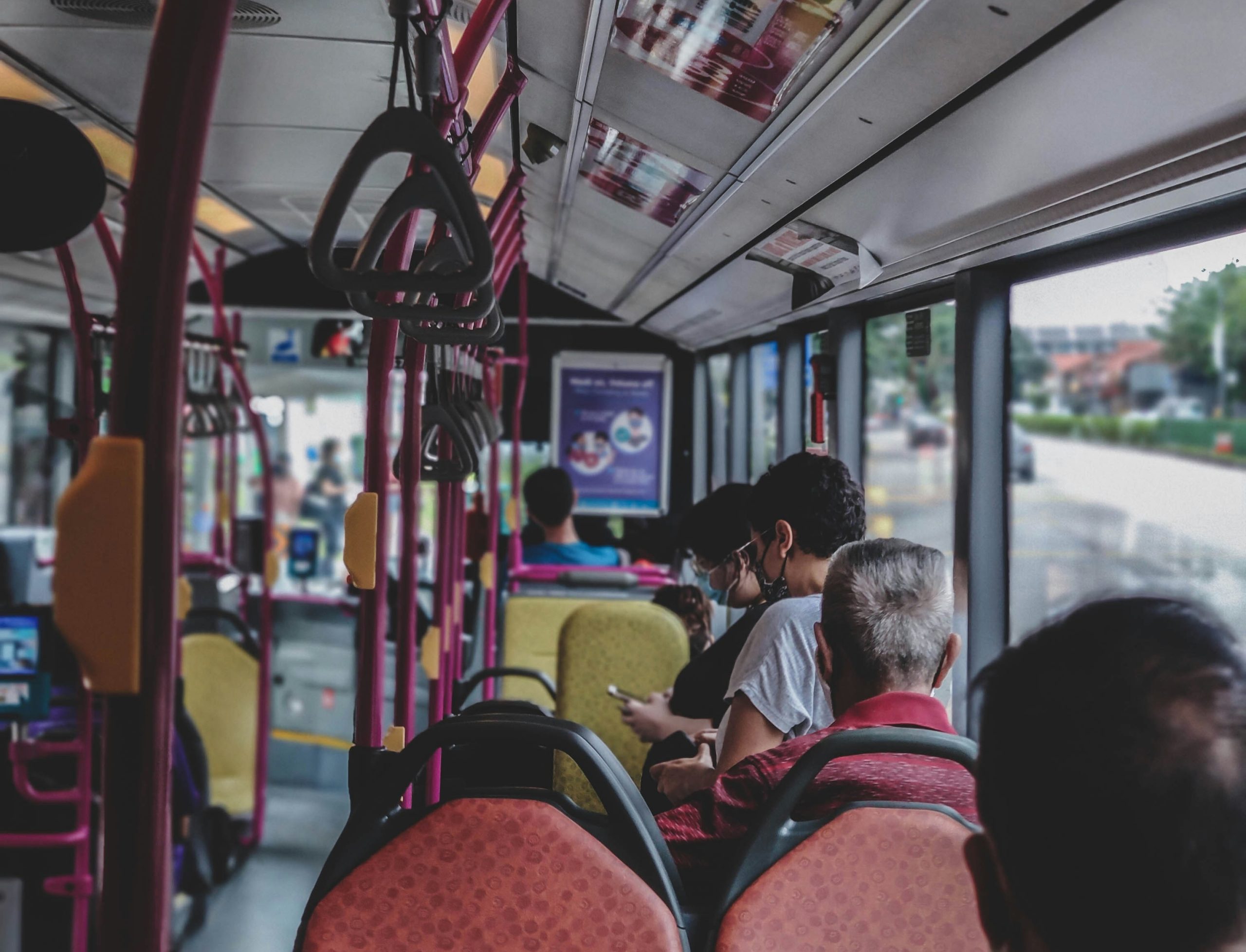


Passengers in Singapore who play loud music or videos on public buses now risk fines of up to S$500 (≈ US$390/€349), as the city-state introduces stricter rules to tackle disruptive behaviour on public transport.
The regulations, which came into effect on 24 September 2026, prohibit passengers from playing audio at a volume that disturbs others. The restrictions also cover other inconsiderate behaviour, including eating or drinking, littering and placing feet on seats.
The measures bring Singapore’s public buses in line with existing regulations on its rail network, following amendments approved by Parliament in October 2025.
Singapore’s Land Transport Authority (LTA) said the changes aim to create a “safer, more considerate, and pleasant public transport environment for all”.
“Public transport is a shared space, and every commuter has a part to play in ensuring a gracious and pleasant commuting environment,” the authority said.
More serious offences carry significantly higher penalties. Passengers who obstruct or endanger others at bus interchanges or terminals, or soil buses and related facilities, could face fines of up to S$5,000 (≈ US$3,900/€3,485).
Bus drivers will not be responsible for issuing fines. Instead, authorised employees of Singapore’s four public bus operators, including ticket inspectors and interchange staff, can report suspected violations to the LTA for investigation.
Drivers will, however, retain the authority to ask disruptive passengers to leave the bus and refer serious incidents to the police. The LTA has also instructed operators to exercise discretion and fairness, particularly when dealing with passengers with physical or mental health conditions.
The measures have received support from some commuters. Nelson Ferdinand, a 29-year-old flight attendant who regularly travels to Changi Airport by bus, told The Straits Times: “I saw the new rules and I thought, ‘Thank God’, because some people can be really inconsiderate.”
Singapore is not alone in addressing the growing problem of passengers playing audio without headphones, a practice sometimes referred to as “bare beating“.
In the UK, Transport for London launched a campaign in 2025 encouraging passengers to use headphones when listening to music or watching videos. The initiative followed a survey showing that 70% of respondents found loud music and phone conversations without headphones disruptive.
The issue has also sparked political debate, with Britain’s Liberal Democrats calling for tougher action against so-called “headphone dodgers”, including fines of up to £1,000 (≈ €1,190).
The debate has extended to air travel. In February 2026, India warned airline passengers to use headphones or risk penalties, while in March, an American Airlines passenger was removed from a flight between Miami and Tampa after reportedly refusing crew instructions to stop playing a video aloud or use headphones.
Singapore’s latest restrictions add to growing international efforts to address noise disturbances and encourage more considerate behaviour in shared transport spaces.