


Tourist access to Argentina’s Iguazu Falls has been disrupted by heavy rainfall linked to El Niño, with authorities announcing renewed restrictions for Wednesday, 14 October, following a brief reopening the previous day.
The latest measures affect the Upper and Lower circuits, whose paths and walkways lead visitors towards the waterfalls. The national park is set to remain open with a reduced range of attractions and services, according to Argentine news outlet Infobae.
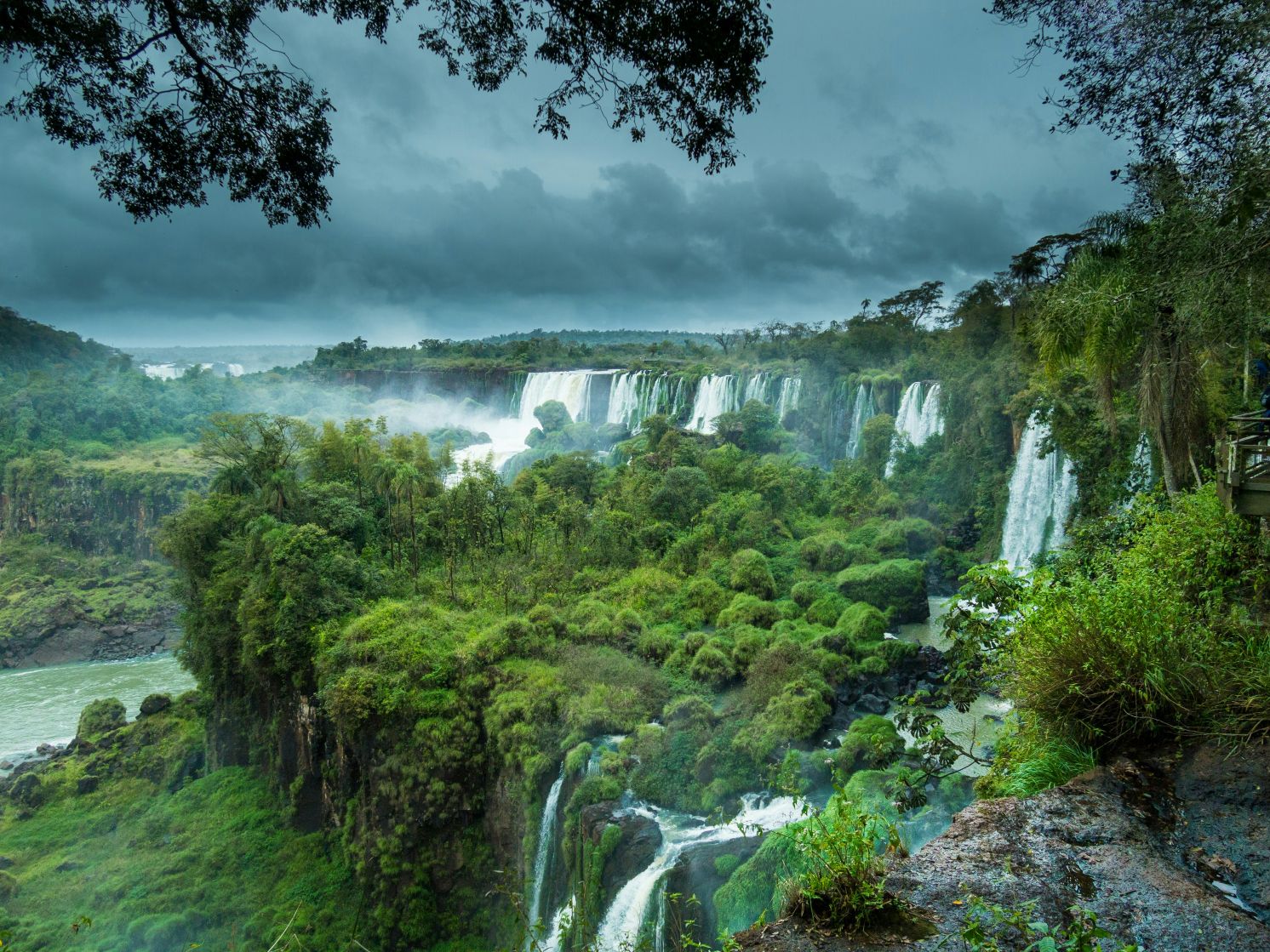
What a difference! Heavy rainfall has transformed Iguazu Falls, one of the world’s largest waterfall systems, along the Brazil-Argentina border. Water flow surged to 455,000 cubic feet per second, more than six times its historical average, prompting authorities to close several tourist walkways as a precaution.
— AccuWeather (@accuweather) October 13, 2026
Authorities initially restricted access on Monday, 12 October, after the Iguazu River’s flow exceeded 12,000 cubic metres per second, more than six times its usual rate. The national park administration and the company operating its tourist circuit introduced the closure as a precaution.
“Temporary restrictions are being imposed on the movement of people and access to public-use areas,” Iguazu National Park said in a statement reported by the Buenos Aires Times on Monday.
Park director José María Hervás explained that persistent rainfall and continuing releases of water from upstream dams were behind the decision.
A gradual reduction in the river’s flow subsequently allowed authorities to announce reopening for Tuesday, 13 October. However, the improvement proved short-lived: water volumes rose again that afternoon, prompting further restrictions for Wednesday. The latest developments underline how quickly access can change during periods of intense rainfall.
Iguazu Falls after heavy rain https://t.co/N7JlaGKnTA
— Science girl (@sciencegirl) October 13, 2026
Changing water levels disrupt access to the falls
The latest closure protocol was triggered when the river’s flow exceeded 11,000 cubic metres per second, the safety threshold for access to the affected walkways and viewing platforms. Forecasts indicated that elevated flows would persist throughout Wednesday.
The Yvyrá Retá visitor centre, Territorio Yaguareté attraction and Ecological Jungle Train were expected to remain available, alongside catering and retail facilities. Entrance prices were reported to be unchanged despite restrictions on access to the waterfalls.
For visitors, the distinction is significant: an open national park does not necessarily mean that its main waterfall circuits are accessible. Authorities have advised tourism operators and travellers to follow official channels for updates before planning their visit.
Iguazú National Park in Argentina reopened today, but the iconic Devil’s Throat walkway remains strictly closed, not surprisingly 👀👀 Heavy rains pushed the river’s flow past 12,000 m³/s, which is nearly 10x its normal volume. https://t.co/JRlgFkHzw0
— Volcaholic 🌋 (@volcaholic1) October 13, 2026
Straddling the border between Argentina and Brazil, Iguazu is one of the world’s most significant waterfall systems. UNESCO describes the falls as extending across almost 2,700 metres, surrounded by subtropical forest. Argentina’s Iguazu National Park has been on the World Heritage List since 1984.
Beyond the waterfalls themselves, the protected area supports rich biodiversity, making it both a major visitor attraction and an important conservation site. UNESCO highlights its role in protecting threatened species and the ecological connections between the Argentine and Brazilian parks.
Flooding has disrupted access before. Closures in 2023 and 2024 occurred during a previous El Niño episode that damaged walkways in the Devil’s Throat section. Authorities closed that circuit and removed walkways in August 2026 as a precaution against another major rise in water levels.
The wider region is also experiencing flooding concerns. Rising levels along the Uruguay River have forced dozens of residents to leave riverside areas in Concordia and Paso de los Libres, extending the effects of the severe weather beyond tourism.
El Niño reinforces the need for flexible travel plans
El Niño involves warming in the tropical Pacific that can alter rainfall and atmospheric circulation far beyond the ocean itself. Its effects vary between regions, increasing the likelihood of wetter conditions in some places while contributing to drought elsewhere.
As Travel Tomorrow explored in its recent article on El Niño’s implications for travel, seasonal climate outlooks indicate changing risks rather than guaranteeing conditions at an individual destination.
For tourism businesses, this means linking contingency plans to official weather alerts and explaining what happens when attractions, roads or excursions become unavailable. Alternative itineraries and clear communication can help operators respond when conditions change after a trip has begun.
For travellers, flexible bookings, additional time and backup activities can reduce disruption. Insurance policies also require attention, particularly provisions concerning weather-related cancellations, missed departures and events already known when cover is purchased.
The sequence of closure, reopening and renewed restrictions at Iguazu illustrates that challenge. Local park notices and weather warnings remain essential even after access has been restored, while individual circuits and excursions may operate under different safety restrictions.