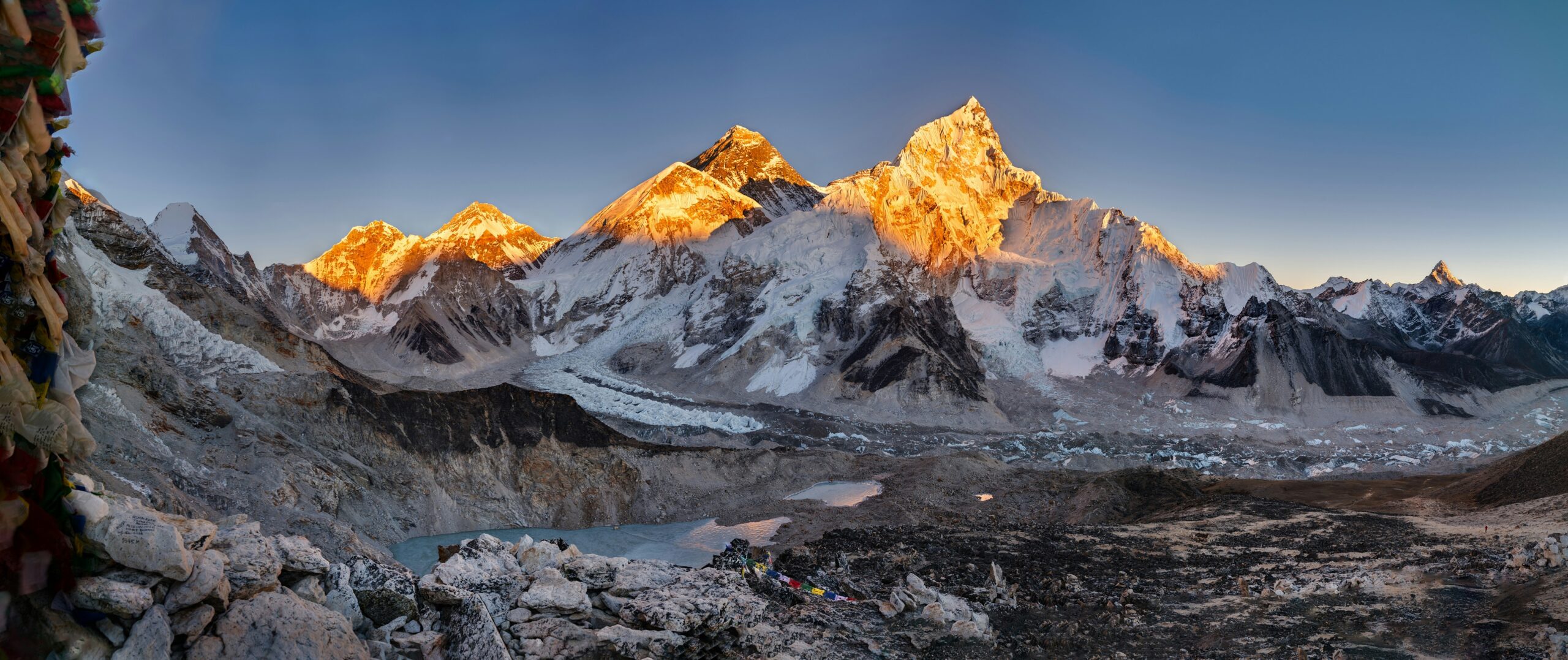



Mount Everest’s base camp is melting due to human activity and climbers who urinate on the mountain are accelerating the problem, a new study shows. The research, published in Regional Environmental Change, reveals in graphic figures the impact of Everest tourism on the very landscape that visitors come to experience.
Across every climbing season in April and May, hundreds of climbers and their guides produce over 6,000 litres of urine – liquid that causes around 154 tons of melt on the Khumbu Glacier, the study says. This repeated seasonal input concentrates the warming effect in a small, heavily used area already under pressure from rising temperatures.
This is the Khumbu Icefall on Mt Everest, one of the most dangerous sections of the standard route to the world’s highest peak. But there is another danger unfolding here. What was once a landscape locked in ice is changing before our eyes. Meltwater streams now run through parts… pic.twitter.com/BTwZIRtAib
— Everest Today (@EverestToday) September 16, 2026
In recent years, climbers have been required to carry their faeces back down the mountain after their expedition, but the same rule does not apply to urine. After being encouraged to drink plenty of water to avoid dehydration, the visitors tend to urinate onto the glacier’s surface, melting it.
Melting is not the only problem either. Urinating on the mountain pollutes water that reaches local communities. And at base camp, climbers who have paid between €26,000 and €260,000 for the privilege of summiting the world’s highest peak expect an increasingly premium offer. The camp proposes not only restauration and the respite of 1,600 heated and powered tents, but also Wi-Fi, coffee bars, and big screens—at a rate (in 2023) of 824 liquefied gas cylinders, over 5000 litres of petrol, and nearly19,000 litres of kerosene.
The result? Base camp temperatures are increasing at double the rate of the rest of the glacier, as reported by the New York Times, and three million kilograms of glacial ice and snow are lost during the spring.
Recognising Everest Base Camp as “a critical staging area for mountaineers” the study notes “a significant increase in human activity over the past few decades.” It adds: “The increasing numbers of climbers, trekkers, and support staff, particularly at the campsite area, has intensified environmental impacts on the Khumbu Glacier.”
I took this video while descending from the summit of Mt Everest (8,848.86 m) and approaching Everest Base Camp on 22 May 2026. Crossing the Khumbu Icefall has always meant navigating collapsing seracs, shifting ladders, and deep crevasses, but now another danger is rapidly… pic.twitter.com/m5ZKsM32Nc
— Poornima Shrestha (@poornimashresth) May 28, 2026
Scientists from the International Centre for Integrated Mountain Development (ICIMOD), based in the Nepali capital, warned as early as 2014 in a report that visitor-driven climate impacts could bring harsher and more frequent avalanches, floods, and landslides to the region, endangering both local communities and adventure-seekers.
Those predictions appear to be proving accurate. A high-altitude glacier collapse and flow of debris occurred on the China-Nepal border on 26 August, 2026, causing catastrophic flash floods and over 1,000 combined fatalities.