


Visitors to Amsterdam will pay more tourist tax in 2027, when the city’s tourist levy is set to increase from the current rate of 12.5% to 16% of the cost of overnight accommodation.
The Dutch capital is “already one of the world’s most expensive cities for overnight stays,” according to Dutch Brief. Combined with the VAT increase on accommodation, which recently went up from nine percent to 21%, the total tax burden on overnight guests will hit 33.5%. Cruise operators are charged €15 per passenger for day visits. Despite those relatively high rates, city councillors have voted in favour of raising the existing tax by 3.5% in 2027.
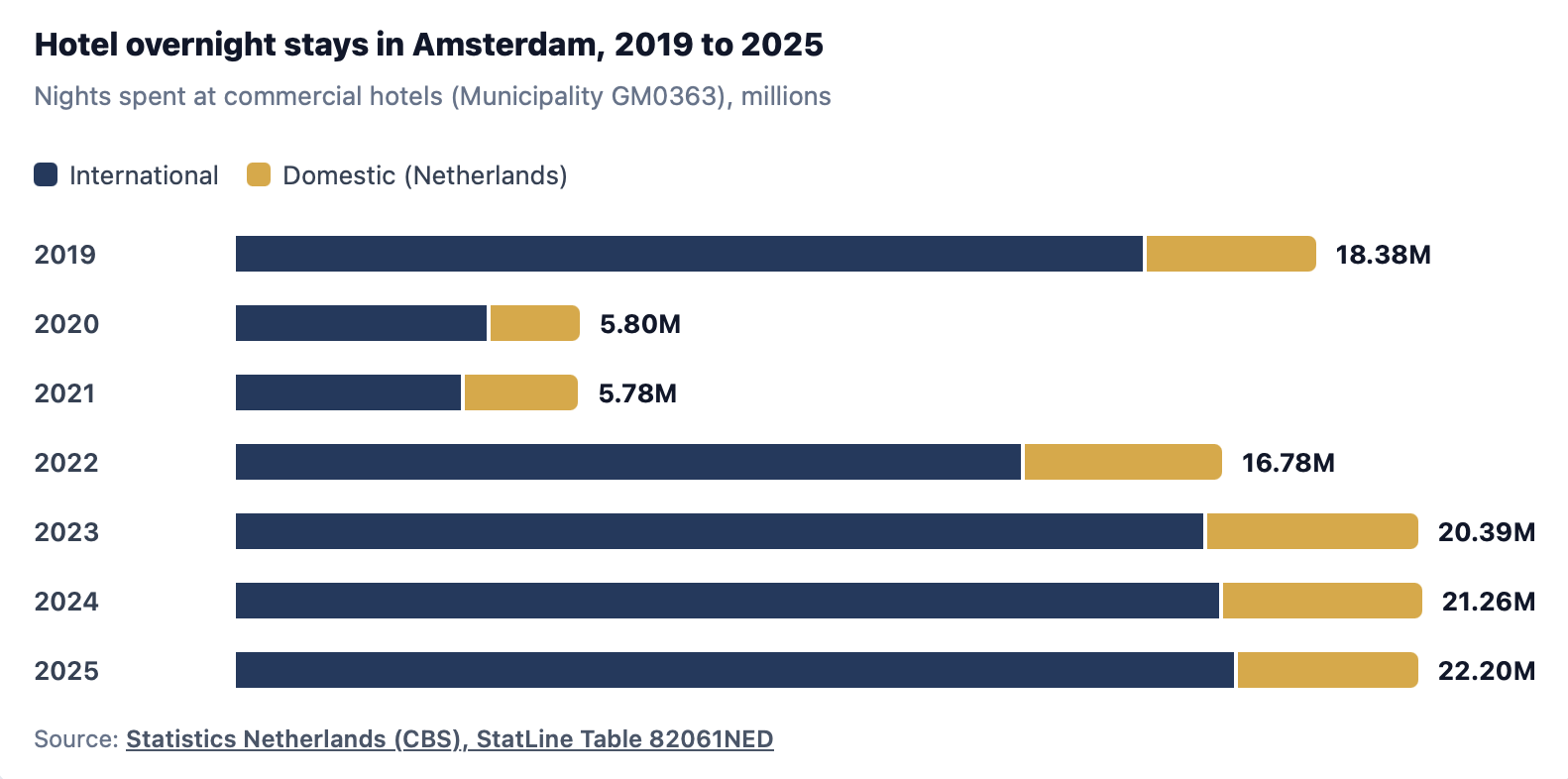
The fiscal policy is part of a 2021 bylaw commitment to try to limit overnight visitor numbers to 20 million per year—a cap brought in to alleviate the “significant pressure” that tourism is said to put “on public spaces, quality of life and municipal facilities.” Yet, it’s far from clear whether the approach is working. The 20 million figure has been breached every year since its introduction, according to official data from the City of Amsterdam Research and Statistics.
With that in mind, the tax applies in a blanket way, whether the visitor stays in a rental apartment, a bed & breakfast, a campsite, a guesthouse, a holiday home, a hostel, or a hotel. But some local sector stakeholders argue that if the city wants to reduce raw tourist numbers but protect the economy, then the focus should be on trying to increase the spend per guest. They note that the tax works perversely to disincentivise people from choosing more expensive accommodation, or from staying and spending within the city at all, since the higher the price per night, the more tax people pay.
Instead, opponents of the tax suggest the rate should be tapered, so as not to penalise consumers who book premium rooms. A group of 47 businesspeople and leaders recently signed an open letter urging the authorities to think again. Some went even further with their criticism, claiming the tax would increase the proportion of visitors who merely “hang around” and annoy residents rather than contributing to the economy.
But the council says tourists must pay into the services they use, such as security, street cleaning and infrastructure, and waste collection. By taxing visitors more, the city highlights that it is able to keep the fiscal burden on residents lower.
With the council having won the argument, for now, and with plans reported by Travel Tomorrow to raise the levy even further to 20%, anyone hoping to stay in Amsterdam and avoid the tax hike will have to hurry up and book themselves a winter season city break before the rate rise in January 2027.