

Following travel sector calls for the European Union to continue easing its new Entry / Exit System (EES), the bloc is reported to be informally allowing at least nine jurisdictions to further delay the full rollout of border controls.
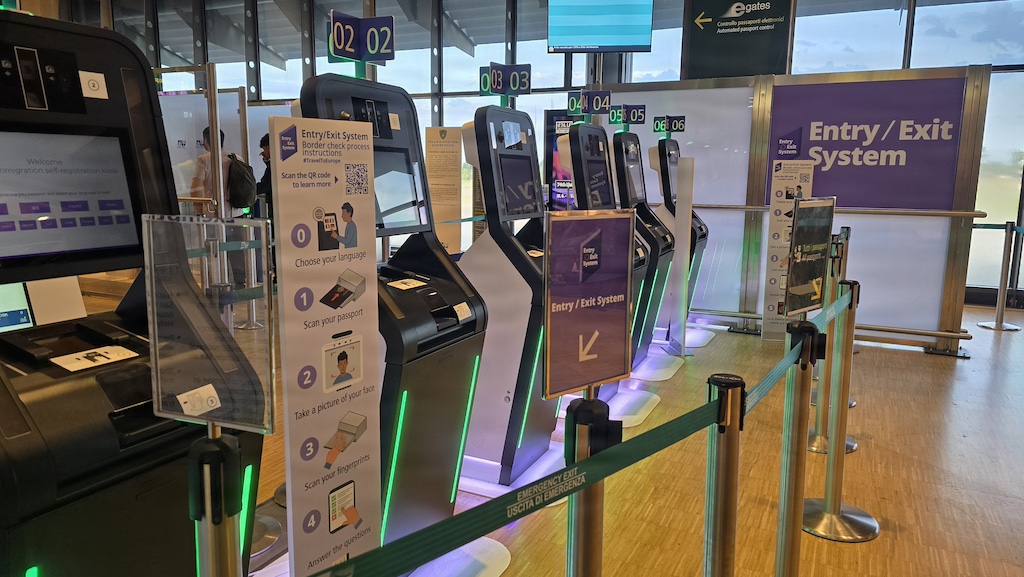
Under the new security scheme, which was supposed to be fully phased in by April 2026, non-EU visitors at the external borders of the Schengen Area must register biometric information on their first arrival—information which is then stored digitally for three years or until the relevant passport expires.
Widespread disruption at travel hubs ensued, as travellers attempted to register at kiosks that were not fully functional and staffing levels at some airports were insufficient to process the summer’s visitor numbers. To ease the chaos, the EU introduced flexibility in applying the new rules with an official grace period that ended on 6 September 2026.
Since then, however, at least nine countries, including France, Germany, Italy, and Switzerland, are still not consistently enforcing the new EES and have been given unofficial permission to continue bending the rules to promote operational efficiency into the autumn season, The Times reports.
The list of countries where EES is still not being properly enforced with the apparent blessing of EU officials consists of Belgium, France, Germany, Greece, Italy, Malta, the Netherlands, Portugal, and Switzerland.
Travel industry stakeholders, from tour operators to airlines, have repeatedly urged the European Commission to reconsider the way the new EES border checks are being implemented, pointing to a poor travel experience for visitors and reputational harm to the region.
Europe’s largest airline, Ryanair, has slammed the way the system has been delivered, saying: “The EU’s handling of EES has been a shambles from start to finish. Airlines, airports, and border authorities repeatedly warned Brussels that the rollout was not ready, that it would increase processing times and that it would create excessive queues for passengers.”
The International Air Transport Association (IATA) has also warned of the continued risk of that congestion and disruption at European borders, with Thomas Reynaert, Senior Vice President, External Affairs at IATA, declaring on 3 September that an ongoing suspension of the measures “is absolutely necessary until the end of the winter season.”
Going further, Matthew Pack, CEO of Holiday Extras, said the border system had “failed” and argued “The honest response is to … roll it back, and rebuild it properly.”
Whether the appetite and funds are there to do so, is another matter, especially when the system has entailed a financial outlay from the bloc’s neighbours. The UK government has provided £10.5 million for infrastructure changes at the Port of Dover, Eurotunnel, and Eurostar, as well as £20 million to boost capacity, amounting to over €35 million in total. A UK spokesperson has, however, said the government is committed “to work closely with our EU, operational and local partners to minimise delays for holidaymakers, hauliers and local communities.”