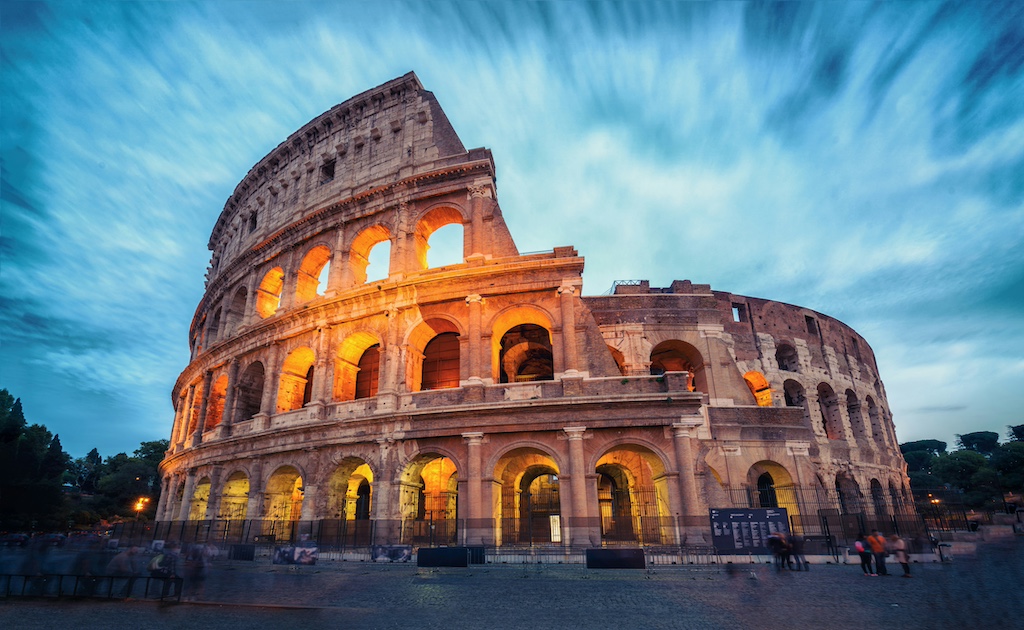


Rome has declared the area around the Colosseum a security “red zone” following a rise in violent incidents, theft and drug dealing around one of the Italian capital’s most visited landmarks. The measure, introduced in late August, will remain in place until 24 December 2026.
The decision follows a particularly serious incident in July, when a group of around 50 young people attacked police officers, reportedly using fireworks and leaving several officers injured.
Authorities have linked the recent problems around the Colosseum to what they describe as “predatory crimes and drug dealing”, prompting the deployment of additional security forces to protect both visitors and residents.
Under the new measures, police presence around the landmark will be reinforced around the clock, alongside military personnel already deployed at some of Rome’s busiest tourist sites. Officers will also have greater powers to intervene against suspected troublemakers and order individuals to leave the protected area.
New metro station linked to rise in incidents
Rome Prefect Lamberto Giannini, who is responsible for security in the capital, has pointed to the opening of the new Colosseum metro station as one of the factors behind the increase in incidents.
The station opened in December 2025 as part of the €7 billion expansion of Rome’s underground network and provides direct access to the historic centre. It also includes a multi-level underground museum displaying archaeological finds uncovered during construction.
According to Giannini, however, the improved transport connection has also made it easier for groups of marginalised young people to reach the area and target tourists and residents.
In the ordinance establishing the red zone, Giannini said existing security measures had proved insufficient to deal with what authorities described as a “serious public emergency” presenting a “risk of serious damage” to sensitive areas of the city.
The designation gives security officers additional powers to arrest suspected offenders or order certain individuals to leave the area.
Tourist hotspots under increased surveillance
The Colosseum is not the only part of Rome where security has been strengthened. Additional measures have also been introduced around Termini railway station, St Peter’s Basilica and the Basilica of Santa Maria Maggiore.
The latter has experienced an increase in visitors since Pope Francis was laid to rest there in April 2025.
Rome already deploys military personnel around major tourist attractions, with armed soldiers, barriers and checkpoints a familiar sight at some of the capital’s busiest landmarks. However, authorities acknowledge that the existing security presence has not been sufficient to deter all forms of crime.
An American tourist visiting the Colosseum told CNN that she had witnessed a woman being pickpocketed despite the visible security presence. She also said her hotel had advised her not to visit the area at night.
The new measures come after substantial investment in Rome’s transport and public infrastructure and amid continued high visitor numbers in the Italian capital.
Authorities are expected to assess the effectiveness of the red zone in September, including whether the additional police presence and expanded intervention powers have helped reduce crime around the Colosseum.