

Ryanair is cutting its winter flight schedule and reducing its annual passenger target by two million as soaring jet fuel prices put pressure on the airline industry, warning that European air fares could rise significantly in 2027 if oil prices remain high.
Europe’s largest airline by passenger numbers has reduced its traffic forecast for the financial year ending 31 March 2027 from 216 million to 214 million passengers. The decision is intended to limit Ryanair’s exposure to expensive unhedged fuel during the winter season, when airlines traditionally face weaker demand and profitability.
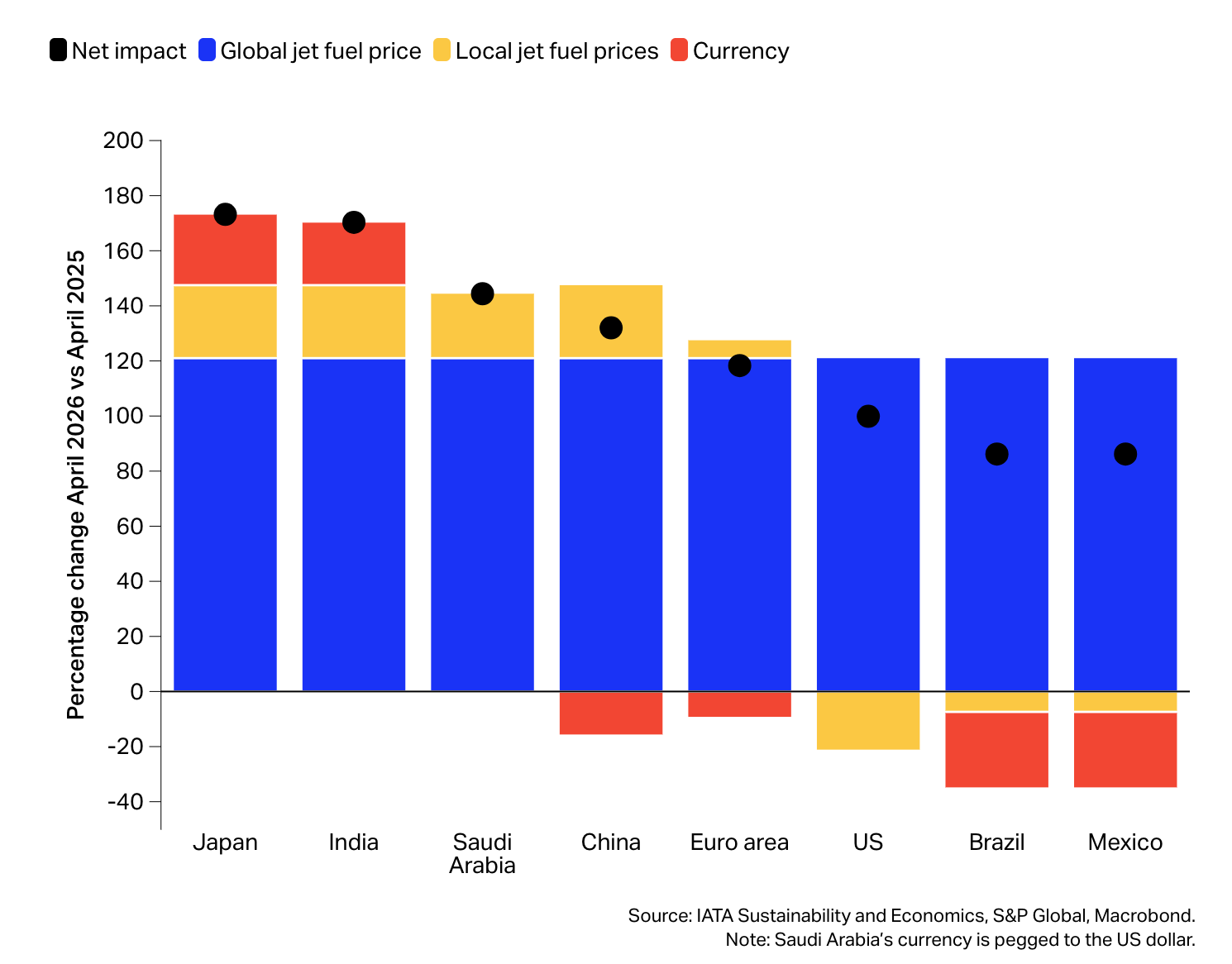
Jet fuel has recently been trading at around $140 (€120) per barrel, approximately double the price at which Ryanair secured most of its fuel requirements for the current financial year.
The airline has hedged 80% of its fuel at $67 per barrel, providing significant protection from current market prices. Hedging allows carriers to agree fuel prices in advance, protecting them from sudden fluctuations in energy markets.
However, Ryanair said it was “prudent to strategically limit exposure to unhedged aircraft fuel during the unprofitable winter season”, which runs from November to March.
Two million fewer passengers
As a result, Ryanair expects its passenger numbers during the winter to remain broadly unchanged compared with the previous year rather than continuing the growth recorded during the summer.
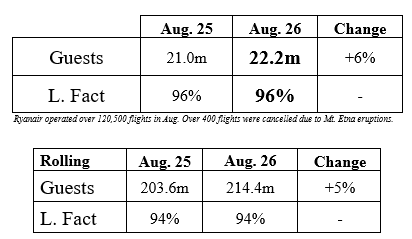
The airline expects to carry around 145 million passengers between April and October, up more than 5% from approximately 138 million during the same period last year. In August alone, Ryanair carried 22.2 million passengers, an increase of 6% year-on-year.
The reduction in winter capacity is expected to cut seasonal losses by between €70 million and €100 million.
Ryanair nevertheless expects to remain profitable for the full financial year, although profits are likely to fall below the record levels achieved during the previous 12 months.
European air fares could rise in 2027
The airline has also warned that persistently high energy prices could have wider consequences for European aviation next year.
“If high oil prices continue through to summer 2027, Ryanair believes short-haul air fares in Europe will increase materially to reflect higher oil prices, as some less well-hedged competitors will struggle to maintain capacity or even survive this coming winter season,” the carrier said.
The warning echoes concerns raised earlier this year by the wider aviation industry. IATA Director General Willie Walsh had already warned that higher fuel costs would inevitably feed through to ticket prices as geopolitical tensions disrupted energy markets and increased costs for airlines.
The pressure on Ryanair itself has also been building for months. In April, the low-cost carrier revealed additional fuel costs of $50 million (€42.6 million) in a single month, with CEO Michael O’Leary warning about the consequences of persistently elevated fuel prices for less financially resilient European airlines.
Fuel represents one of the largest operating expenses for airlines, but the impact of rising prices varies significantly depending on how much fuel each carrier has hedged and at what price.
Ryanair’s relatively high level of hedging gives it substantial protection against current market prices, but its decision to reduce capacity illustrates the scale of the pressure even for carriers that secured much of their fuel in advance.
If elevated prices persist into 2027, airlines will progressively have to purchase a larger proportion of their fuel at higher rates as existing hedging contracts expire. That could force carriers to reduce capacity, increase fares or find savings elsewhere.
Network cuts
Ryanair has already made adjustments to parts of its network amid wider geopolitical disruption. The carrier suspended 17 routes to Amman, Jordan, during the summer. When services return, the airline is expected to initially connect the Jordanian capital with only four airports: Budapest, Bucharest, Madrid and Vienna.
For passengers, the immediate effect of Ryanair’s winter reductions will depend on which routes and frequencies are removed. But the airline’s broader warning is clear: if fuel prices remain close to current levels, European travellers could face fewer flights and higher fares in 2027.