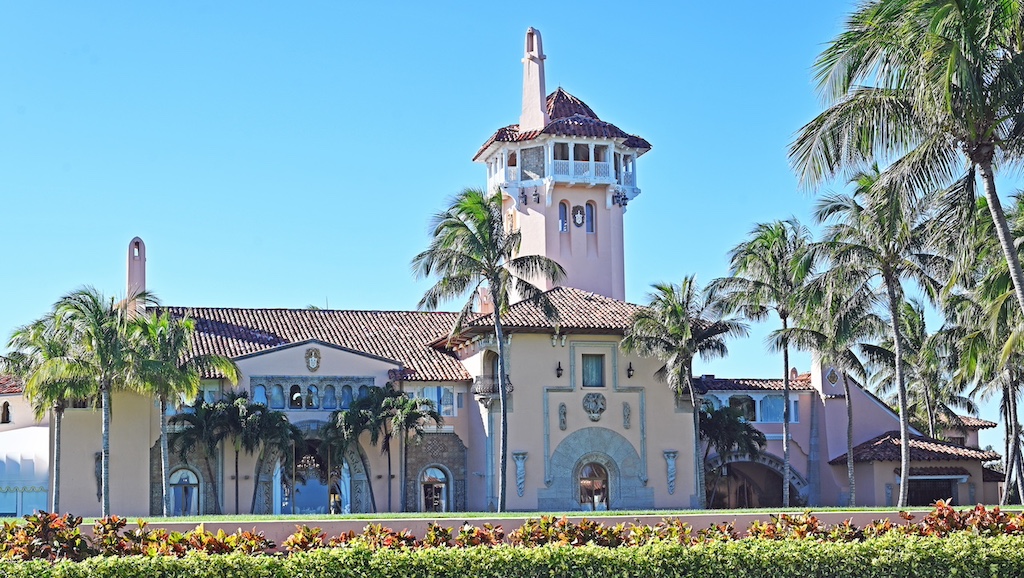


The US Federal Aviation Administration (FAA) has proposed permanent special air traffic rules around President Donald Trump’s Mar-a-Lago residence in Palm Beach, Florida. The plan follows a request from the US Secret Service, which cited security concerns involving unauthorised aircraft and unmanned aircraft systems, better known as drones. The proposed restricted zone would cover an area within one nautical mile of the property and extend up to 2,000 feet in altitude. Mar-a-Lago sits less than five miles from President Donald J. Trump International Airport, formerly known as Palm Beach International Airport, and directly beneath part of its flight path. The FAA says the measures are intended to protect the president while allowing the nearby airport to continue operating.
The proposal would not close the airport or prevent scheduled commercial flights from arriving and departing. Instead, airlines would be able to use the airspace if they comply with specific procedures set by the FAA. This is important because a conventional presidential no-fly zone would severely limit routine operations at the airport. The FAA said such a restriction would make its main runway effectively unusable. The special rules are therefore designed as a compromise between security requirements and the need to maintain air links to Palm Beach.
Aircraft using the restricted airspace would need to file a flight plan before departure. A flight plan provides air traffic control with details including an aircraft’s intended route, its capabilities and the purpose of the flight. Pilots would also need authorisation from air traffic control and would have to maintain two-way radio contact while in the area. In addition, aircraft must use a discrete transponder code assigned by air traffic control, allowing controllers to identify and track them on radar. These requirements would apply to commercial flights and other authorised aircraft entering the designated zone.
Emergency, lifesaving and law-enforcement flights would also be able to access the airspace when necessary. Their operators would need to coordinate with the airport’s control tower and remain in communication with air traffic control. The focus of the proposal is therefore not on stopping all aircraft, but on preventing unidentified or unauthorised flights from approaching a protected location. The Secret Service said the measures would improve its ability to manage the “persistent risks posed by unauthorized aircraft and unmanned aircraft systems”. Drones have become a growing security concern because they can be operated from a distance and can be difficult to detect or identify quickly.
Temporary flight restrictions have already been in place around Mar-a-Lago since October 2025. Those interim measures are due to expire in October 2026, but the FAA’s new proposal would create a permanent framework instead. The agency routinely introduces wider flight restrictions when a US president or vice president travels outside Washington, DC. However, Mar-a-Lago’s regular use by Trump means the FAA and Secret Service are seeking rules that can remain in place beyond individual visits. Similar restrictions have previously been introduced around presidential and vice-presidential properties, though the FAA says the airport’s location makes the Palm Beach case particularly complex.
The airport itself was renamed President Donald J. Trump International Airport in July 2026. It is one of South Florida’s major airports, behind Miami International Airport and Fort Lauderdale–Hollywood International Airport in daily passenger traffic. Its proximity to Mar-a-Lago means that aircraft approaching or leaving the airport may need to pass through the proposed restricted area. For travellers using commercial airlines, the FAA’s proposal should mean flights can continue as normal, provided that operators follow the required procedures. The plan remains a proposal for now, meaning the FAA has not yet formally adopted the permanent rules.