


Travel consumers are increasingly powering their searches with AI tools, particularly Gen Z, of whom 48% have used TikTok for travel inspiration. Against that backdrop, hospitality firms are racing to embed AI into their trip planning offers.
Both Wyndham Hotels & Resorts and Choice Hotels International launched new AI-powered tools this week, according to company press releases. Wyndham brought online a ChatGPT app, which it claims is the first native AI app in the hotel industry. It aims to make filtering searches by map and by amenity among its 8,400 hotels “more intuitive” and “conversational,” Wyndham said.
In a statement, Scott Strickland, Chief Commercial Officer, Wyndham Hotels & Resorts, said: “Conversational AI is reshaping how travelers discover and book. With our native ChatGPT app launch, Wyndham is helping our hotels stay at the forefront—building on years of AI investment to directly connect with guests in new ways while ensuring the experience is both intuitive and highly visual.”
The tool is not Wyndham’s first rodeo with large language models (LLM). Since 2018, it has poured $450 million into technology solutions, and in 2025, it was the first major hospitality firm to integrate Anthropic’s Claude. Future plans include Google’s AI Mode. Michael Mahar, senior vice president and head of commercial technology at Wyndham, said in a statement. “Whether it’s helping reduce operating costs, drive incremental revenue or expand distribution through new platforms like ChatGPT, our goal is to enable franchisees to compete more effectively while delivering a better experience for guests.”
That’s a goal shared by Choice Hotels, which last month deployed AI power across its discovery and booking tools, but has also incorporated AI into franchise management, with a focus on driving more revenue and improving efficiency, a press release said.
Choice’s AI and digital tools now range from CHARLIE, an AI-powered virtual “teammate” that helps staff with core operating platforms; Choice Hotels Business Direct, a small- and medium-sized enterprise self-service platform; EasyBid, an AI-powered tendering tool; and RAISE, which helps accommodation owners manage pricing, rates, and stock.
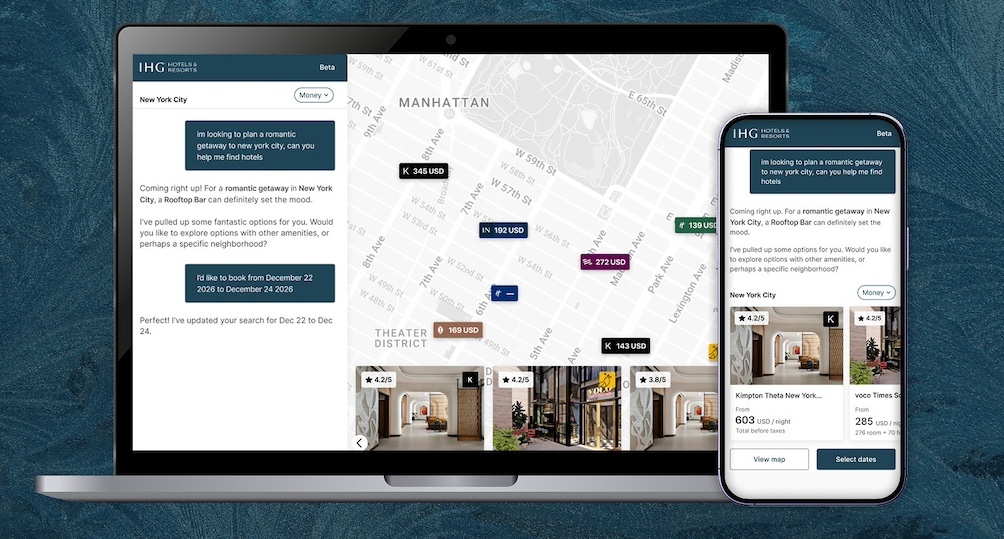
Meanwhile, IHG Hotels & Resorts has launched a beta version of a conversational AI search tool to help narrow down tailored, review-driven hotel recommendations from searches among its 7,000-strong property portfolio, and to facilitate promotional activity by owners. The hospitality group is also aiming to acquire and retain direct-booking customers with a loyalty scheme, as well as optimise commercial opportunities and minimise corporate costs, CEO Elie Maalouf said in earnings call earlier this year.
Another AI tool entering the sector that promotes direct bookings and promises loyalty points is Marriott’s “Ask Bonvoy” – a “natural language search experience” which aims “to make travel planning easier, more intuitive, and more personal,” Marriott CEO Anthony Capuano said. Guests will be able to converse with AI over their travel requirements and preferences, and when their choice is made, will be passed straight “to Marriott’s existing booking capabilities to complete reservations,” a press release says.
In addition, in spring 2025, Hilton debuted a beta version of its AI Planner, a similar generative AI concierge that uses conversational intelligence to assist guests in discovering hotels across the company’s global portfolio, comparing amenities and crafting travel plans.
The plethora of AI travel planning tools has been released amid new Amadeus’ “Travel Dreams 2026” data showing 69% of travellers are satisfied enough with AI-generated summaries to base their travel decisions on without further research. It’s a phenomenon that means destinations are now competing for customers not only via real estate, but via the digital information space.