


Climate change is driving unprecedented European ocean temperatures, with severe impacts on marine life, new research has found, as the phenomenon pushes marine species into cooler waters, disrupts food webs, and increases the risk of water-borne disease.
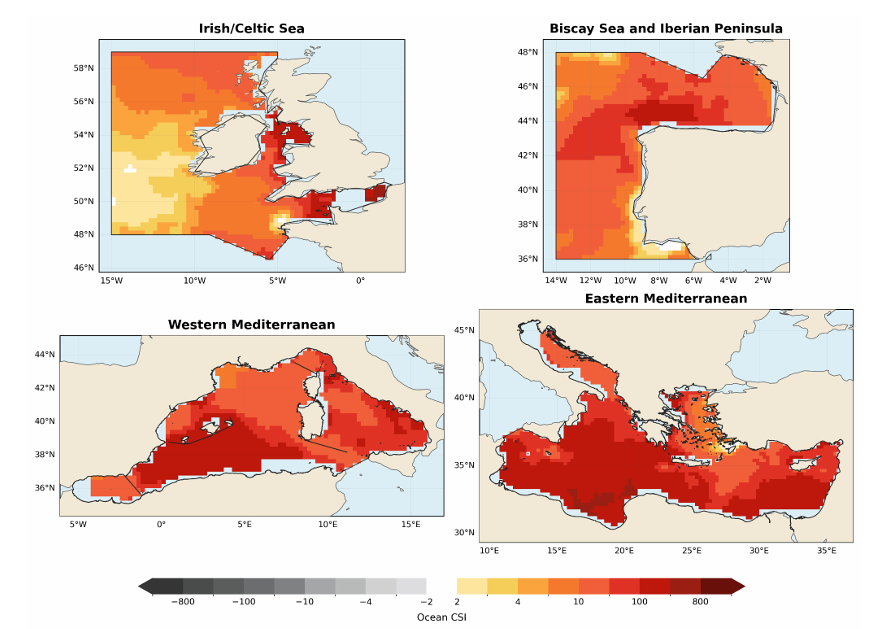
The findings from World Weather Attribution, involving researchers from Ireland, Sweden, Switzerland, the United Kingdom, and the United States, show that carbon pollution has supercharged sea surface temperatures, raising them by about 2C in the Mediterranean, 1.4C in the Bay of Biscay and Iberian Peninsula, and 1.3C around Ireland and the Channel.
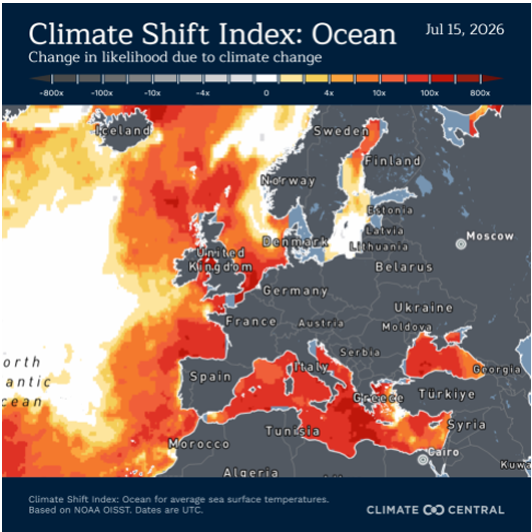
The marine heatwaves are being observed earlier in the year, more frequently, and at higher intensities than would have been usual in pre-industrial times, with temperatures occurring in the Celtic region that previously would have been considered a 1-in-100-year event. In the Bay of Biscay and the Iberian Peninsula, the western Mediterranean and eastern Mediterranean, the sea surface highs “would have been virtually impossible in a pre-industrial climate,” the researchers said, noting that the increases in the western and eastern Mediterranean“substantially exceed the level of global warming.”
The high sea surface temperatures have occurred outside the summer months too. The shoulder months, especially in spring, show warming much greater than the global average, the study says.
Co-author Claire Bergin, a climate analyst at Ireland’s Maynooth University, said: “While warmer waters for swimming may sound appealing to beachgoers in cooler countries like mine, the impact on marine life beneath the surface is more serious.” She went on to warn of “the potential to completely reshape ecosystems that coastal communities rely on for food and income, and drive damaging extreme weather on land too.”
As marine species migrate and adapt their diets to the changing conditions, “shifts in marine species distributions may affect the range of fish and crustaceans available for human consumption and aquaculture,” the report warns, highlighting examples such as dolphins reportedly feeding on jellyfish due to changes in the availability of their usual prey.
Warmer seas not only bring a risk of different diseases and parasites, but in turn cause warmer air and higher humidity for coastal regions increasing the risk of heat stress in human populations, and the chance of extreme rainfall events later in the season.
The report calls for a rapid transition away from the climate supercharging fossil fuels which, the researchers say, “is essential to save crucial ecosystems, fisheries, food production and tourism along the European coasts.” They also suggest adaptation measures to reduce pressure on marine ecosystems, protect habitats, evolve fisheries and aquaculture management, and improve monitoring and early-warning systems.