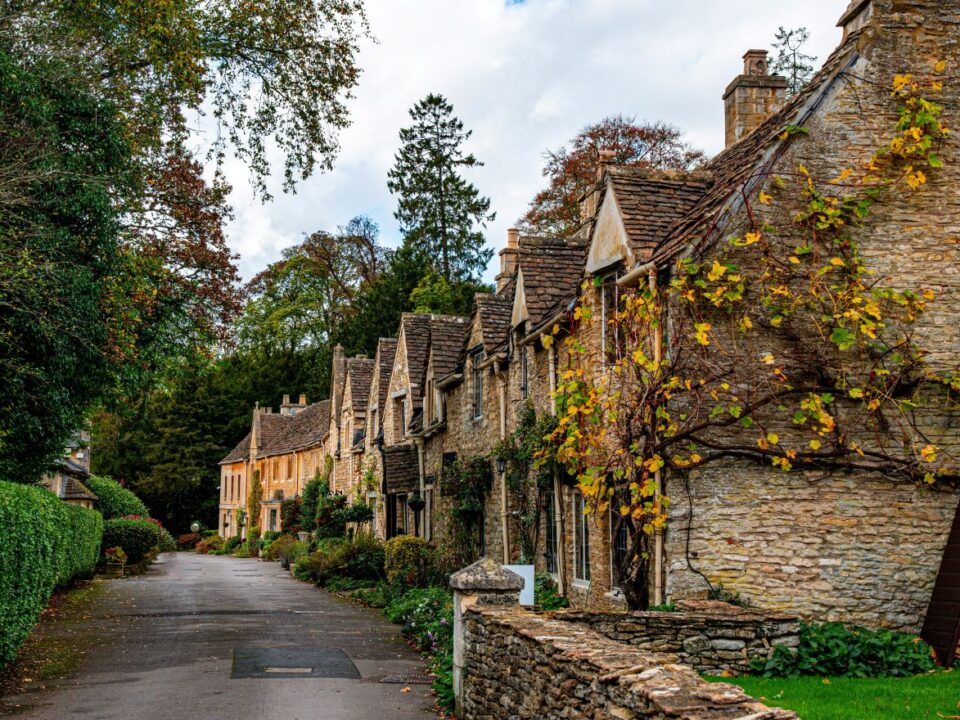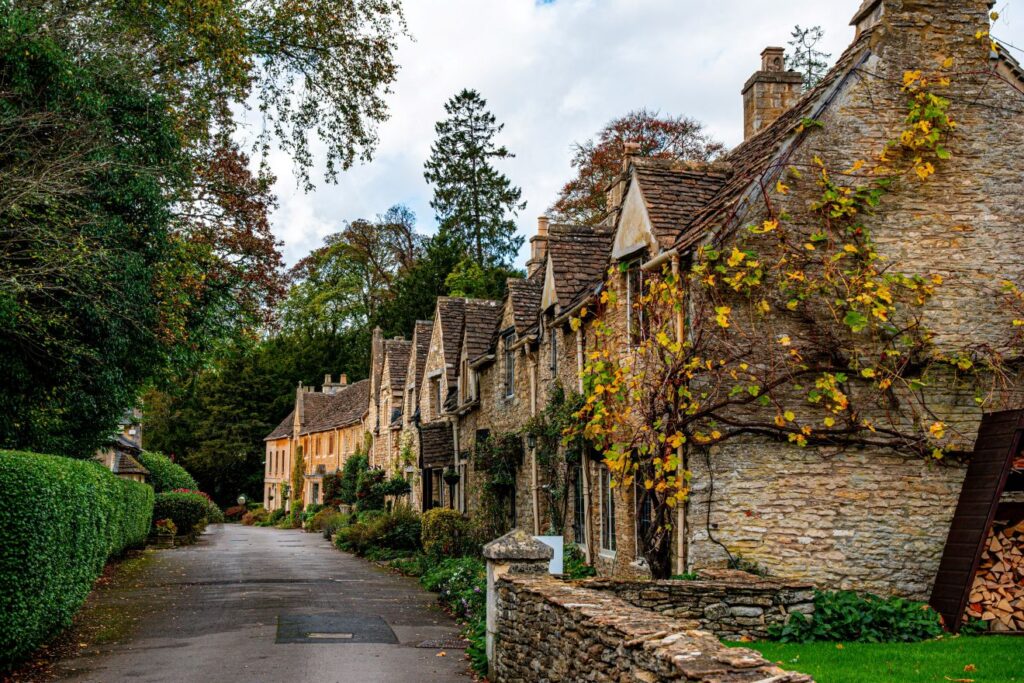

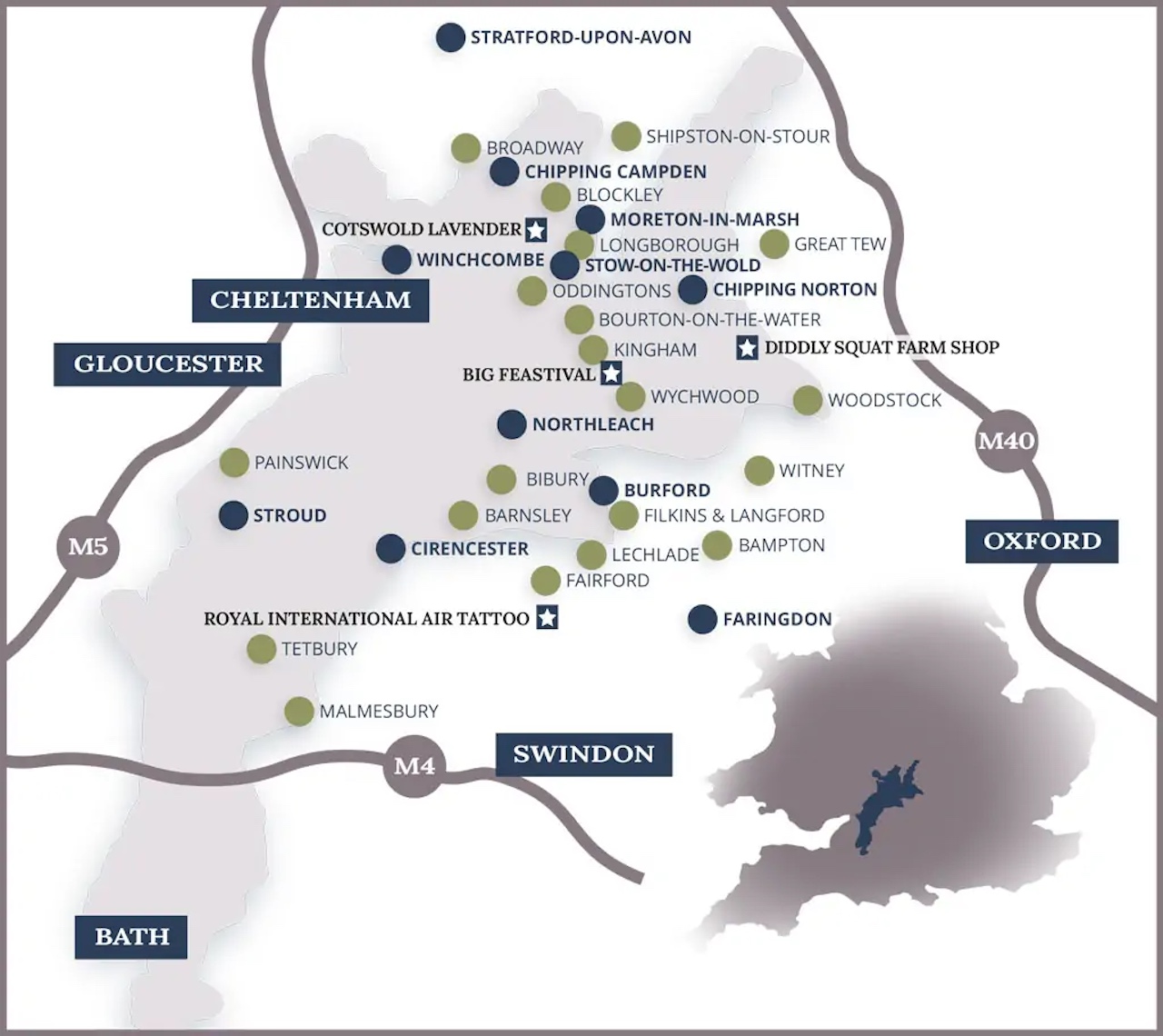
As in so many places around the world, the locally available building materials have traditionally determined the local architecture, at least until the second half of the twentieth century. The Cotswolds cover 800 square miles of central-south-west England and form the UK’s largest designated Area of Outstanding Natural Beauty (AONB). The Cotswold name comes from two Old English words: “cot” (meaning a sheep enclosure) and “wold” (meaning a hill or high open land). Together, the name translates to “sheep enclosures on the rolling hills”, reflecting the landscape and the region’s historic medieval wool trade. The AONB is famous for its picturesque villages built of honey-coloured stone.
The area attracts the rich and famous.
The area also attracts millions of tourists and day trippers, including domestic day trippers from the Midlands and international visitors looking for a day out in the country from London. The Cotswolds are recognised as ‘one of England’s long-established and world-renowned “attract” brands’, and in 2014 recorded 100% visitor satisfaction. With visitors arriving by car, coach and rail, many of them day trippers or visiting friends and relatives (VFR), it is difficult to obtain reliable estimates of visitor numbers across a landscape surrounded by cities and composed of villages and small towns.
The best data available are from 2019, before the COVID-19 pandemic. The Cotswolds Tourism Destination Management Plan 2022–25 reports 2.4 million domestic tourists spending at least one night, while overseas visitors spent approximately €221 million (£189 million) on 371,500 trips, alongside 23 million day trips. Despite the high visibility of visitors in the honeypots, tourism in the Cotswolds supported only 31,000 jobs, representing 8% of the total.
Villagers may have Parish Councils, but these bodies have limited powers to address overtourism and generally have toseek action from higher authorities.
Bibury, with 600 residents, attracts up to 50 coaches daily and 20,000 weekend visitors. Gloucestershire County Council (GCC) significantly increased parking enforcement in the village, which has been experiencing a “nightmare”, issuing 651 penalty charge notices in 2025, a sharp rise from 28 in 2019. The fines generated approximately €53,000 (£45,570), not enough to cover the approximately €4,700 (£4,000) monthly cost of enforcement. Pay and display parking will be introduced for 24 on-street spaces, projected to generate up to approximately €256,000 (£218,880) annually. The fines accrue to GCC and may or may not be invested in managing overtourism in Bibury. GCC is developing a broader traffic management scheme.
Local government can cease marketing villages suffering from overtourism, but influencers on social media are now driving much of the demand.
Bourton-on-the-Water’s beautiful river attracts millions of tourists in the hot weather (Charlotte Joynes)
Residents describe Bourton-on-the-Water, population 4,000, as “Blackpool-on-the-Water” due to the sheer volume of visitors, estimated at 5,000–10,000 daily. Day trippers bring their own picnics, although they may purchase ice cream. Residents’ concerns include tourists using hedges as toilets, leaving litter, damaging property, and coaches illegally parking in residential areas. In a recent survey of 202 residents, 94.6% said they felt visitor numbers were excessive. Charlotte Joynes, chair of Bourton Residents Voice, explains: “We would like enforcement,” says Joynes. “The coaches coming in are doing it illegally because of traffic regulations. But we don’t have police to stop them. We want people to visit but respect where they’re coming to.”
The tensions in Bourton-on-the-Water also raise a broader question: to what extent should residents of popular destinations be able to demand restrictions on visitors? The debate is particularly sensitive in picturesque villages where high property prices and second-home ownership can create perceptions that measures against overtourism are designed to protect privileged residents rather than local communities.
That argument emerged strongly among readers responding to The Independent’s coverage of the situation in Bourton-on-the-Water. One reader, Isthatso, questioned whether people who choose to live in one of the country’s most beautiful and expensive villages should expect protection from large numbers of visitors:
“Sorry, if you choose, and can afford, to live in one of the most beautiful villages in the country then you must expect a lot of tourists. What do these privileged residents want – government intervention to protect their peaceful lifestyle from interference by the common herd? If they don’t like it they can move, like anyone else who doesn’t like where they live. With prices in that village, they’ll have choices if they sell up. It’s no different to people who buy a house next to a long-established pub then complain about the noise. I’m sick of wealthy, privileged people complaining that they need exclusive access to everything that is good.”
Another reader, Nigel Fromage, similarly argued that popular beauty spots should not become accessible primarily to those wealthy enough to live there:
“Sheer unadulterated snobbery. Firstly, what is wrong with Blackpool? It’s a brilliant destination suitable for all families, especially if you’re on a limited budget. Secondly, how many of the ‘residents’ in Bourton are genuine locals? Many of them are rich newcomers who buy up the expensive, picturesque cottages, forcing young people and locals out of the area – and then have the audacity to complain about the crowds spoiling their personal space. I’ve been visiting Bourton since I was a child, and yes, it has become more crowded in recent years, but why should the beautiful places in Britain become the domain of the rich?”
These reactions highlight one of the difficulties of tackling overtourism in villages: measures intended to protect residents and local infrastructure can also be perceived as attempts to restrict public access to places that belong to everyone.
Managing day trippers is particularly challenging, and exceptionally so where there is attractive public space for picnicking beside a stream, as there is in Bourton-on-the-Water. Enforcement is expensive. Restricting vehicle access and providing parking some distance from the village may therefore be among the only effective ways of reducing the pressures of overtourism.