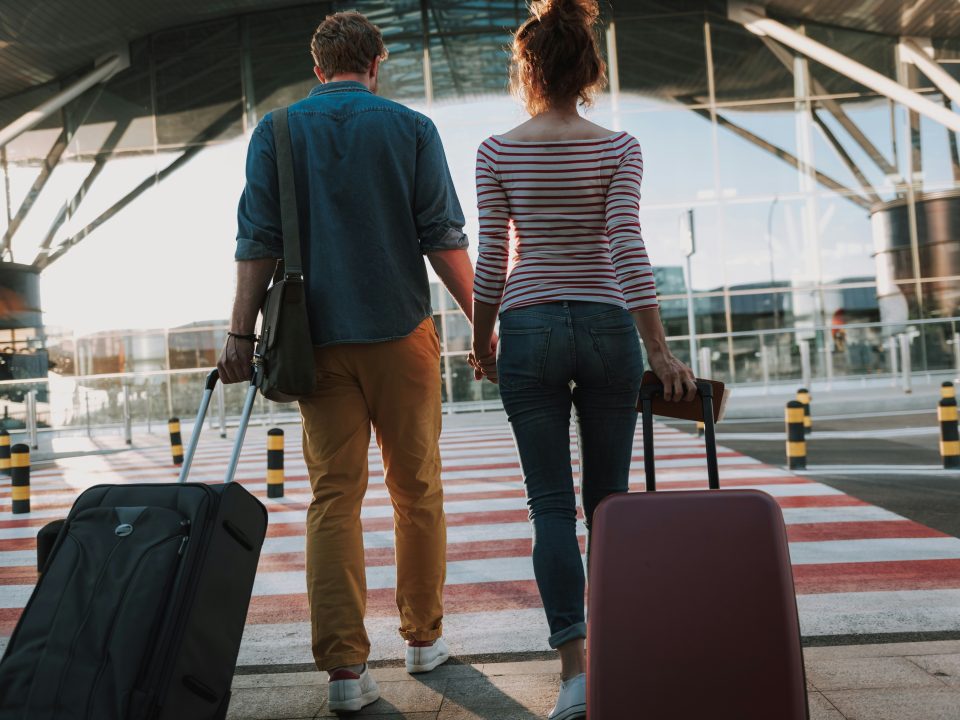


British passport holders will soon no longer need to show their passports when re-entering the country at selected airports, as part of a drive to improve the experience and efficiency of border control procedures.
The new “contactless borders” would employ facial recognition technology at e-gates, allowing returning travellers to pass through border control without having to get their passports out. They would, however, still need to carry their passports when travelling.
Due to be introduced during autumn 2026 at Birmingham and East Midlands airports, the new technology is then expected to be rolled out to e-gates at a range of other airports around the country, including some of the UK’s busiest hubs. Bristol, Cardiff, Edinburgh, Gatwick, Glasgow, Heathrow, London City, Luton, Manchester, Newcastle and Stansted airports could be using the system as early as 2027, The Times reported. The ability to use the contactless e-gates could also be extended to other nationalities in due course, officials have said.
Sunday Times exclusive: Britons will no longer need to show their passports when flying back into UK airports because upgraded facial recognition technology is being introduced at e-gates. Read more about how it will work at the link below 👇 https://t.co/mPVvL1mDdV
— Lottie Hayton (@lottiemayhayton) October 4, 2026
Phil Douglas, the United Kingdom’s Border Force director, told The Times that the contactless system could slash border processing times by as much as 25% and said: “It will mean we have a more secure border and a much faster transit through the airport. It’s quicker, it’s more modern, it’s more secure.”
But critics have pointed out that the system could be subject to abuse, negligence and machine errors. It is seen by some as being part of the spread of facial recognition technology in the UK, which consistently ranks among the top ten most surveilled populations in the world. It also relies on the chips in people’s passports functioning correctly and on airlines accurately transmitting passenger photo data to border control agents ahead of the day of travel. Anyone who is not recognised will still need to present themselves and their documents to a human border agent for verification.
In other areas, facial recognition technology is causing controversy. Big Brother Watch has warned that the technology disproportionately misidentifies Black people, who make up 80% of those subject to errors. The UK’s biometrics and surveillance camera commissioner has also warned that the technology could expose the public to breaches of their rights, and police forces to lawsuits.
China has created a technology-driven Orwellian surveillance state, where AI pre-crime systems and social credit scores can decide your fate. If your social credit score gets too low, you are banned from airports. If you try, facial recognition SKYNET system will send an alarm to police..
— Songpinganq (@songpinganq) June 8, 2024
Nonetheless, Douglas has defended the proposal, pointing out that releasing border officers from stationary checkpoints will allow them “to be much more mobile” and free them to carry out their duties in a more agile way, focusing on crime prevention and safeguarding.
Similar systems are already in place at other well-known hubs, including Abu Dhabi, Dubai and Singapore.