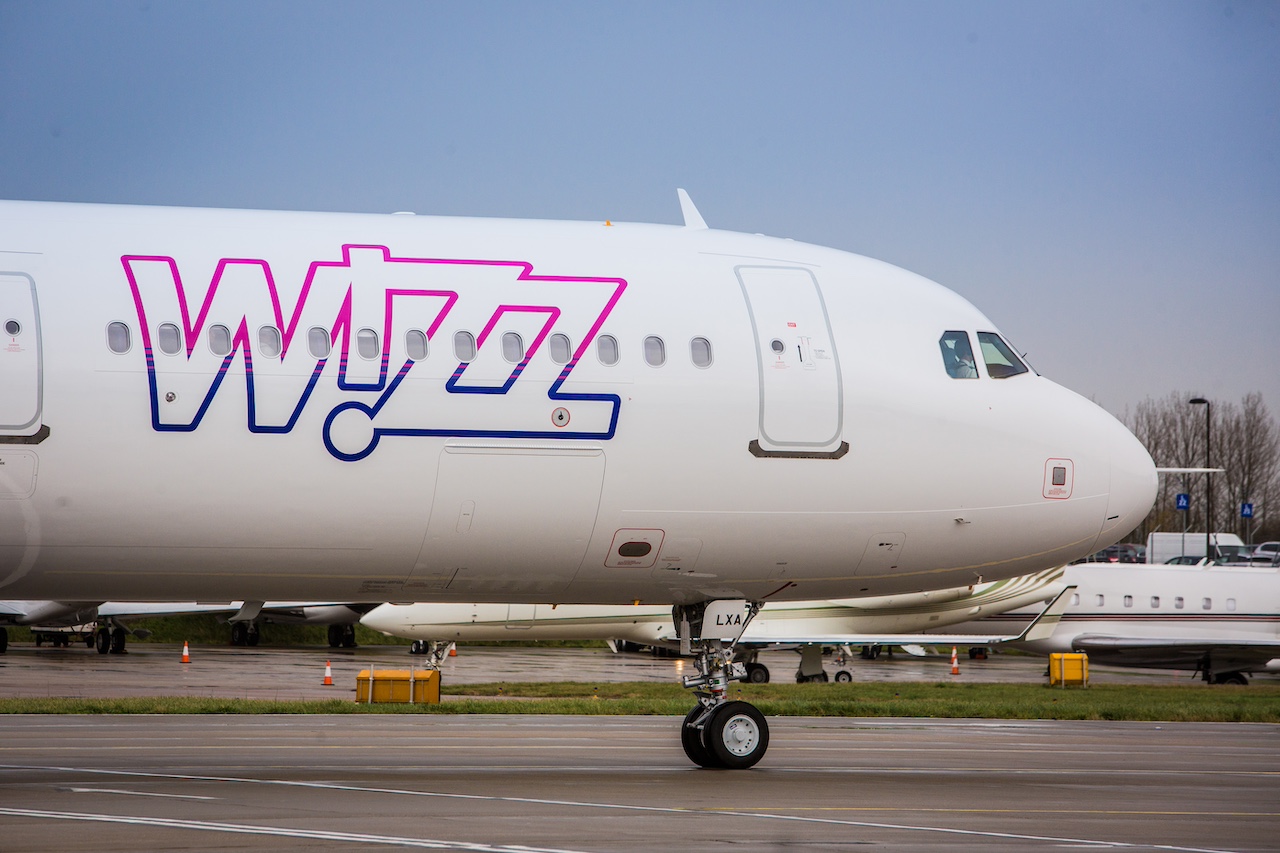



Wizz Air has announced it will equip its entire fleet with Starlink from 2027, adopting a technology already embraced by several major carriers but largely avoided by low-cost airlines due to the costs involved.
The Hungarian carrier has described this development as “the evolution of affordable, always-connected air travel”.
For the uninitiated, Starlink, which is operated by Elon Musk’s SpaceX, provides high-speed internet via a network of low-Earth orbit satellites, delivering fast, consistent broadband at 39,000 feet from gate to gate. Passengers will be able to download a three-hour HD film in around three minutes, make video calls without interruption, and crucially, use the service from gate to gate rather than only once airborne.
Wizz Air added that “every new generation Wizz Air aircraft is expected to be Starlink-equipped, ensuring a consistent onboard experience regardless of route or destination”. The company currently operates 265 Airbus A320 family aircraft, around 200 of which are the newer NEO models likely to be retrofitted.
Notably, Ryanair and easyJet have held back from adding satellite internet to their fleets. EasyJet walked away after holding discussions with Starlink. Michael O’Leary, Ryanair’s combative CEO, had a high-profile disagreement with Musk and has since cited installation costs, fuel drag, and the short duration of his flights as reasons not to proceed.
Starlink has prohibited carriers from charging passengers extra for the service, thus removing the most obvious way to recoup the investment.
Wizz Air’s Chief Commercial Officer, Ian Malin, has taken a different approach. Commenting on the deal, he said, “The whole point of ultra-low-cost travel has always been to make opportunities accessible to more people. In 2027, we’re taking that philosophy into the space era”.
The financial terms of the agreement between Wizz Air and SpaceX were not disclosed.
Starlink has already signed agreements with several major US airlines, including American Airlines, Southwest, United and Alaska Airlines. It has also partnered with long-haul operators such as Singapore Airlines and Emirates. In February 2025, Latvian carrier airBaltic became the first to launch the service in Europe, followed by Air France, SAS and British Airways. In Asia, the Hanjin Group of South Korea, which includes Korean Air, Asiana Airlines and three budget airlines, announced a deal in December 2025, with the service expected to be rolled out across 2026.
SpaceX continues to expand Starlink’s presence in the aviation industry, making in-flight connectivity a key battleground for airlines.
This announcement comes at a time when the aviation industry is under renewed pressure due to the ongoing crisis in the Middle East, which has led to higher fuel prices and changes to some flight routes. While installing satellite technology represents a significant investment, Wizz Air appears undeterred.
The airline has recently faced challenges, including reducing its order for Airbus aircraft and ending its operations in Abu Dhabi. However, ahead of its latest financial results on 11 June, the carrier reported 26% passenger growth in May, expects strong summer demand, and has said it aims to break even or deliver a modest profit this year.
Although Wizz Air is presenting itself as the first low-cost airline to commit to a fleet-wide Starlink rollout, it may not be the first European carrier to complete the installation process. Lufthansa Group’s Eurowings is also expected to introduce the technology following the agreement announced by its parent company.
Regardless of who crosses the finish line first, passengers will likely hope that other low-cost airlines follow suit.