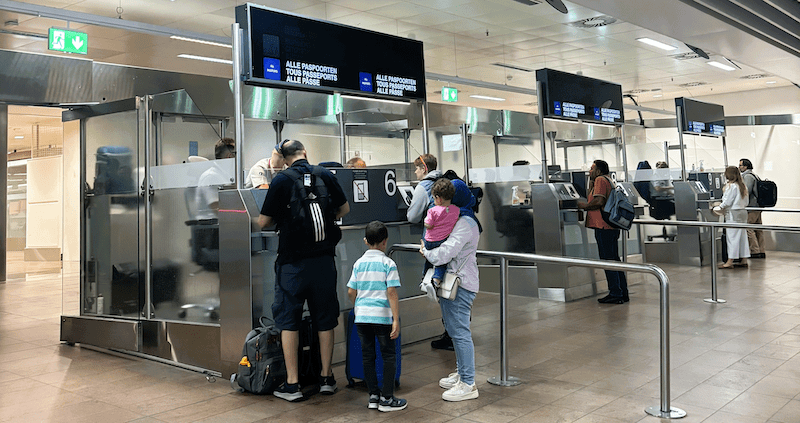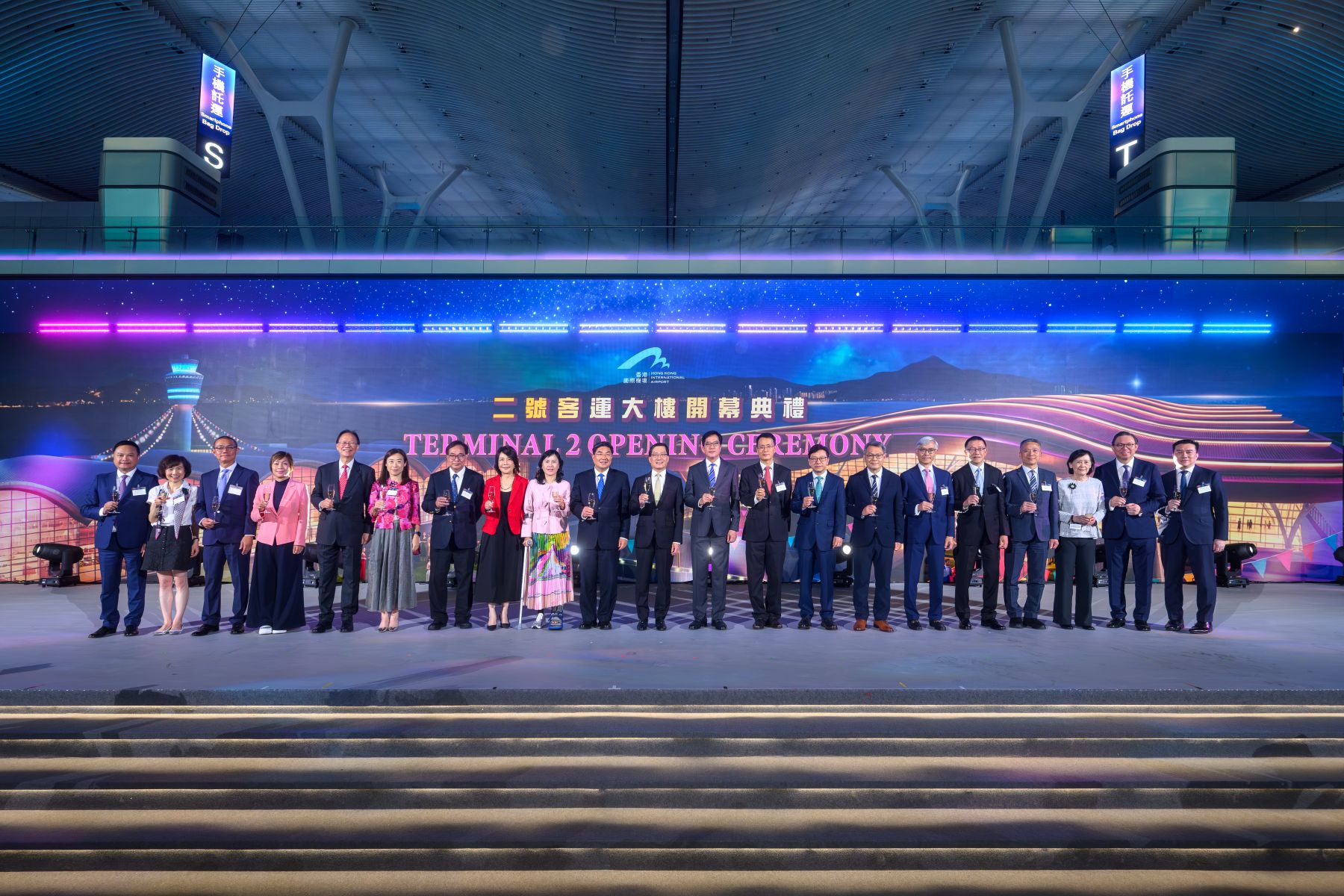



Hong Kong International Airport launched services at its brand-new Terminal 2 on 27 May, showcasing a youth-focused renovation, expansion, and automation programme that aims to allow passengers to “complete the check-in process in 45 seconds,” one official at the hub said.
With nearly 300,000 m2 of space, the terminal offers new smart check-in kiosks, self-drop baggage points, as well as hybrid check-in options. The Hong Kong Airport Authority, which manages HKG, estimates that Terminal 2 will handle eight million fliers in its first year, with capacity reaching up to 30 million annually. That’s on top of Terminal 1’s yearly capacity of 70 million, giving Hong Kong 100 million throughput annually and more of a footing among the world’s largest airports.
Fifteen airlines primarily operating regional routes, including the three home-based carriers: HK Express Airways, Hong Kong Airlines and Greater Bay Airlines, are currently relocating their check-in counters from Terminal 1 (T1) to Terminal 2 (T2) in phases, a press release said, and have begun operation. The completed relocation is promised for 10 June 2026, ahead of the summer travel season.
Another key selling point is Terminal 2’s public transport connections, boasting seamless links between T1 and T2 departures level via the Airport Express platform. The facility is also served by 29 bus routes at the departure level. T2 and is “directly connected via a short, covered walkway to Car Park 3, a new six-storey facility with over 1,000 parking spaces, which has already been opened to the public,” the press release said.
In addition to building capacity, the airport aims to better compete with Asian rivals on the Best Airport front. It is currently ranked in fourth place, while Singapore’s Changi, where lush gardens, a waterfall wall, fitness zones, climbing walls, and more, appeals to the Instagram generation. It has won first place in the annual Skytrax index for the last two years.
New T2 welcomes its first departing travellers🌟
— HKIA (@hkairport) May 27, 2026
Big cheers as our new #T2 officially opens its passenger departure facilities today🎉. Smart tech, great eats, shopping and plenty of photo spots are all set for you to explore🍽️🛍️📸!#hkia #hkairport #hongkongairport #hkg… pic.twitter.com/CSTQr9OIzo
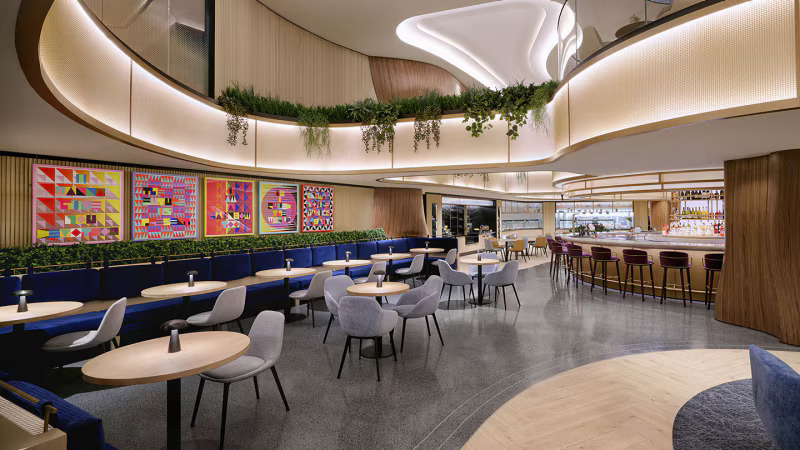
Accordingly, inside the new Hong Kong terminal, under a curved ceiling, travellers will find LED welcome screens displaying ocean scenes, as well as retail and refreshment options curated to appeal to a younger consumer, such as Filipino fried chicken chain Jollibee, locally-designed apparel, plus an arcade full of claw machines.
However, the launch has not been entirely bed of roses. The renovations were over the initial budget by 37% (which some might call a success, given the post-COVID supply chain and cost issues many projects are dealing with). The makeover also comes with pressure to perform as an international aviation hub, yet the launch in the last week of May has been described by commentators as lacklustre, with, for example, only two restaurants open in the Terminal, as opposed to a planned one hundred.
As well as LEDs overhead, brighter horizons could be coming, however. Hong Kong International Airport achieved a 19.6% year-over-year increase in passengers for March 2026, more than double Changi’s 8.5% growth for the same period. Despite some persistent gaps, Hong Kong itself is almost at a full post-COVID recovery for visitor numbers. And as travellers opt for airlines and routes away from the stricken Middle East, the city and the airport could be set to benefit further.