

Virgin Atlantic has become the first airline to integrate ChatGPT into its travel experience, in a move aimed at making trip planning smoother, more intuitive and, inevitably, boosting sales too.
Gone are the cumbersome searches for the best destination, the endless switching between tabs, or the need to compare fares across multiple windows.
Or so Virgin is betting on with its new ChatGPT integration, which it has designed to offer passengers a more seamless and conversational booking experience.
On 20 April, the airline officially launched what it describes as the world’s first airline app within ChatGPT. Users can search for flights, destinations, and prices by simply asking questions in everyday language – much as they would speak to a human travel agent or Virgin employee – albeit one with more comprehensive knowledge, reach, and speed.
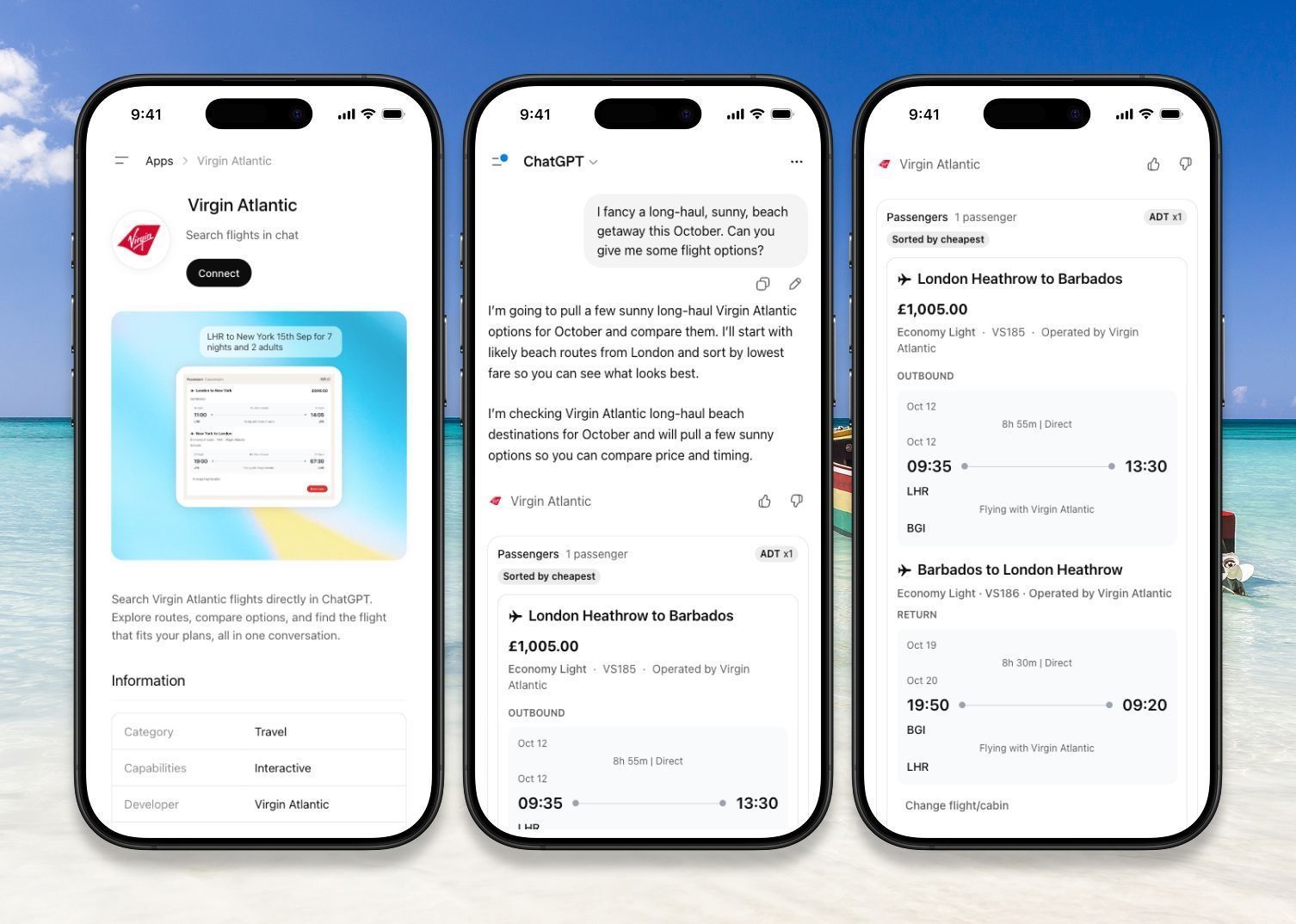
Customers can type requests such as “flights to the Caribbean in February” or “show me flights in Premium to Los Angeles next month”, and receive immediate, easy-to-read summaries generated through ChatGPT.
Virgin Atlantic Chief Customer Officer Juha Jaervinen described the launch as part of the airline’s ambition to move towards more intuitive customer interactions.
“We’re proud to be the first airline in the world to launch an app in ChatGPT, as we continue to focus on meeting our customers where they are and making it easier than ever to connect with us.
“Whether you know exactly where you want to go or you’re just looking for inspiration, this experience is designed to make planning and booking your next trip simple and seamless. You can simply ask, and we’ll do the rest, showing the best options quickly”, continued Jaervinen.
He added that combining artificial intelligence with the “personality and care” that the company is known for would create a more personalised and intuitive experience for travellers.
For now, however, the process falls short of offering a fully AI-driven booking journey. Once passengers have selected their preferred destination or flight, they are redirected to the Virgin Atlantic website or mobile app to finalise their booking. This enables the airline to maintain direct contact with customers rather than handing over the relationship to third-party booking platforms.
Nevertheless, this marks a significant first step towards a more integrated AI travel experience, aligning with Virgin Atlantic’s broader expansion into AI-powered customer services.
This also aligns with Virgin Atlantic’s long-standing approach of staying slightly ahead of the curve, as demonstrated through initiatives such as Premium Economy, onboard social spaces, and, more recently, AI-powered concierge tools.
More broadly, this shift reflects an intensifying battle over the initial stage of travel planning. Airlines increasingly want to capture customers before they reach comparison sites or online travel agencies such as Booking.com or Expedia Group.
ChatGPT is rapidly becoming a new battleground for customer attention, with companies racing to ensure they remain visible and relevant within AI-generated travel searches.
“Virgin’s move is smart because it plays offence early”, observes travel expert Luca Capula. He argues that companies that can catch customers at the earliest moment of intent “that messy, irrational moment when travellers are not yet ready to book, but are very ready to fantasise”, gain a major advantage.
Virgin Atlantic is far from alone in moving into this area. Skyscanner launched its own ChatGPT integration in April, enabling users to explore destinations and compare prices via conversational search rather than traditional filters, and eDreams is developing AI-powered travel tools.
However, when things go wrong, from flight cancellations and rerouting to geopolitical disruptions, bots are still unable to replace human customer service entirely. In an industry where disruption is always a possibility, this may be the next challenge for AI.