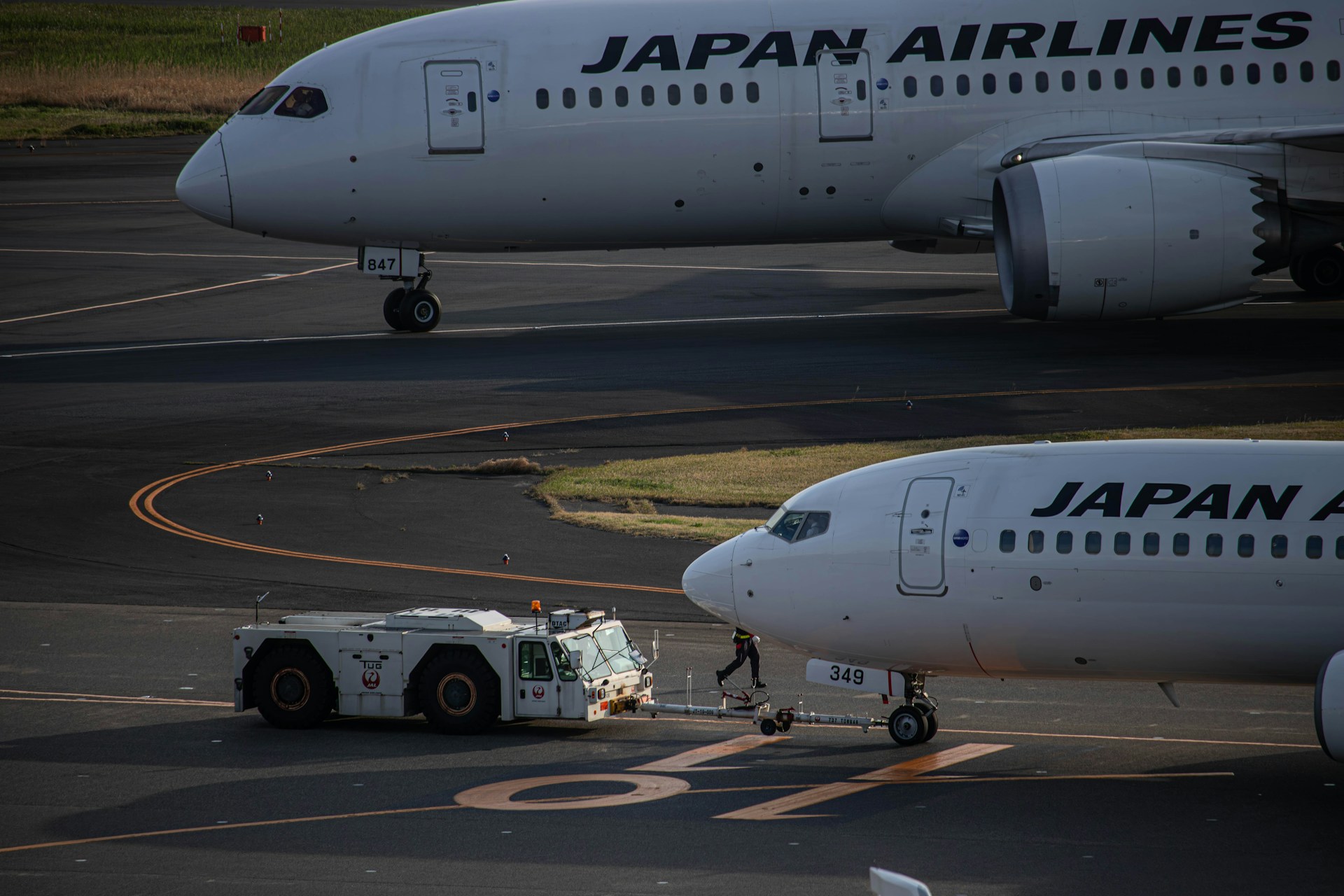



Japan Airlines will begin testing humanoid robots for ground handling tasks at Haneda Airport from May 2026. The trial will run for around two years and is the first initiative of its kind in Japan. The airline is working together with GMO AI & Robotics to explore how this technology can support daily airport operations. The main goal is to reduce the workload for employees and improve efficiency in one of the country’s busiest airports.
The project is designed as a phased experiment rather than a simple short-term test. Teams will first analyse airport operations in detail to identify where robots can be used safely and effectively. This will be followed by repeated trials that simulate real working conditions on the ground. The idea is to gradually build a system where robots and humans work together in a structured way. In the long term, the partners hope to create a more sustainable model for airport operations.
The robots will initially be used for physically demanding tasks such as loading and unloading cargo containers and moving equipment on the tarmac. These machines are built in a humanoid form, meaning they can move in a way that is similar to humans and operate in spaces designed for people. This allows them to work within existing airport infrastructure without major changes. During demonstrations, a robot measuring around 130 centimetres was seen carefully pushing cargo onto a conveyor belt and even waving to a colleague. The robots can operate for two to three hours before needing to recharge, and they are currently controlled remotely by human operators, mirroring human movements.
One of the main reasons behind this initiative is the growing labour shortage in Japan’s aviation sector. The country is dealing with a declining working-age population while at the same time welcoming a rising number of international visitors. More than seven million tourists arrived in Japan in just the first two months of 2026, adding pressure to airport services. Ground handling work is often physically demanding and requires long shifts, making it harder to attract and retain staff. By introducing robots, airlines hope to reduce the physical strain on workers and maintain smooth operations.
The issue goes beyond aviation and reflects a broader national challenge. Japan may need more than 6.5 million foreign workers by 2040 to meet its economic goals as the domestic workforce continues to shrink. This creates political and social pressure, as immigration levels remain a sensitive topic. In this context, automation and robotics are increasingly seen as part of the solution. The use of humanoid robots in airports is therefore not only about efficiency, but also about responding to long-term demographic changes.
Japan Airlines will trial humanoid robots for baggage handling and aircraft cleaning at Tokyo's Haneda Airport starting in May, citing workforce shortages and rising tourist numbers pic.twitter.com/XJ9ImcN3UO
— Reuters (@Reuters) April 29, 2026
The technology behind the robots combines artificial intelligence, advanced sensors, and remote operation. This allows them to perform tasks that require both strength and precision while still being supervised by human operators. GMO Internet Group, the parent company involved in the project, has even declared 2026 as the “First Year of Humanoids”. The aim is to accelerate the use of this technology across different industries, not just aviation. Airports are being used as a testing ground because they present real-world challenges that require adaptable solutions.
Robots are already present in some Japanese airports, where they are used for tasks such as security patrols and customer service. The introduction of humanoid robots for ground handling is, therefore, a continuation of an ongoing trend rather than a completely new development. What makes this project different is the focus on physically demanding back-end operations that have traditionally relied on human labour. These tasks are less visible to passengers but are essential for keeping flights running on time.
🇯🇵 Japan’s labor shortage is so severe it burned through its entire 5-year quota for foreign restaurant workers in record time.
— World of Statistics (@stats_feed) April 26, 2026
The food service sector (restaurants, hospital/nursing home meal services) hit its 50,000 cap early – new Specified Skilled Worker visa applications…
Despite the growing role of automation, human workers will remain essential in airport operations. Certain responsibilities, especially those related to safety and decision-making, cannot be handled by robots. Officials involved in the project have made it clear that the goal is to support employees rather than replace them. By taking over repetitive and physically heavy tasks, robots could help improve working conditions and reduce fatigue. Human oversight will continue to be necessary to ensure that all operations meet strict safety standards.
The trial at Haneda Airport reflects a wider shift in the global aviation industry. Airports around the world are exploring new technologies to handle increasing passenger numbers and improve efficiency. These include biometric boarding systems, automated baggage handling, and autonomous vehicles. Humanoid robots could become another tool in this transition, especially in locations where labour shortages are becoming more severe. Their ability to work in human-designed environments gives them an advantage over more specialised machines.
In the future, the role of these robots could expand beyond cargo handling. Japan Airlines is already considering using them for tasks such as cleaning aircraft cabins and operating ground support equipment. As the technology improves, robots may become more autonomous and capable of interacting more naturally with both staff and passengers. If the current trial proves successful, similar systems could be introduced at other airports in Japan and beyond. This would mark an important step towards a more automated and flexible airport environment.