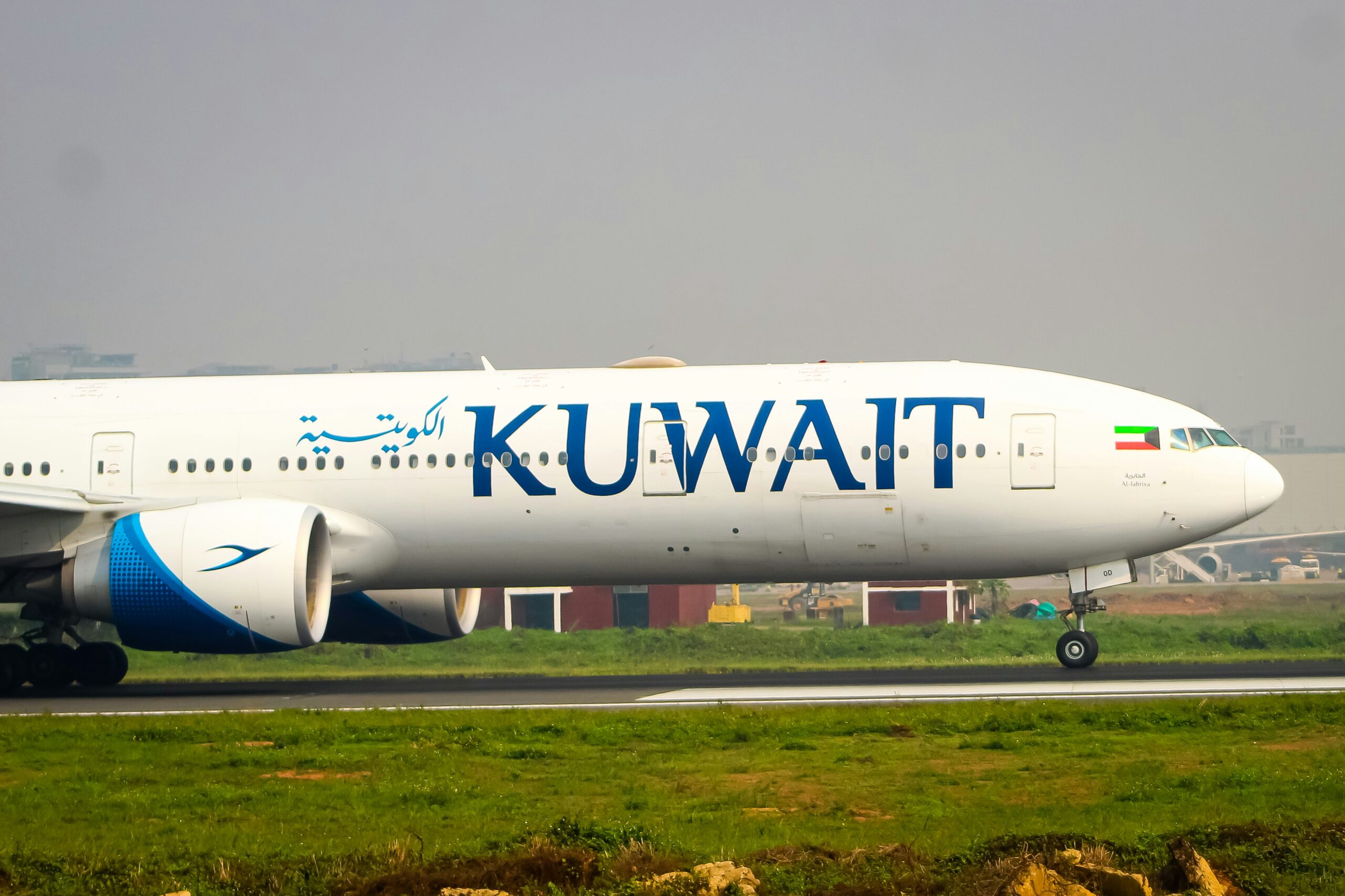



Kuwait has reopened its airspace for the first time since the outbreak of war involving the US, Israel and Iran two months ago, which engulfed the region and caused severe disruption to the aviation sector.
Following the official reopening on 24 April, commercial flights resumed two days later, with the country’s national carrier, Kuwait Airways, and the low-cost airline Jazeera Airways, gradually restarting operations.
تعلن الخطوط الجوية الكويتية عن استئناف رحلاتها بشكل استثنائي ومحدود من مبنى الركاب 4، اعتباراً من يوم الأحد 26-4-2026.
— Kuwait Airways (@KuwaitAirways) April 23, 2026
Kuwait Airways announces the resumption of its flights on an exceptional and limited basis from Terminal 4, starting Sunday, 26-4-2026.
.… pic.twitter.com/v6gF1F6tzZ
The return to normal is being phased in, with the authorities aiming to progressively restore air traffic ahead of the full resumption of airport operations. In a statement carried by Kuwait News Agency, the country’s civil aviation authority said that the move is part of a “gradual resumption” plan.
Kuwait International Airport was hit directly during the conflict, with Iranian missiles and drones striking both terminals, including Terminal 2, which is still under construction, as well as its radar system and fuel storage facilities, which are the primary reasons for this staged approach to resuming normal operations.
Since the escalation began, both Kuwaiti airlines have temporarily relocated their operations to Dammam in Saudi Arabia, around a five-hour drive from Kuwait. In the early days of the conflict, travellers from across the Gulf also diverted there.
Until operations fully normalise, both airlines will continue to partially operate from Dammam.
Kuwait Airways is now restoring a first batch of 17 routes from its base in Kuwait, including to London, Istanbul, Mumbai, Cairo and Manila. Jazeera Airways is resuming services to Istanbul, Beirut, Damascus, Dubai, Cairo, Amman, Kochi, Mumbai and Delhi.
At the time of writing, Kuwaiti carriers remain the only airlines to have confirmed their return to Kuwait Airport. Major European carriers, including Air France, Lufthansa, KLM and British Airways, have yet to lift their suspensions.
Recovery remains uneven across the region. Last week, Hamad International Airport announced it would resume operations.
Other regional carriers, including Oman Air, Royal Jordanian, Tarco Aviation and US-Bangla Airlines, resumed services on 23 April. Middle East Airlines is set to follow on 26 April, with Himalaya Airlines resuming on 28 April. Qatar Airways has been operating limited flights since 7 March, and this past week, Hamad International Airport began welcoming back a wider array of foreign carriers.
In the United Arab Emirates, Dubai International Airport, which was also impacted by Iranian projectiles during the conflict, resumed operations on 2 March. Emirates has now restored nearly 80% of its Dubai flight network, while smaller carriers such as flydubai and Air Arabia resumed operations more recently, on 21 and 22 April, respectively.
Meanwhile, Saudi Arabia’s airspace remained open throughout the conflict, though it experienced significant cancellations and delays. Some routes were scrapped entirely, including Virgin Atlantic’s, despite the fact that the company had only launched operations there a year earlier. Oman’s airspace also remained open, but was similarly affected.
Bahrain, Iraq and Israel reopened their airspace on 8 April following the ceasefire, while Iran partially reopened on 18 April.
However, the reopening of airspace does not necessarily signal an immediate return of tourism. As previously reported, the conflict has had a significant impact on traveller confidence, with potential losses across the region reaching billions. Many travellers are likely to remain cautious, waiting to see how the situation evolves before booking trips to the Middle East again.