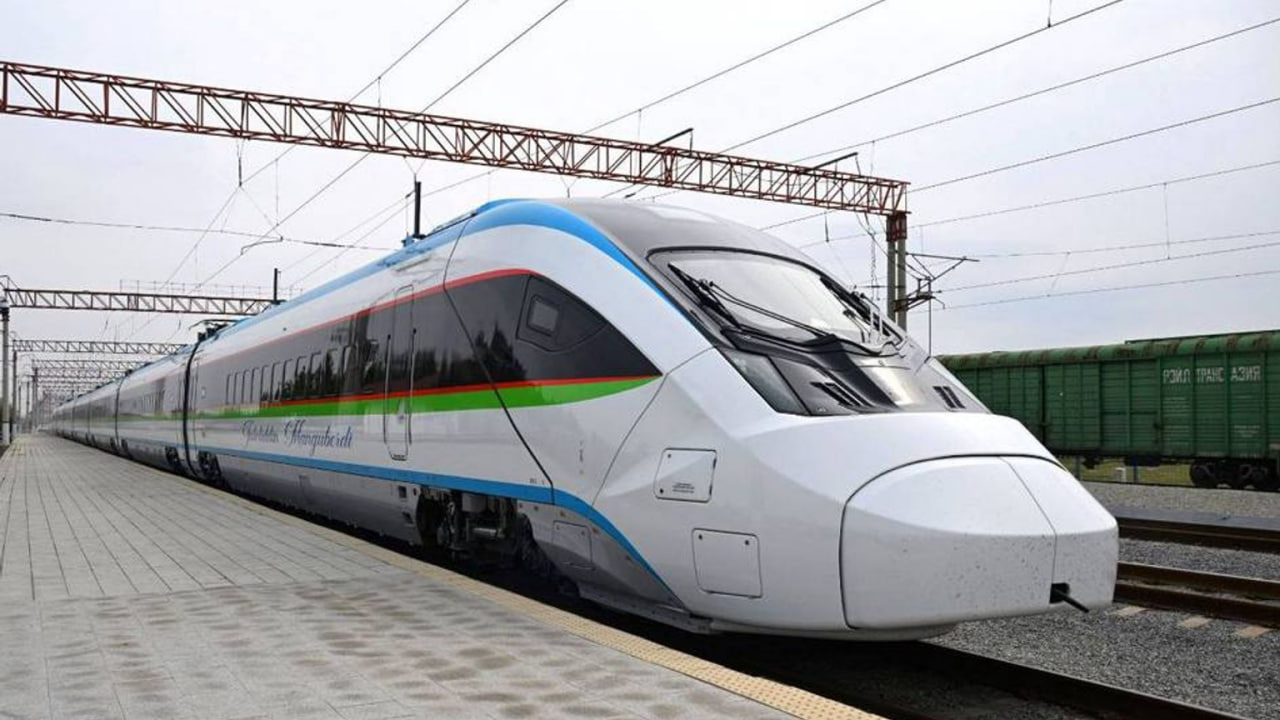



A new high-speed rail connection linking Tashkent and Khiva is set to launch on 2 May, marking a significant step in Uzbekistan’s efforts to modernise its transport infrastructure and support its rapidly growing tourism sector.
The new service, named “Jaloliddin Manguberdi”, will reduce travel time between the Uzbek capital and one of its most iconic Silk Road destinations from around 14 hours to approximately seven and a half, offering a faster and more comfortable alternative for both domestic and international travellers.
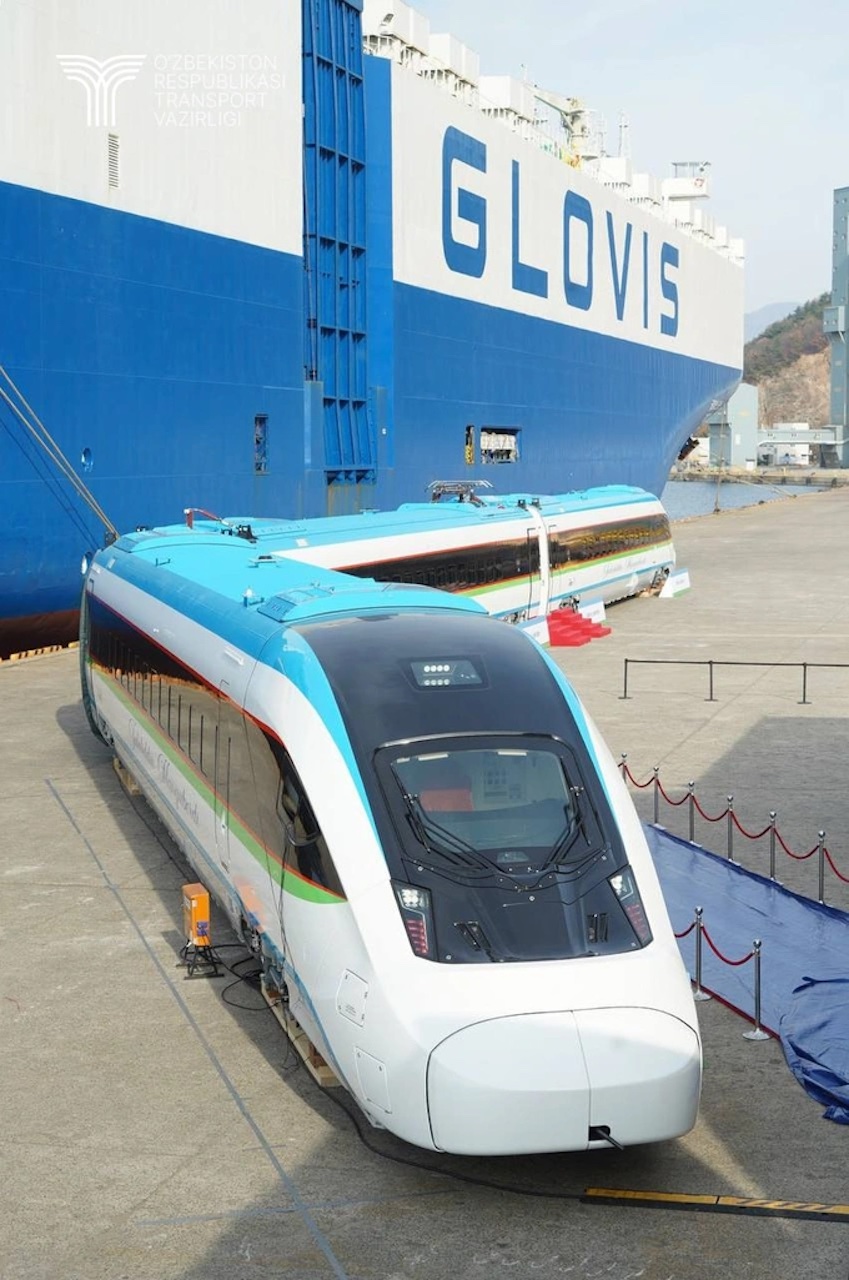
Operated using high-speed trains manufactured by Hyundai Rotem, the service is part of a broader national strategy to upgrade rail connectivity across the country. The trains can reach speeds of up to 260 kilometres per hour and are specifically designed to operate in Uzbekistan’s desert climate conditions.
Each trainset consists of seven carriages with a total capacity of around 390 passengers, offering three travel classes: VIP, business, and economy. The introduction of these modern trains follows a contract signed between Uzbekistan Railways and Hyundai Rotem during a state visit by the South Korean president, under a wider programme aimed at reforming the country’s railway system.
President Shavkat Mirziyoyev personally tested the new train in March, travelling alongside members of the public to demonstrate its capabilities ahead of the official launch.
Strengthening connectivity along the Silk Road
The new rail link reinforces Uzbekistan’s position as a key destination along the historic Silk Road, making it easier for travellers to explore the country’s cultural heritage.
Tourism to Uzbekistan has been growing steadily, with international arrivals increasing by 14% year on year in 2025, according to UN Tourism. As reported by Travel Tomorrow, the country aims to attract 12 million foreign visitors in 2026, with long-term ambitions to reach 20 million annually by 2030.
Improved infrastructure, including high-speed rail connections, is central to this strategy. By reducing travel times and enhancing comfort, the Tashkent–Khiva route is expected to encourage visitors to extend their itineraries beyond the traditional hubs of Samarkand and Bukhara.
Discovering Khiva’s timeless heritage
Believed to be over 2,500 years old, Khiva has long held a strategic role as a desert outpost for Silk Road caravans travelling towards Persia. Today, it remains one of Central Asia’s best-preserved historical cities.
At the heart of Khiva lies Itchan Kala, a UNESCO World Heritage Site since 1990 and the first of its kind in Central Asia. Enclosed within its ancient walls are more than 50 monuments, offering a remarkable glimpse into the region’s architectural and cultural legacy.
Among the highlights is the Juma Mosque, notable for its forest of intricately carved wooden columns and its distinctive covered courtyard. Visitors can also explore the Konya Ark citadel, once the residence of Khiva’s rulers, and the Pahlavon Mahmud mausoleum, famed for its turquoise dome and elaborate tilework.
For panoramic views across the city, climbing the minaret of the Islamkhodja Madrasah offers a striking perspective over the desert landscape and historic skyline.
Beyond the city walls, travellers can experience a more contemporary side of Khiva. The local bazaar near the eastern gate continues the tradition of trade that defined the Silk Road, offering regional dishes, sweets, and handicrafts. Nearby, the Nurullaboy Palace, completed in 1912, blends traditional Uzbek architecture with Russian imperial influences, reflecting a later chapter in the city’s history.
A catalyst for tourism growth
The launch of the high-speed rail service comes at a time when Uzbekistan is investing heavily in tourism infrastructure, expanding accommodation capacity, and promoting new destinations across the country.
With nearly 11 million international visitors recorded in 2025 and tourism revenues surpassing $4.4 billion, the country is positioning itself as one of the fastest-growing travel destinations globally.
By connecting its capital more efficiently with one of its most iconic heritage sites, the Tashkent–Khiva high-speed rail link is expected to play a key role in shaping the next phase of Uzbekistan’s tourism development, making the journey along the Silk Road not only more accessible, but also more appealing than ever.