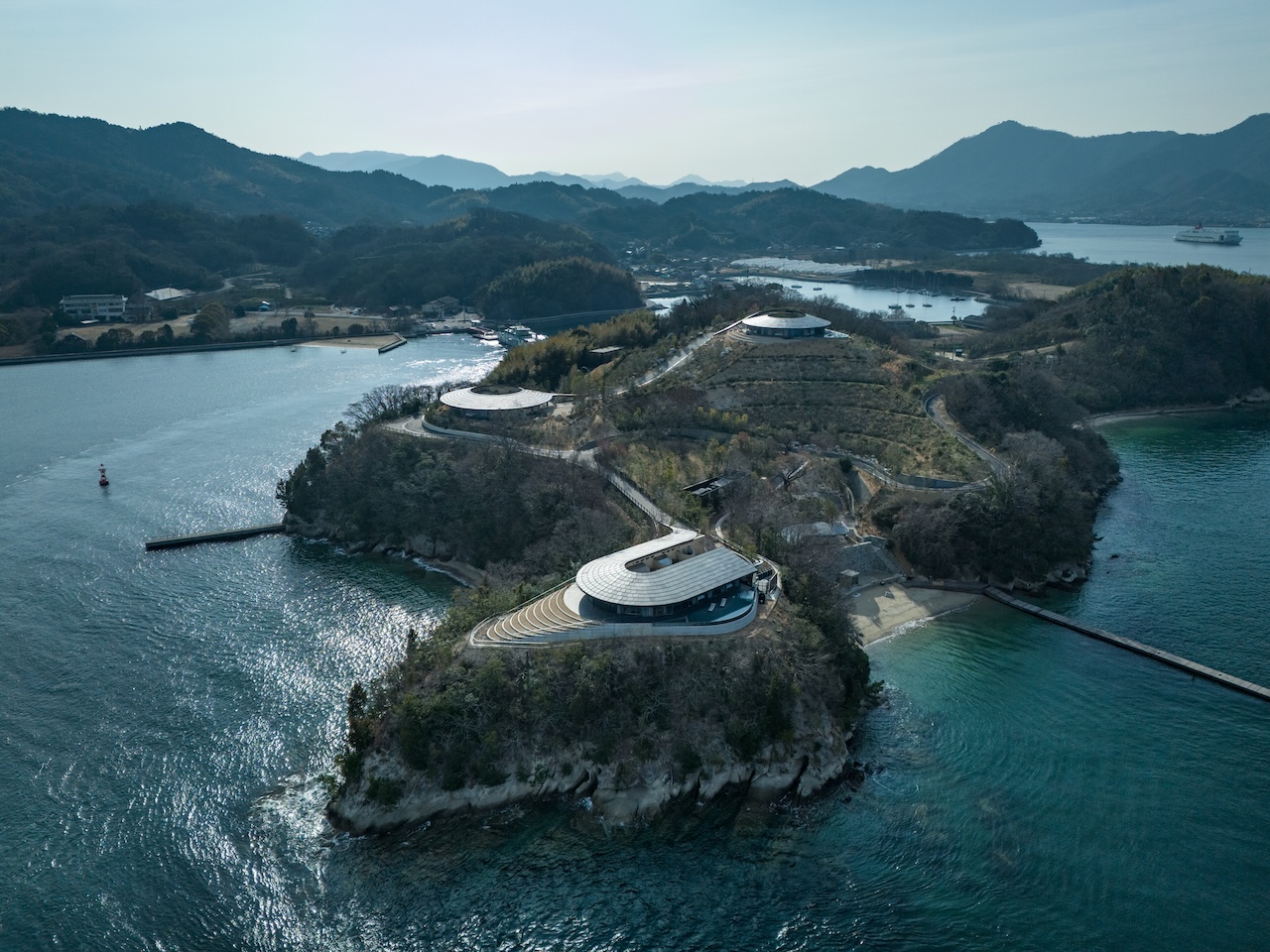



Bjarke Ingels Group (BIG) has completed a trio of luxury villas in Japan using rammed earth construction, marking the studio’s first built project in the country and a significant addition to the growing network of high-end “NOT A HOTEL” properties.
Named NOT A HOTEL Setouchi, the development is located on the remote island of Sagishima in Japan’s Seto Inland Sea and comprises three villas embedded into a 30,000-square-metre coastal site. The project also includes a beachfront restaurant and private beach, with the architecture designed to merge closely with the island’s mountainous terrain.
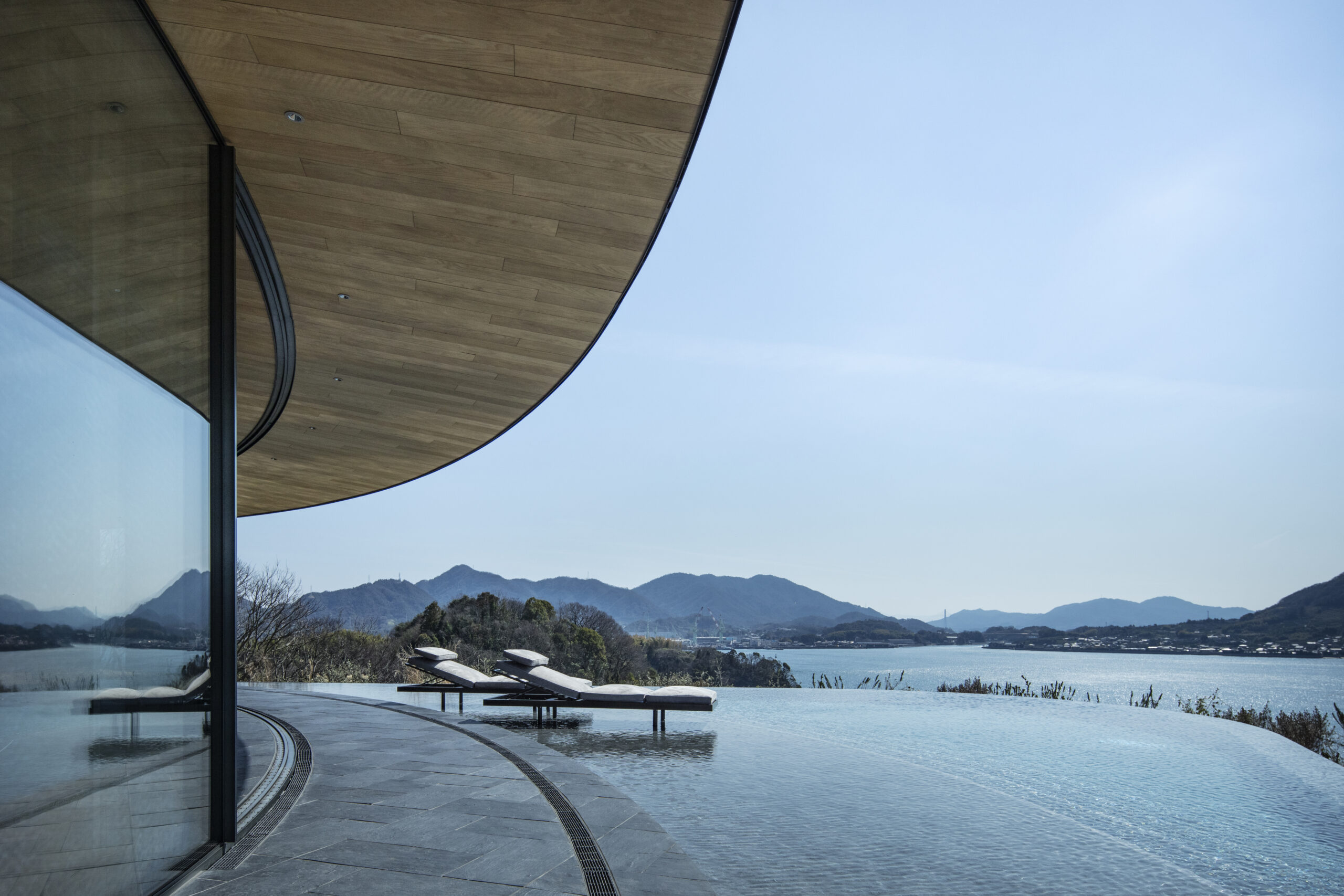
“The archipelago around Sagishima is like a Japanese landscape painting. Steep rolling hills covered in lush green vegetation erupt from the tranquillity of the Seto Inland Sea. The four pavilions are conceived as extensions of the dramatic topography,” said BIG founder Bjarke Ingels.
The villas are constructed using soil sourced directly from the site, applied through the traditional rammed earth technique, allowing them to appear carved out of the landscape, smoothly integrated into the hillside’s natural topography.
BIG arranged the three four-bedroom residences along the natural contours of the hillside, following existing infrastructure and unfolding “like a ribbon” across the terrain. Each villa is named according to the degree of panoramic view it offers — 180, 270 and 360 — reflecting the project’s emphasis on framing vistas of the surrounding archipelago.
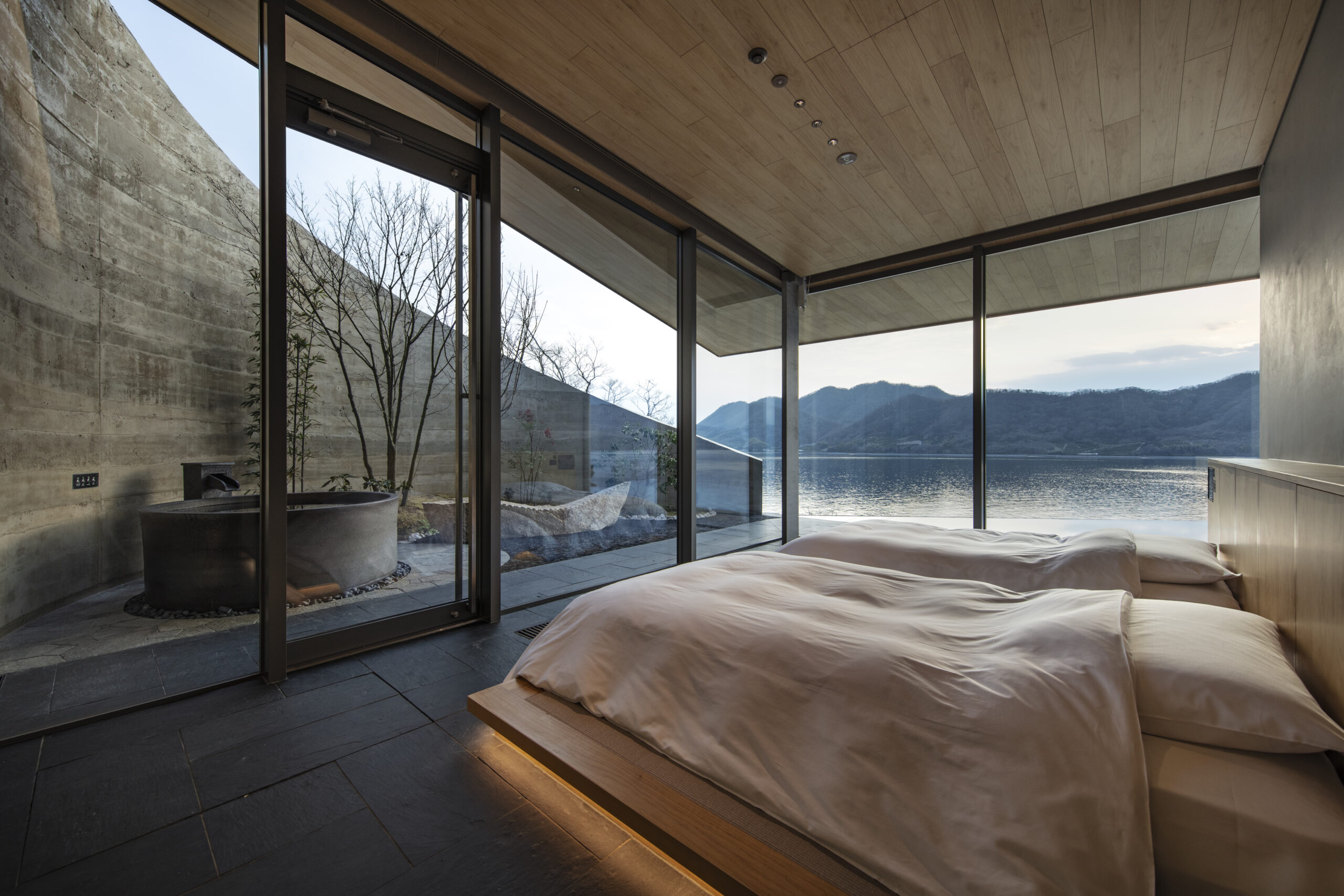
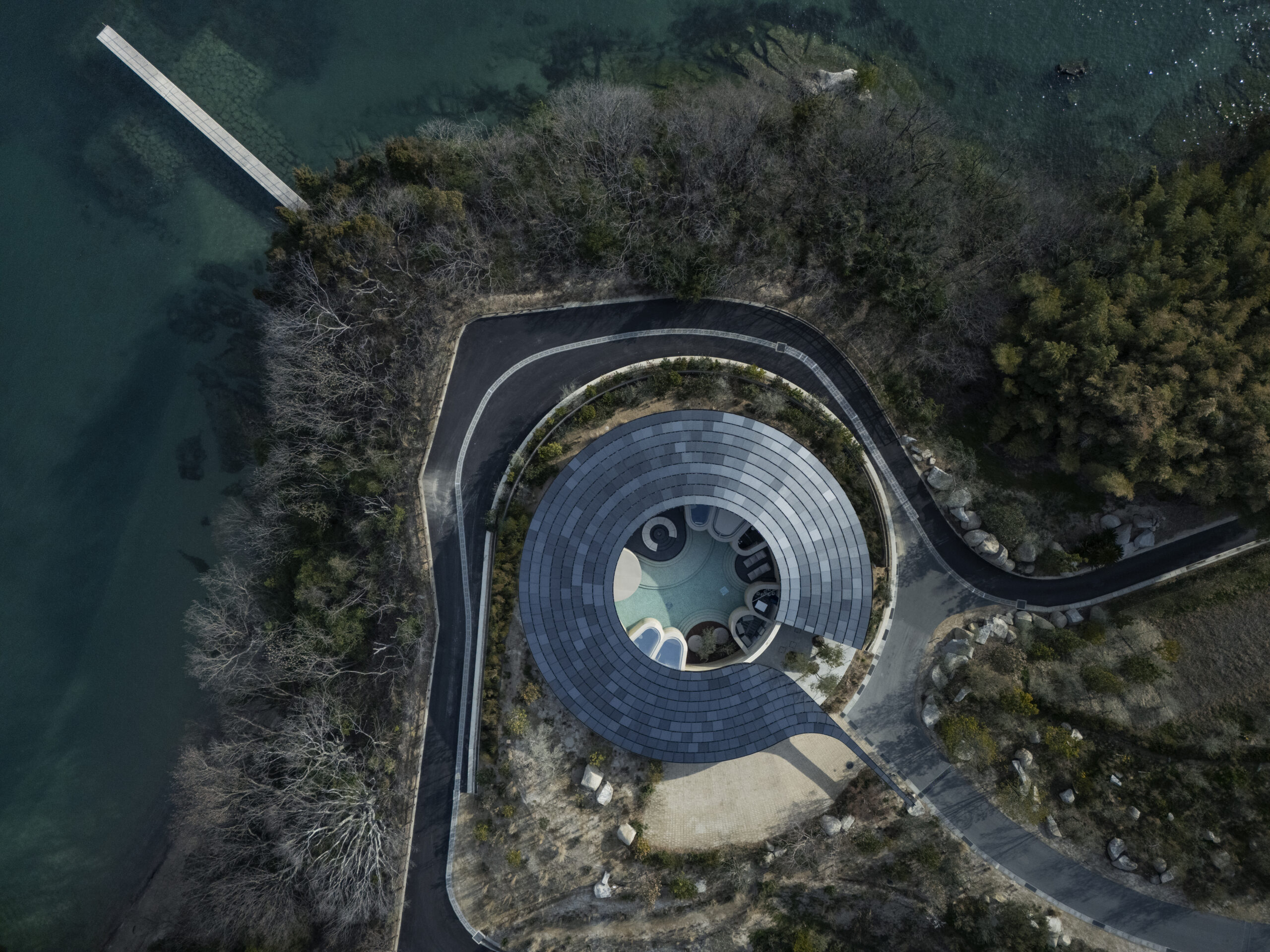
The design draws on both Scandinavian and Japanese architectural traditions, combining contemporary forms with references to traditional elements. Large glass facades reinterpret shoji screens, blurring the boundary between interior and exterior. The roofs are topped with low-reflective solar tiles that reference traditional Japanese roof forms, while adjustable facades and overhangs are used to support passive cooling strategies. Rainwater is collected on site and reused for landscape irrigation.
The homes are organised as open-plan living spaces, with Japanese-style baths, storage set within separate skylit pods, and heated infinity pools. Subdued colour palettes are paired with black slate flooring that references the proportions of traditional tatami mats.
“The project stands as a remarkable convergence of Danish design and philosophy, traditional Japanese architecture, and the technical sophistication and construction precision of contemporary Japan,” said Ryohei Koike, BIG associate.
Each villa responds to its specific position on the site. The 360 villa sits at the highest point and is arranged as a ring around a central courtyard, offering uninterrupted views in all directions. The 270 villa frames a wide panorama and incorporates outdoor leisure areas including a pool, sauna and firepit, while the 180 villa follows the curvature of the shoreline at the water’s edge.
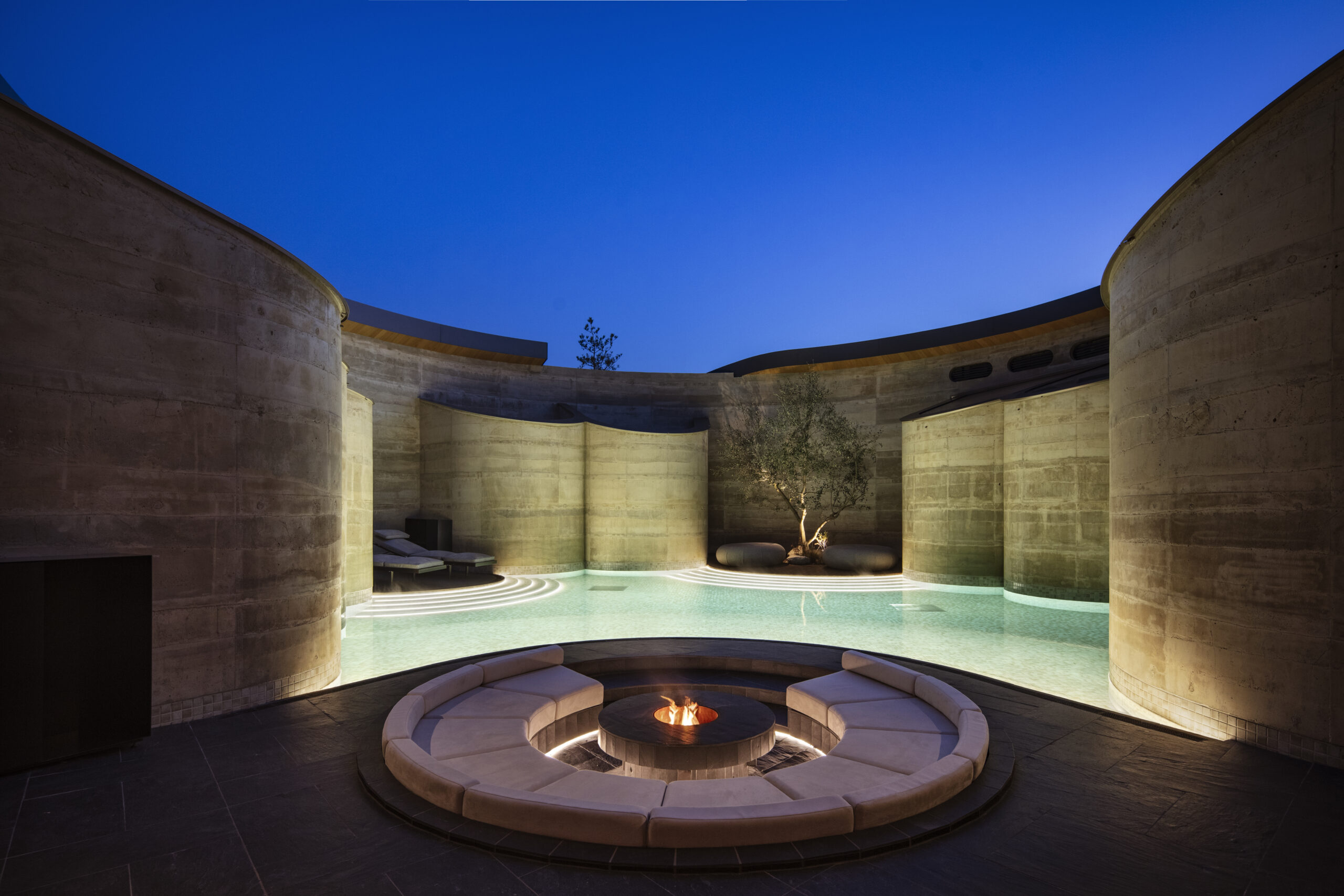
Bjarke Ingels described the project as an exploration of contrasts between openness and enclosure. “On one hand, each home is like an inhabited view, open and extroverted,” he said. “On the other, their spinal walls outline a private and protected space — open only to the sky.”
Landscape restoration formed a key part of the masterplan. Indigenous vegetation was harvested and temporarily removed during construction and later restored, including native grasses, olive trees and lemon trees, in an effort to return the site to its natural state.
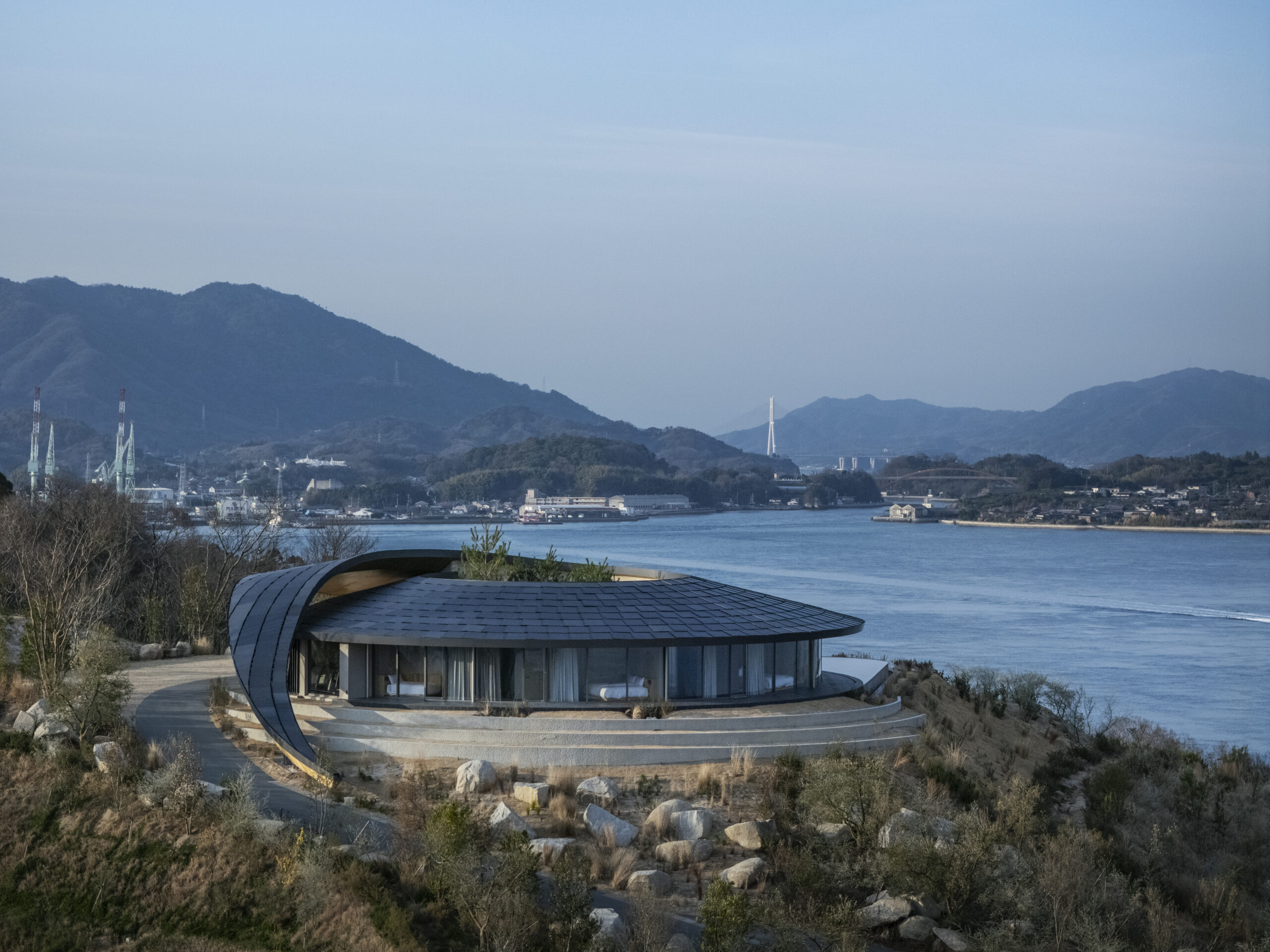
The project represents a milestone for BIG, not only as the studio’s first completed work in Japan, but also as a synthesis of cultural influences. According to the studio, the villas seek to balance “traditional and modern” approaches, forming a striking architectural statement while pushing forward the luxury hospitality sector in Japan.