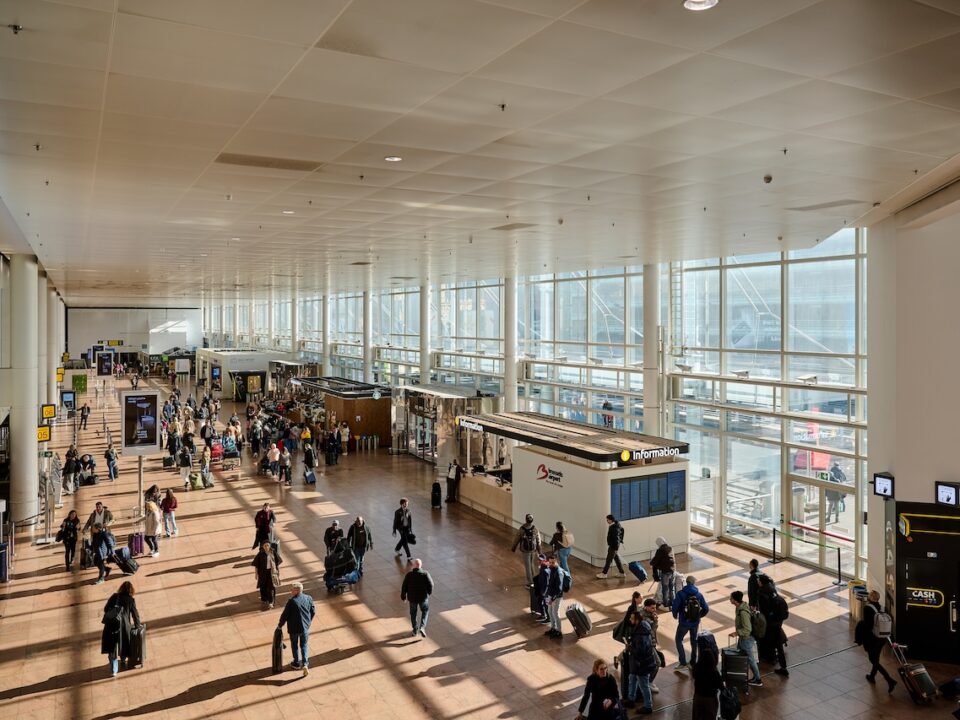



Operations at Brussels Airport in the Belgian capital severely disrupted the sleep of more than 104,000 people in 2025, according to a new report on noise pollution coming from the hub.
Almost 60% of the people who reported severe sleep disturbance as a result of night flights at the airport are resident in the Brussels-Capital Region. The 104,000 figure is an increase of 2.5% on 2024, slightly more than the 2.1% increase in night time flights (departing or arriving at the airport between 11pm and 7am).
The districts with the worst night time noise pollution were the “City of Brussels” where 16,643 people reported severe sleep disruption; followed by Schaerbeek (12,924), Sint-Jans-Molenbeek (10,596), and Evere (7,039). In the Flemish Brabant neighbourhood of Zaventem, which hosts the airport, only 6,770 people reported sleep disruption, while in Vilvoorde 5,482 people suffered.
The report, conducted by aviation consultancy To70 and commissioned by the airport in accordance with VLAREM regulations, also found a sharp rise in sleep disruption reported in the Sint-Jans-Molenbeek district (up 54%) and Koekelberg (up 47%). Residents of Jette on the other hand appeared to benefit from a noise pollution reduction resulting in 35% fewer people claiming severely disturbed sleep patterns.
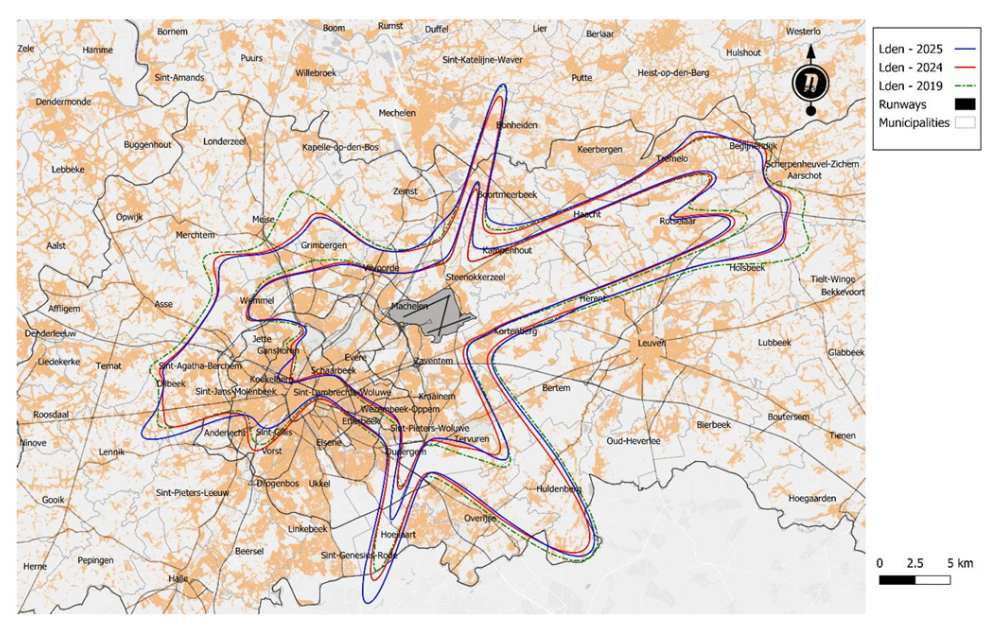
These changes could be attributed to a new landing protocol that came into effect in summer 2025, eliminating the way aircraft used to carry out a turn in the skies over Jette and instead aligning them with the runway as they overfly Molenbeek and Koekelberg.
The report also claims that demographic changes also play a part in how many people are affected by airport noise. For example, the size of so-called “L-den” 45 decibel area (the European standard for measuring environmental noise and community annoyance) increased by 2.9% in 2025, and the number of potentially “highly annoyed people” within the 55 decibel area increased by 7.4%. However, if the population in these areas had remained constant, the report says, the number of people potentially highly annoyed in 2025 would have been 0.9% lower.
This seems not only a small percentage difference, but a spurious argument in a northern European capital where population increases are a given. Some commentators point out that it remains unclear why the airport is still operating high numbers of supposedly banned night flights at all, and why aircraft are overflying densely populated areas near the centre of the capital city, potentially annoying so many people, when they could be flying over the less populated outskirts. Meanwhile, tens of millions of euros in fines for noise pollution by airlines remain unpaid.
Noise pollution and sleep disturbance have been associated with poor health and wellbeing outcomes, including heart disease, especially among men.