



Portugal’s Humberto Delgado Airport in Lisbon is serving as the guinea pig for a new “Travel to Europe” app, designed to streamline the European Union’s new entry-exit system (EES) processes for third-country travellers to the bloc. The app, launched for arrivals to the Portuguese capital’s hub on 16 March 2026, follows a period of questions and concerns over Portugal’s readiness to implement EES.
The European Commission’s unannounced assessment of Lisbon Airport in December 2025 (two months after the EES rollout began) found “serious deficiencies” in border security control. Those deficiencies had led to long queues for travellers at the hub, with some members of the travelling public reportedly waiting seven hours at Delgado. The situation eventually deemed so bad that the introduction of the EES had to be suspended for three months.
The crisis also saw the national Public Security Police (PSP) union complain to the Interior Ministry in November, saying security staff were “under constant pressure to make it easier for people to enter the country, contrary to what is often sold by the government, that there is proper surveillance,” said Paulo Santos, president of the police union ASPP. In January 2026, 24 National Republican Guards were drafted into the hub to help control crowds.
Now the newly available app aims to address some of these concerns and slash in-person security check times at the airport. It allows travellers to register their personal and travel information prior to arrival at the border, meaning some processing can happen up to 72-hours ahead of their border crossing, where travellers can then use a QR code to access their pre-registration at self-service border control kiosks (SSK), if available.
In short, using the app gives travellers the chance to enter personal and travel info in advance and complete an EU entry eligibility questionnaire, saving time at the entry point itself.
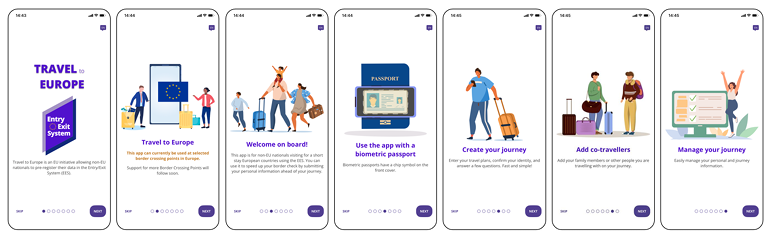
The app is available from major download platforms, such as the App Store and Google Play. While not mandatory, destination manager Visit Portugal has described it as “a tangible improvement in the experience of entering Europe, with direct benefits for travellers and for operational efficiency at the borders.”
While using the app is totally optional and does not replace standard border control procedures, authorities have emphasised in a statement that it allows some of the required information to be processed in advance, making the experience of entering Europe simpler and more efficient for both travellers and border control officials.