


A new study shows how vegetarians are substantially less likely to have five types of cancer when compared to meat eaters. However, the research indicated that there were also downsides to a vegetarian diet.
In order to determine whether or not vegetarian diets might influence the overall cancer risk, a group of scientists analysed the health data of 1,645,555 meat eaters, 57,016 poultry eaters, 42,910 pescatarians, 63,147 vegetarians, and 8,849 vegans. Their research was published in the British Journal of Cancer on 27 February 2026 and could be considered promising.
“Appropriately planned vegetarian and vegan diets are considered to be healthful and nutritionally adequate; compared to omnivorous diets, vegetarian and vegan diets are typically lower in some nutrients such as protein, saturated fat, and certain micronutrients such as vitamin B12, but higher in others such as dietary fibre, carotenoids, and vitamin C. Such nutritional differences might influence cancer risk”, the researchers explain.
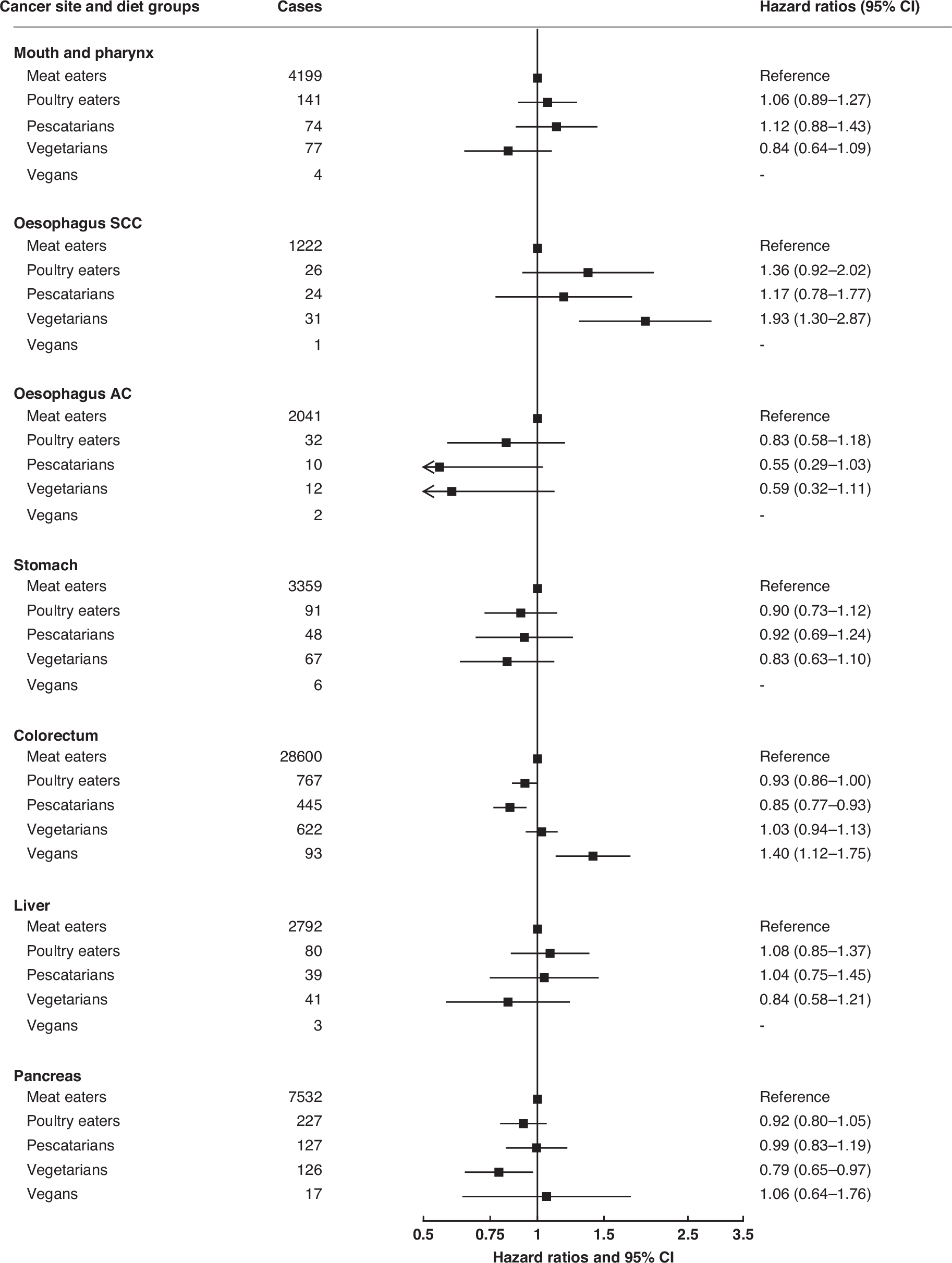
After analysing the health data of the participants, over 1.8 million people overall, the researchers conclude that vegetarians had a 31% lower risk of multiple myeloma, a 28% lower risk of kidney cancer, a 21% lower risk of pancreatic cancer, a 12% lower risk of prostate cancer, and a 9% lower risk of breast cancer when compared with meat eaters. Together, the five types of cancer amount to approximately a fifth of cancer deaths in the UK, and the outcome of the study can thus be considered substantial.
Limitations to the study
However, the study also shows that vegetarians had more or less double the risk of squamous cell carcinoma. According to the scientists, a lack of key nutrients such as B vitamins could explain this number. Moreover, vegans showed a 40% higher risk of bowel cancer compared with meat eaters. The researchers suggest that a low average intake of calcium and other nutrient deficiencies encountered in some who follow a plant-based diet might explain this.
Although the results of the study are promising, especially for vegetarians, the researchers underline that caution is needed.
“Future research should examine the possible mediating roles of both metabolic factors and nutritional deficiencies, and collect more data, particularly in vegans and in populations outside Western Europe and North America. The generalisability of the findings should be considered cautiously, because the diets and nutritional intakes of both vegetarians and non-vegetarians can vary substantially within and between populations”, the scientists write in the British Journal of Cancer.
While the study seems to indicate a link between vegetarian diets and a decreased risk for some kinds of cancer, the exact connection remains unknown. Whether meat in particular increases the risk of developing cancer or whether vegetarians consume more of some kinds of nutrients that protect against the disease could not be determined as of yet.