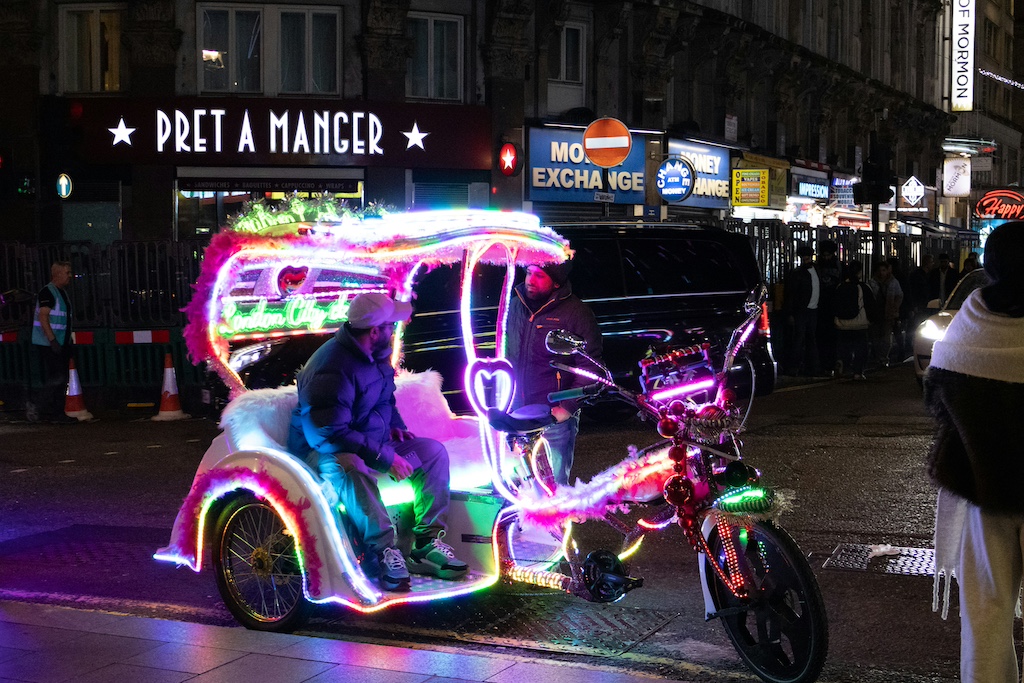



Starting from 30 October 2026, London’s pedicabs or rickshaws will be subject to a new set of rules. Licenses and fare caps should put an end to the previously mainly unregulated aspect of London’s transportation system.
Although pedicabs have been a common sight in London’s streets for years, regulations for the means of transport have been lacking since the start. Because of this, the rickshaw business has been prone to malpractices, such as high, unannounced fares and safety risks linked to the state of the pedicabs.
After years of speculation and two public consultations, Transport for London has now announced the first pedicab regulation ever for the city. The new rules are set to go into effect starting from 30 October 2026.
“After years of campaigning, I’m pleased that TfL will be regulating pedicabs across the capital to ensure they meet proper operational standards. Pedicabs should be a fun way to explore London – but too often people face rip-off fares, blaring music and unsafe behaviour. We’re bringing in these new rules so that both customers and drivers can benefit from an industry that is safer, more reliable and professional. This will play an important role in supporting our vital night-time economy and enabling more people to enjoy all that our great city has to offer as we continue building a safer, fairer, greener London for everyone”, said Mayor of London, Sadiq Khan, in a statement.
Overall, six rules have been agreed upon by Transport for London. Although they will only become mandatory as of 30 October 2026 in order to allow people to adapt to the new system, pedicab owners can already take action and prepare themselves.
1. Licensing
As of 9 March 2026, rickshaw drivers in London will be able to apply for a license. The pedicab vehicle licensing will cost £114, while the one-year licence for drivers amounts to £100.
2. DBS check
Starting from 30 October 2026, pedicab drivers will need an enhanced DBS check, a full driving licence, or a valid theory test certificate. Requirements include sufficient knowledge of the English language, a safety assessment, an equality and regulatory understanding, and a set of minimum medical standards.
3. Safety check
In order to be able to function as pedicabs, the vehicles, too, will need to meet a certain set of standards. The rickshaws must be road legal, have a valid pedicab licence identifier, and pass regular safety checks.
4. London premises
Pedicab operators will need to have a London premises, including fire risk assessments, record-keeping, and DBS checks for staff.
5. Fare caps
Although Transport for London’s Finance Committee still has to confirm the fare caps during a meeting on 25 February 2026, the planned maximum fares amount to a base fare of up to £5, followed by a charge of up to £1 per minute afterwards. In case of multiple passengers, pedicabs may charge an extra £3 per additional passenger.
6. No loud music
As of 30 October 2026, London rickshaws will no longer be permitted to use external audio to not disturb residents and passers-by.