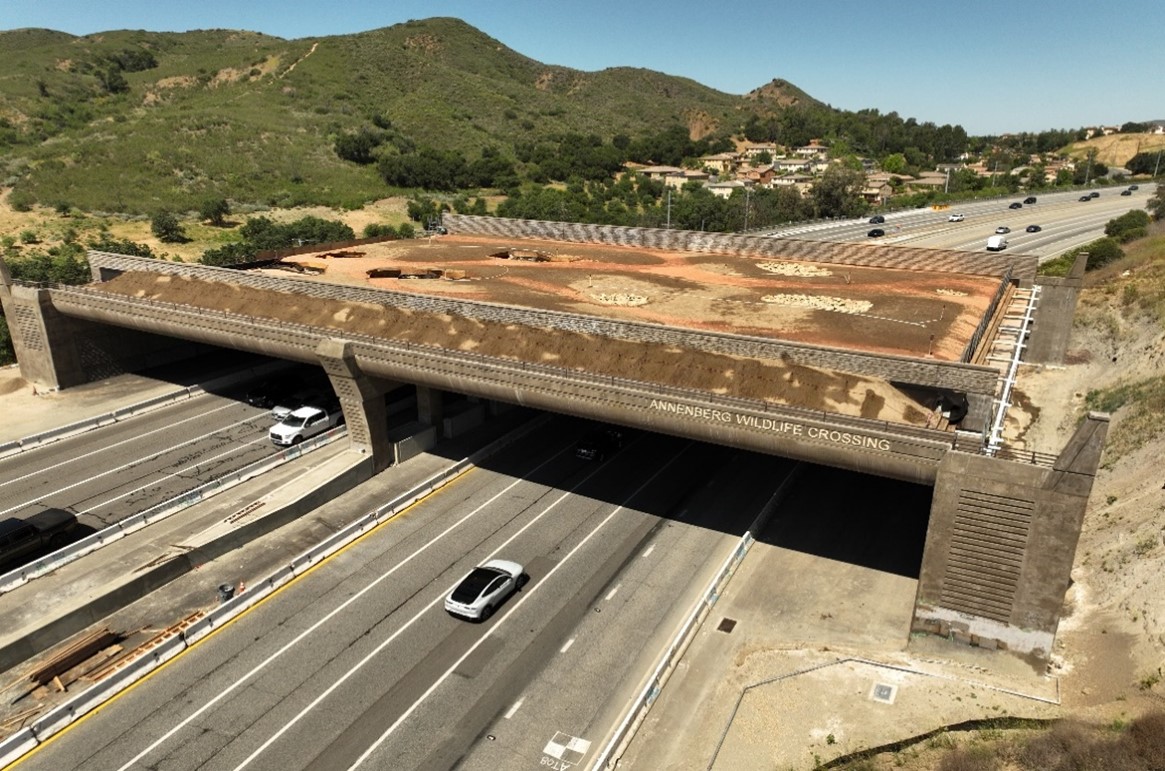

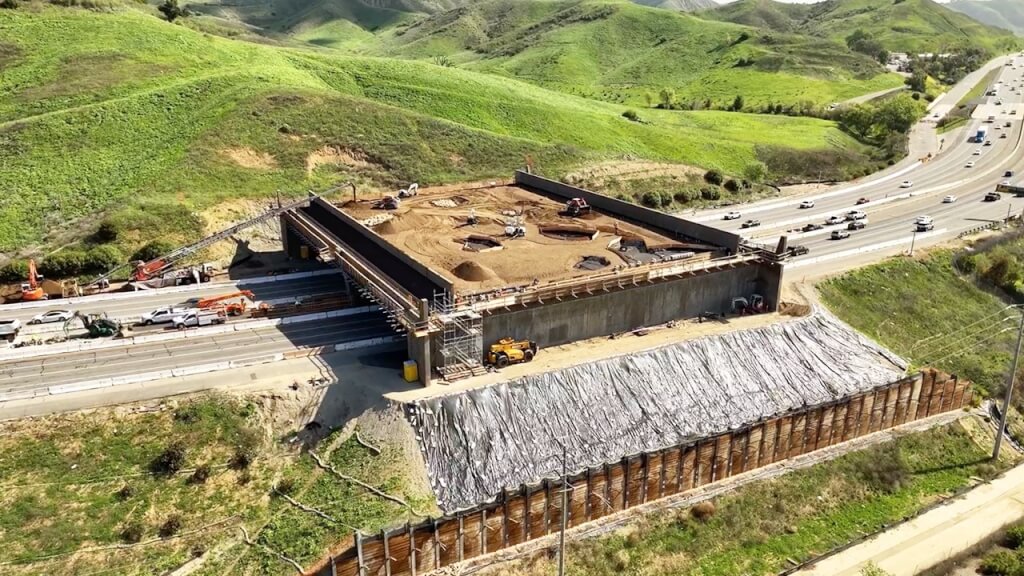
The world’s largest wildlife crossing is set to open later this year in Southern California, marking a milestone in one of the most ambitious conservation infrastructure projects ever undertaken in the United States. The Wallis Annenberg Wildlife Crossing, currently under construction over the 101 freeway in Agoura Hills near Los Angeles, is scheduled to open to wildlife on 2 December 2026, according to project officials.
Spanning 10 lanes of traffic on one of the nation’s busiest highways, the $114 million bridge is designed to reconnect habitats between the Santa Monica Mountains and the Simi Hills. Conservationists say the crossing could play a critical role in protecting mountain lions, bobcats, deer, coyotes, foxes and other species whose migration routes have been cut off by urban development and freeways.
Construction on the bridge began on Earth Day in 2022, with an expected cost of roughly $90 million. Officials originally hoped to complete the project by 2025, but severe rain and flooding over consecutive years delayed the timeline.
The wildlife crossing includes two connected bridge structures: a 43,500-square-foot span over the 101 Freeway and a 12,425-square-foot bridge over Agoura Road. Together, the 55,925-square-foot project became the largest wildlife bridge of its kind in the world.
“We have been studying wildlife, including bobcats, coyotes, and mountain lions, in the park and in the Liberty Canyon area for more than 25 years now, and we have documented the major barrier effects of the freeway, in terms of movement and gene flow. But it is incredibly exciting to see this research turn into conservation action,” said Seth Riley, the wildlife branch chief of the Santa Monica Mountains National Recreation Area.
Thousands of native plants are being installed across the structure to recreate the surrounding ecosystem and encourage animals to use the passage naturally. The bridge also includes sound walls and specially designed barriers intended to reduce noise and light from the freeway below.
More than 50 cameras will eventually monitor the wildlife crossing and surrounding areas, capturing animals as they move through the corridor. Jeff Sikich of the National Park Service said researchers have already completed a two-year study tracking five key species before the bridge opens and will conduct follow-up research afterwards to measure its impact on wildlife movement and population numbers.
The project has become closely associated with the story of P-22, the famed mountain lion that became a symbol of wildlife isolation in Los Angeles after crossing multiple freeways and living for years in Griffith Park. P-22 lived to an estimated 12 years old, longer than most wild male mountain lions. In 2022, biologists found him suffering from severe injuries and illnesses, including kidney failure, head trauma and injuries from a car strike, leading to the difficult decision to humanely euthanise him.
Beth Pratt, California regional executive director for the National Wildlife Federation and one of the project’s leading advocates, told The Guardian: “Ensuring that wildlife remain on our landscapes into the future across the Golden State requires that we address the devastation that freeways and roadways have caused to ecosystems, fragmenting them into islands that threaten wildlife large and small with extinction.”
Despite widespread support from environmental organisations and state officials, the crossing has also faced criticism over rising costs and delays. Some conservative commentators and political critics have labelled the project as a ‘bridge to nowhere’, while supporters argue it could become a global model for urban wildlife conservation.
The project is being praised as part of the state’s broader infrastructure and climate agenda, with officials saying the crossing will help protect both wildlife and the hundreds of thousands of drivers who use the freeway each day.