


Travellers to Bolivia and the Seychelles are being warned about a tropical virus that is also now increasingly transmissible in Europe due to global warming, according to the Centers for Disease Control and Prevention (CDC).
Chikungunya is spread by mosquitoes and can be mild and symptomless, but in serious cases causes fatigue, fever, headaches, severe joint and muscle pain, nausea, rashes, and even death. The name “Chikungunya” comes from a Kimakonde word used in Tanzania, where the disease was discovered in the early 1950s, to describe the way people suffering from the virus would curl up in agony. In up to 40% of cases, according to the WHO’s Dr Diana Rojas Alvarez, the disease can still be behind severely debilitating arthritis and pain as long as five years after infection.
Here’s how you can protect yourself from chikungunya:
— World Health Organization (WHO) (@WHO) February 19, 2026
🦟 Use mosquito repellents and nets, even during the day
🧥 Wear loose clothes that cover arms & legs
🚫 Eliminate mosquito breeding areas pic.twitter.com/YIIYDJRIQJ
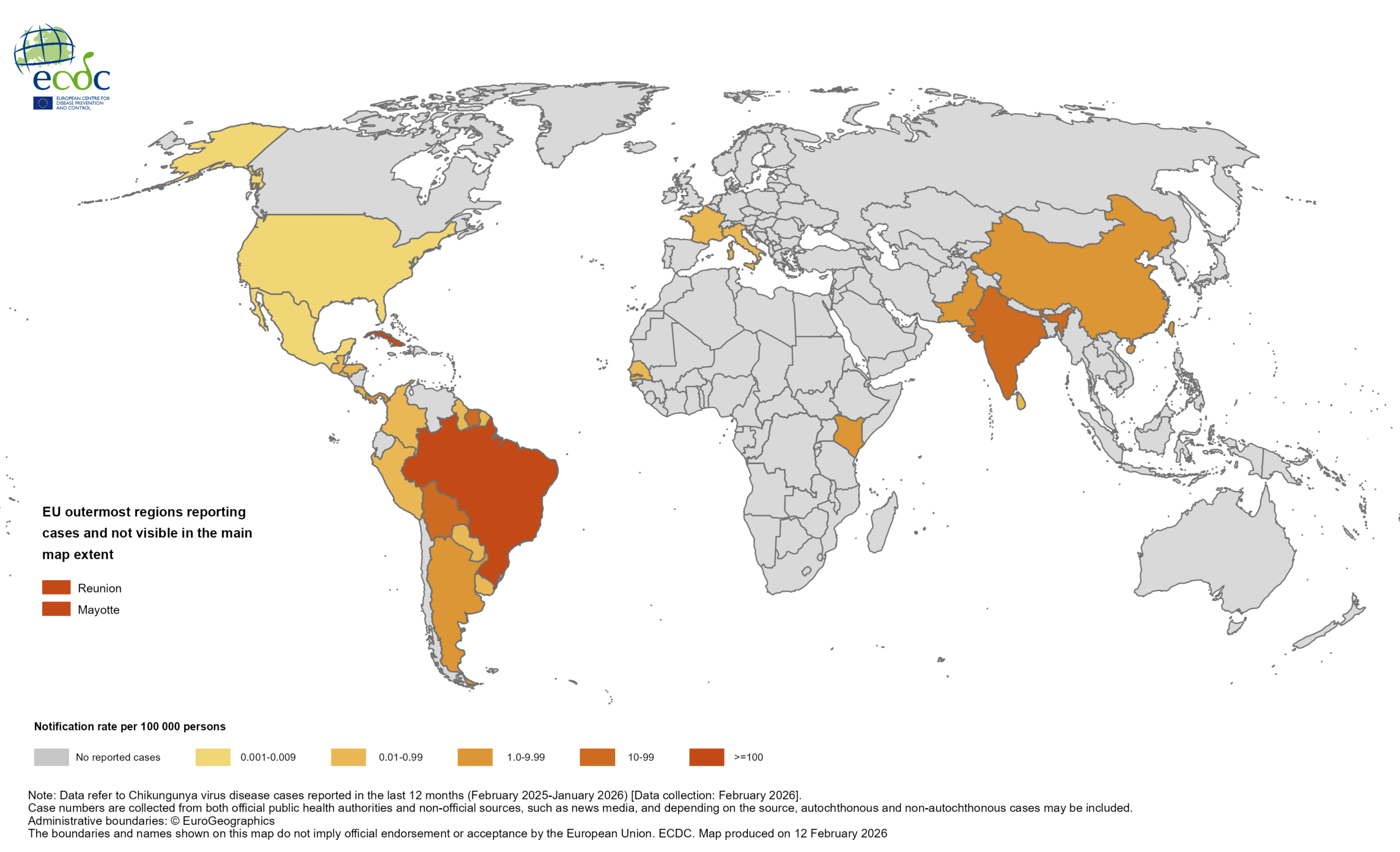
The virus is usually only fatal if caught by vulnerable people with comorbidities, newborns, or the elderly. There were over half a million cases worldwide in 2025, and 186 related deaths across 41 countries or territories, the Pan American Health Organisation (PAHO) has said.
The CDC has issued “Level 2” warnings for Bolivia and the Seychelles, urging people to get vaccinated before travelling there, and to consider cancelling their trip if they are pregnant. But, with average temperatures rising in Europe due to climate change, a new study has found that transmission of the disease is now possible for over half the year in Greece, Italy, Portugal, and Spain, and other southern European destinations too, as well as in Belgium, France, Germany, Switzerland and even the UK’s south-east for up to three months of the year. And with no sign of global warming abating, the authors of the paper, published in the Journal of the Royal Society, say the disease’s spread northwards is only a matter of time.
Over-the-counter medicines like paracetamol can help to control the fever and relieve the pain associated with the disease in many cases, experts note. However, two chikungunya vaccines, one for people aged 18 to 59 years and another for people aged 12 plus, have been approved by regulators in several countries for vulnerable populations. They are costly, still under review and are “not yet widely available nor in widespread use,” the World Health Organisation points out, but people travelling to high-risk areas should consider asking for a vaccine.
Other steps travellers can take to protect themselves include the careful use of insect repellents, placing treated nets over beds, and ensuring skin is covered up with long sleeves and trousers. Wearing pale colours is also thought to be less attractive to mosquitoes.