

Uzbekistan’s tourism sector continues its rapid expansion, welcoming more than 6.5 million international visitors during the first six months of 2026 as the Central Asian nation moves closer to its ambition of attracting 20 million annual tourists by 2030.
According to the National Statistics Committee, 6,565,410 foreign citizens travelled to Uzbekistan for tourism purposes between January and June 2026. This represents an increase of approximately 1.3 million visitors, or 24.9%, compared with the same period in 2025.
The figures confirm the strong momentum already observed earlier this year. As Travel Tomorrow reported in May, Uzbekistan had already welcomed around 4 million foreign visitors during the first four months of 2026, reflecting the country’s accelerating tourism growth and extensive investment in infrastructure, hospitality and destination development.
Neighbouring countries remain the main source markets
The vast majority of international visitors continued to come from neighbouring Central Asian countries, underlining the importance of regional travel for Uzbekistan’s tourism industry.
| Country | Visitors (January–June 2026) |
|---|---|
| Kyrgyzstan | 1,875,332 |
| Kazakhstan | 1,553,688 |
| Tajikistan | 1,471,670 |
| Russia | 585,558 |
| Afghanistan | 238,925 |
| China | 223,479 |
| Turkmenistan | 164,211 |
| Türkiye | 95,466 |
| India | 26,450 |
| Germany | 22,294 |
Together, Kyrgyzstan, Kazakhstan and Tajikistan accounted for almost 4.9 million arrivals, highlighting the close travel links between Uzbekistan and its regional neighbours.
Russia remained the fourth-largest source market, while China continued to strengthen its position among Uzbekistan’s most important international tourism markets.
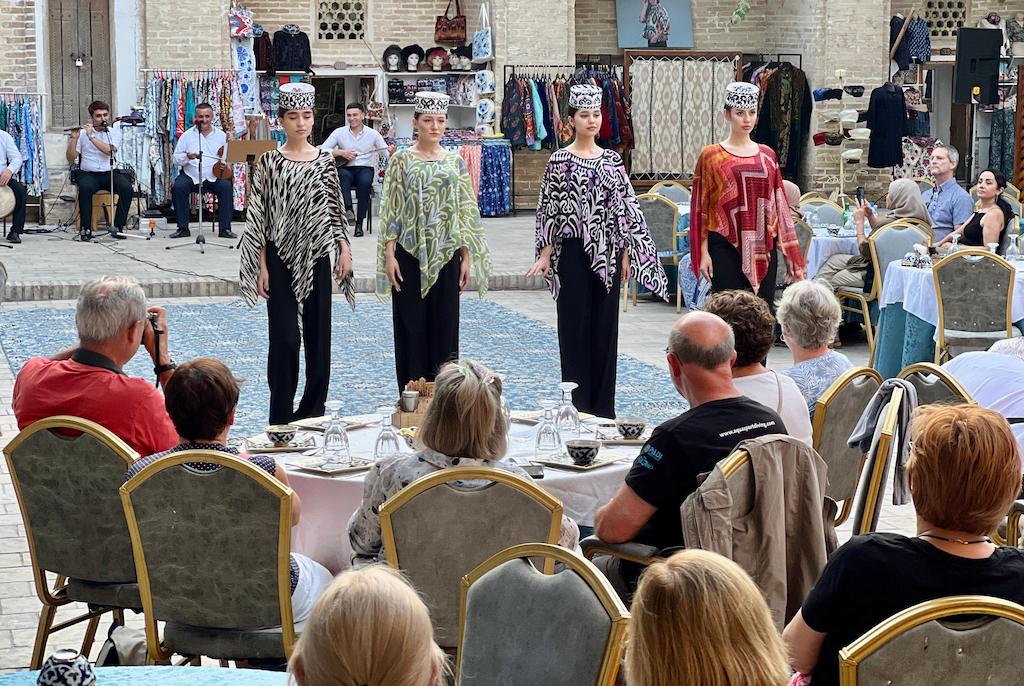
Tourism strategy gaining momentum
The latest figures come as Uzbekistan pursues one of the world’s most ambitious tourism development strategies.
During a tourism promotion event held at the Embassy of Uzbekistan in Brussels in May, Uzbek authorities outlined a roadmap aimed at transforming tourism into one of the country’s key economic pillars. The strategy seeks to attract 20 million international visitors annually by 2030, double the number of high-end hotels, expand accommodation capacity to around 95,000 rooms, and increase tourism’s contribution to the national economy from 3.5% to 7%.
The government is simultaneously investing heavily in tourism infrastructure, with dozens of tourism master plans under development, new hospitality projects, upgraded transport links and improved visitor services designed to support sustained growth.
Officials are also working to diversify Uzbekistan’s tourism offer beyond its renowned Silk Road heritage. Alongside cultural tourism centred on historic cities such as Samarkand, Bukhara and Khiva, the country is expanding ecotourism, gastronomy, pilgrimage, medical, sports and MICE (meetings, incentives, conferences and exhibitions) tourism in an effort to attract visitors throughout the year.
Business tourism receives further support
Uzbekistan has also introduced new measures to strengthen its position as a destination for international business events.
Earlier this year, the government approved a mechanism allowing organisers of qualifying international conferences, forums and exhibitions to recover 50% of the value-added tax (VAT) paid on eligible expenses. The incentive applies to events attracting at least 100 foreign participants, reflecting the country’s growing focus on the MICE sector.
Combined with expanding international air connectivity, simplified visa procedures and continued investment in tourism infrastructure, the latest visitor figures suggest Uzbekistan remains on course to achieve its long-term tourism ambitions.