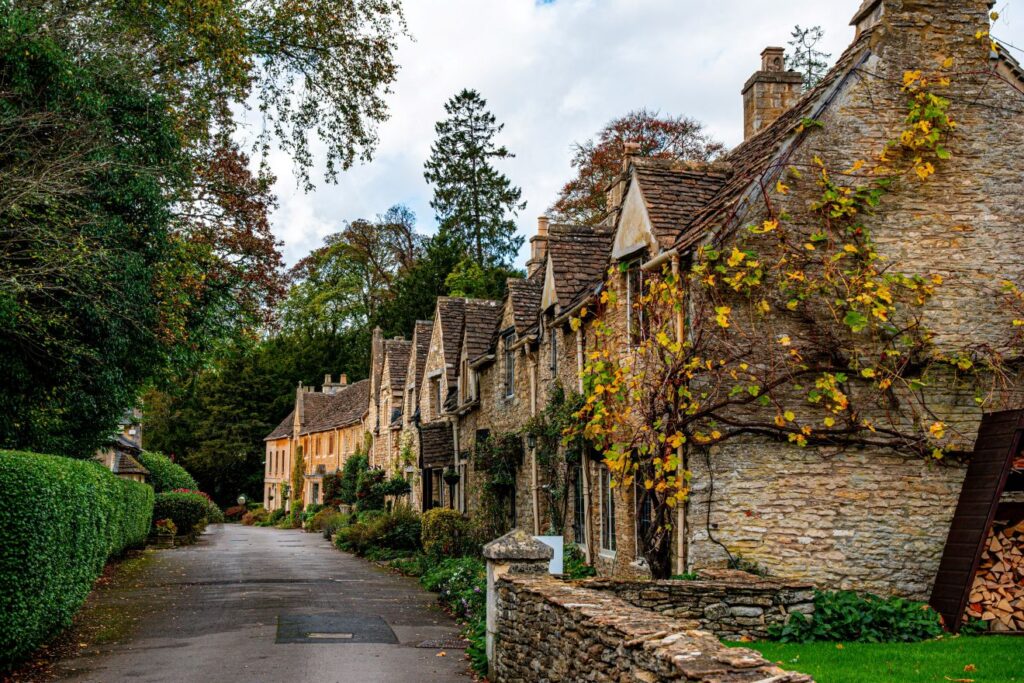
An abandoned village on Salisbury Plain that remains closed to the public for most of the year will open for four days after Christmas.
Imber, first recorded in the 1086 Domesday Book as a small agricultural settlement, was gradually acquired by the War Office in the late 19th and early 20th centuries. By 1932, almost all of the surrounding farmland belonged to the Ministry of Defence.
In December 1943, all 150 residents of Imber were ordered to evacuate to make way for US troops training ahead of the liberation of Europe from nazi occupation. Told their departure was vital to the war effort, and that they could return once the conflict had ended, they were given 47 days to leave their homes. The war ended, but the promise, however, was never honoured. The Ministry of Defence retained control of the site, and no resident has ever been allowed to move back.
Attempts to reverse that decision failed. In 1961, more than 2,000 people, including former residents, attended a rally demanding the right to return. A subsequent public inquiry ruled that the needs of the military took precedence. A further review in the 1970s reached the same conclusion. Imber has remained a training area ever since.
The only person who has managed to ‘return’ in recent years is Ray Nash, a former resident whose wish to be buried next to the father he lost as a one-year-old was granted by the Ministry of Defence in 2023. It was the first funeral in decades, and could very well be the last.
Today, Imber is open only on select days, including Easter, certain summer weekends, and the period between Christmas and New Year.
@carmaadventures A village in the UK you can only visit 3 times a year… Would you explore Imber or is it too eerie? Save this for your UK bucket list 🇬🇧 . . . #hiddenuk #ukbucketlist #ghostvillage #traveluk #unusualplaces ♬ Walking Around – Instrumental Version – Eldar Kedem
Why visit an abandoned village, some might ask? For some the emptiness (and history) is precisely the appeal. As Weird Wiltshire notes, “the British Isles are pretty crowded. Annoyingly so at times. Sixty million of us live here. Pockets of land untouched by humans are rare. Quiet areas are also becoming fewer and fewer.” The peculiarity of Imber, the author adds, is that “although there are thought to be over 3,000 lost settlements across our wondrous lands, there are very few abandoned villages left.”
Adventurous visitors will be greeted first by the Grade-I-listed church of St Giles, with “light refreshments available”. It :opens between 1100 hrs (11 am) and 1600 hrs (4 pm)”, according to the church website.
This 13th Century Church in Wiltshire is inaccessable for most of the year. It sits inside a military range on Salisbury Plain which is closed to the public, and was once the bustling heart of the village of Imber. The village was evacuated in 1943 for military training purposes… pic.twitter.com/3JexHedSW3
— Glyn Coy (@Glyndle) December 7, 2025
Beyond the church, remnants of the old settlement still stand: former farmhouses, cottages, a manor house, the Bell Inn pub, the building that once served as the village school, and several military housing blocks. All other structures either fell into dereliction or were demolished by the army during decades of training exercises.
Another highlight for visitors is the stark military landscape surrounding the village: army vehicles, mock training structures, and signs warning, ‘Danger unexploded military debris. Do not leave the carriageway.’
Went for a wander round Imber today. The village was abandoned when it was taken over by the military for training in World War II pic.twitter.com/B96HuiZ5tb
— Jonathan Holmes (@JHolmesEsq) August 26, 2024
Other UK ghost settlements share a similar fate. In 1930, the last residents of Hirta, in the remote St Kilda archipelago, were evacuated and resettled across Scotland.
The village will next open to visitors from 27 to 30 December, subject to the military schedule.