The Spanish city, which marks the end of the legendary Camino de Santiago pilgrimage route stretching across France, Portugal and Spain to the supposed burial site of St. James, is now among the many European destinations struggling with overtourism.
In an attempt to ease the strain of overtourism, Santiago de Compostela – a city of around 98,000 inhabitants – has issued a ‘good manners guide’, politely urging visitors to keep noise levels down, respect traffic regulations, and use plastic tips on their hiking poles to protect the centuries-old cobblestones. Translated into eight languages, the guide has had little effect. Last year, more than half a million people completed the Camino – five times the city’s population – and according to Euronews, this figure has increased 725-fold over the last forty years. Many tourists simply ignore the guide’s recommendations, leading some to wonder if Barcelona’s ‘Wild West’ approach of water-gunning visitors might prove more effective.
The popularity of the Camino surged after the release of Emilio Estevez’s 2010 film The Way, starring Martin Sheen, and the trend has been amplified by social media since then. The pilgrimage itself dates back to the 9th century. For centuries, pilgrims believed that reaching St. James’s tomb would bring them forgiveness and renewal. Today, however, it risks becoming just another mass-tourism product.
“We do not have tourism phobia. We have always lived in harmony with tourism, but when it gets out of hand, when the pressure goes beyond what is reasonable, that is when rejection arises,” explains Roberto Almuíña, president of the neighbourhood association in the old town that’s a UNESCO World Heritage site.
As in Barcelona and San Sebastián, the effects are being felt far beyond the popular tourist attractions. The explosion of short-term rentals has driven a 44% rise in real estate prices over the past five years. In response, the mayor has requested that Santiago be declared a ‘high-pressure zone’, while short-term rentals in the city centre have been prohibited since 2019. Visitors can still book small hotels, guesthouses, or former seminaries.
Good Morning from #Spain, where the housing market is booming w/a momentum not seen since the mid-2000s. Home sales and prices are closing in on the record highs set before the 2008 financial crash. The problem: only about 100,000 new apartments are built each year – roughly a… pic.twitter.com/E3C0WZsNYS
— Holger Zschaepitz (@Schuldensuehner) September 1, 2025
For locals, the change has been brutal. “The only people who have been able to stay in the neighbourhoods are those who have been lucky – or unlucky – enough to inherit an apartment from their grandparents, uncles or parents,” Andrea Dopazo, 32, told Euronews. About half the residents of the historic centre left between 2000 and 2020; today, barely 3,000 remain. “The city has emptied out… Closed, abandoned buildings are falling apart,” Almuíña deplores. Hardware stores and newsstands have vanished, and only one bakery remains.
For some pilgrims, the decline is not just material. Spanish friends Álvaro Castaño and Ale Osteso, who met on the Camino and return every year, mourn the loss of spirituality that seems to fade as mass tourism grows.

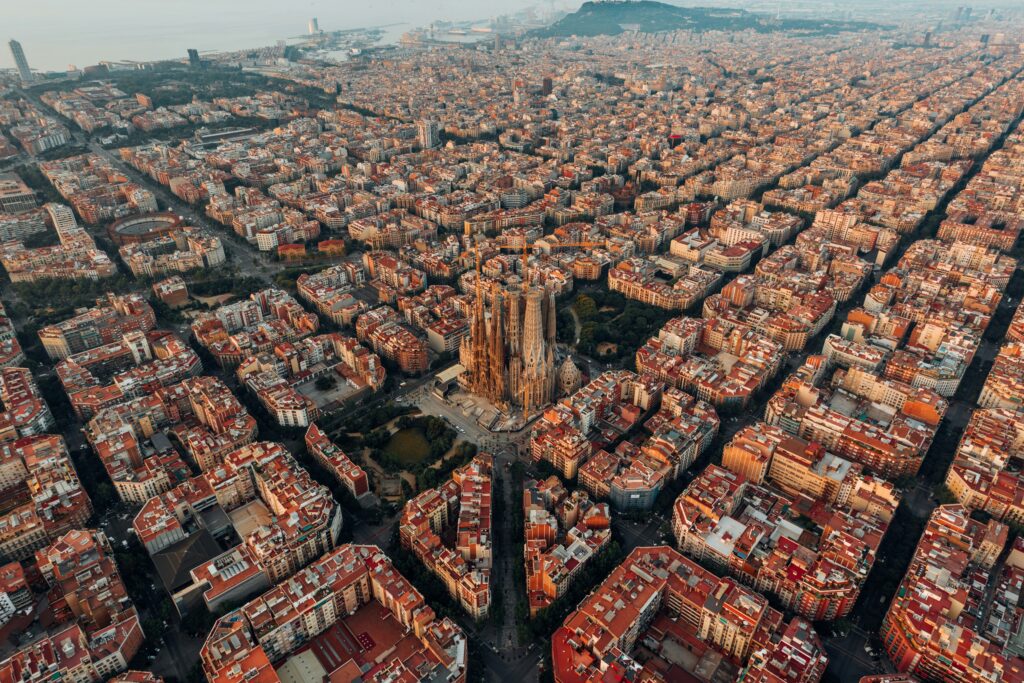
Spain as a whole faces the same dilemma: its tourism sector is projected to exceed €260 billion by 2025, yet locals from Barcelona to the Balearic Islands are protesting as they are driven out by the crowds. In order to strike a balance between cash flow and community that is both workable and lasting, Santiago may need to look to the Camino itself for guidance – a path built on humility, respect, and renewal – and let that spirit inform its future.