

Authorities in South Korea have placed travel restrictions on all citizens, banning them from travelling to Iran from 6 pm on 5 March 2026 due to the risk of being caught up in Israeli and US military strikes there.
The Ministry of Foreign Affairs announced the Level 4 travel alert, saying to forbid all travel in Iran and calling on nationals already in the country to leave as soon as possible. “We urge our nationals planning to travel to the region to cancel their trips, and those currently staying in the region to evacuate,” the statement said. The announcement marks a shift from a Level 3 advisory, which came into effect in June 2025, discouraging all travel in Iran.
The government of the Republic of Korea, with grave concern, is closely monitoring the developments in the Middle East involving the United States, Israel, and Iran, and is actively undertaking multifaceted efforts to ensure the safety and protection of Korean nationals currently… pic.twitter.com/iyhfpjvOhc
— MOFA (@MOFAkr_eng) March 4, 2026
While some travel advisories against journeys can invalidate insurance policies if people decide to ignore them, the South Korean ban means anyone choosing to ignore it and go to Iran without explicit special dispensation to do so could be penalised under the Passport Act.
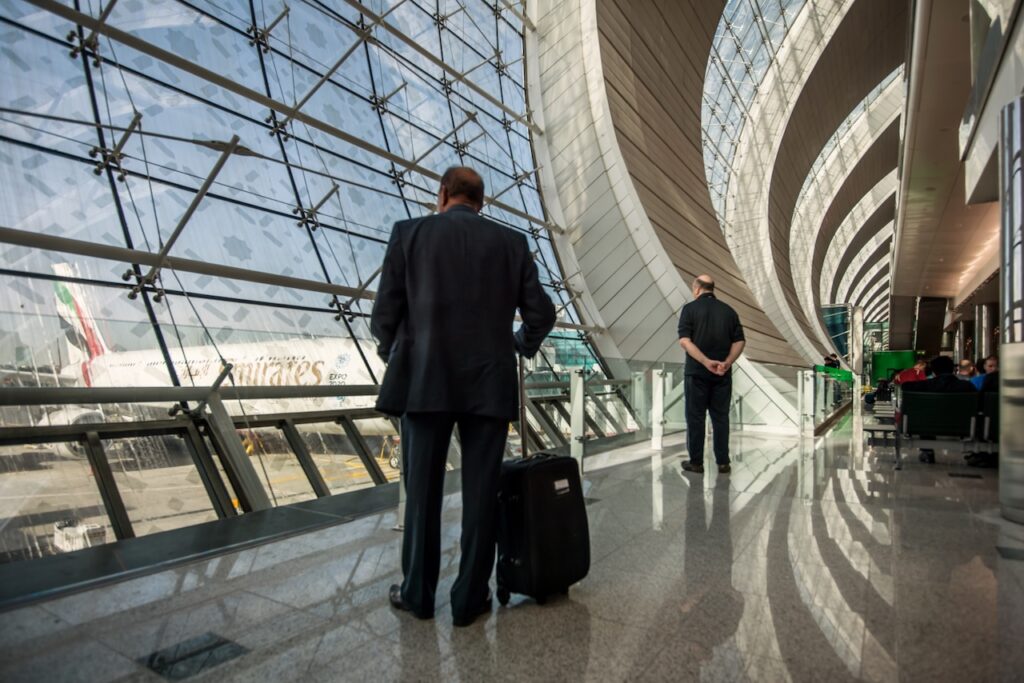
However, it is not easy to comply with the rule change. South Koreans will find themselves among the hundreds of thousands of foreign citizens in the Middle East seeking repatriation flights under closed airspace conditions, or face paying high prices for private charter jets from hubs such as Dubai.
On March 4, Director-General for African and Middle Eastern Affairs at MOFA, Chung Kwang-yong, met with the diplomatic corps of the six GCC member countries to the Republic of Korea at their request – the ambassadors of Oman and Bahrain, and the chargés d'affaires of Saudi… pic.twitter.com/2jqSsSft89
— MOFA (@MOFAkr_eng) March 5, 2026
A number of airlines have, however, now recommenced special rescue operations, including British and Qatar Airways, and Emirates. Yet the security situation is impacting not only whether the airlines take to the skies, but also the highs and lows of their share value. Korean Airlines shares rose 5.6% in the wake of the crisis, Cathay Pacific increased 2.2%, and Qantas Airways was up one percent.
For many Chinese carriers, it was a different story. Air China, China Eastern Airlines, and China Southern all dropped by between one and four percent in the Hong Kong and Shanghai markets, demonstrating what Natixis analyst Gary Ng has called their high sensitivity to the Iran conflict, with sentiment vulnerable because of “exposure through routes and energy in both revenue and costs.”
Across the Middle East, travel sentiment is at risk too, according to Oxford Economics analyst Jessie Smith, who reported on the potential impacts of both an early resolution to the hostilities and a two-month conflict. Both scenarios saw revenues and sentiment affected to varying degrees for at least the first half of the year, depending on the territory and the pre-existing success of its travel sector.
In the worst case, significant airspace disruption and infrastructure damage would extend into April 2026, with repatriation flights the priority when flights resume. After a two-month war, Smith predicted bookings will take longer to get back to normal as sentiment in travel to the region takes time to recover. That includes deeper, longer negativity for GCC countries and the rest of the Middle East into Q3 and Q2, respectively, and negative consumer sentiment through to the end of 2026 for Iran, Israel, and Lebanon. Losses could be as high as $56 billion, more than a quarter of the Middle East’s usual revenue from visitor spending.