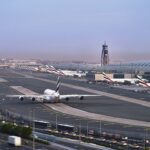


As if being stranded in the Middle East with missiles flying uncomfortably close overhead were not stressful enough, scammers have spotted what they see as a “new market opportunity.” With hundreds of thousands of passengers desperate for information on possible exit routes, they are finding it.
Following widespread flight suspensions across the region triggered by airspace closures after US and Israeli strikes on Iran, who will tell the British woman featured in the Daily Mail whose complaints about being “trapped and under attack in Dubai” while her daughters were “furious in Chichester,” her labradoodles were “sick” and her Mounjaro pen sat in the fridge quickly went viral, that she could also become a scammer’s next victim?
Scammers impersonating helpdesk staff from Emirates, Etihad Airways, Qatar Airways, and Gulf Air have been approaching stranded passengers on social media and requesting personal details, including names, phone numbers, email addresses, and booking references.
According to Dubai Police, fraudsters have also been impersonating employees of a “Dubai crisis management” entity and falsely claiming links to the police in order to obtain digital identity data, including UAE Pass credentials and Emirates ID details.
This information can then be used to conduct so-called SIM-swap operations, enabling criminals to intercept verification codes and access victims’ bank accounts via mobile apps. In the UAE, digital identity is tied to the mobile number.
Fake Qatar Airways support scammers are targeting stranded passengers here again. I reported this about a year ago. Why no warning, no visible action to remove these accounts, and no clear statement that customer service may currently be overwhelmed? Is protecting your image more…
— Boris Reitschuster (@reitschuster) March 3, 2026
Dubai Police stressed that they do not request confidential data or verification codes via phone calls or messages, and urged the public not to share personal or banking information with any unverified entity. It added that suspicious activity should be reported immediately via 901 or the official online crime reporting platform.
Airlines have also issued warnings: Emirates has cautioned travellers on X to engage only with its two official accounts, while Qatar Airways has confirmed that it would never ask for passwords, one-time passcodes, banking details, or other sensitive information via social media or direct messages.
On Tuesday, a limited number of flights operated by major Emirati carriers resumed, primarily to repatriate foreign nationals stranded in the Gulf. Airport authorities have asked passengers not to go to the airport unless they have been contacted directly by a member of staff and have urged them to check their flight status in advance.
In light of the current circumstances, Dubai Police have detected attempts by fraudsters to exploit recent developments by impersonating employees purportedly affiliated with the “Dubai Crisis Management” department and falsely claiming links to Dubai Police.
— Dubai Policeشرطة دبي (@DubaiPoliceHQ) March 1, 2026
These attempts aim… pic.twitter.com/sp69KijqO3
As one would expect, travellers are naturally turning to online platforms for information.
Part of the confusion could be attributed to changes in the verification system on X (formerly Twitter). While the blue check mark previously indicated that an account had been verified as authentic, it now simply denotes that the user is a paying subscriber. (Gold check marks identify verified business accounts, while grey ones are reserved for government organisations and officials.)
Travellers are advised to use only contact details published directly on official airline websites, and to ignore unsolicited direct messages offering assistance.
The security situation remains extremely volatile. Since the attacks began on 28 February, authorities have detected 174 ballistic missiles in total, 161 of which were intercepted and 13 of which fell into the sea. In addition, eight cruise missiles and 645 of the 689 drones launched at the Gulf state were intercepted, resulting in three fatalities – Pakistani, Nepali, and Bangladeshi nationals – and 44 direct impacts.