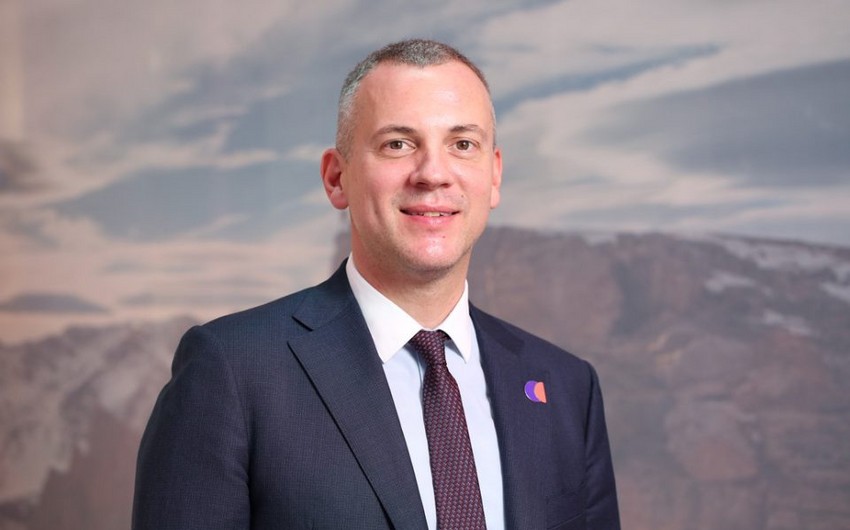
The São Tomé and Príncipe 2040 Investment Forum, held in Brussels on Thursday, 11 December, provided a platform for the island nation to present its long-term vision for sustainable development. On the sidelines of the forum, Travel Tomorrow spoke with Nilda Borges da Mata, Minister of Tourism of São Tomé and Príncipe, about how international recognition, strategic planning, and targeted investment are shaping the future of travel to one of Africa’s smallest and most distinctive destinations.
At the core of this vision lies a clear positioning. São Tomé and Príncipe is not aiming for rapid tourism growth at any cost, but for a model that balances environmental protection, cultural heritage, and economic opportunity.

A landmark year for UNESCO recognition
The minister underlined that 2025 marks a historic turning point for São Tomé and Príncipe on the international stage. Earlier this year, the island of São Tomé was officially designated a UNESCO World Biosphere Reserve, building on the recognition granted to Príncipe Island in 2012. With this decision, São Tomé and Príncipe became the first country in the world to have its entire territory classified as a UNESCO Biosphere Reserve.
“This recognition is the result of many years of work by successive governments, our technical teams and our partners,” the minister said, referring to long-standing efforts to conserve both terrestrial and marine biodiversity.
She described the designation as both an achievement and a responsibility.
“It is a form of recognition for the work done, but it also increases our responsibility to continue protecting our natural heritage,” she explained.
Beyond its symbolic value, the biosphere status is seen as a strategic asset for tourism development. According to the minister, the UNESCO label strengthens the country’s image and credibility as a destination committed to sustainability, helping to attract travellers and investors who share those values.
Tchiloli joins UNESCO Intangible Cultural Heritage list
The interview took place on a particularly symbolic day for São Tomé and Príncipe. On the same day, Tchiloli, the country’s traditional living theatre, was officially inscribed on UNESCO’s Intangible Cultural Heritage of Humanity list.
“This year will remain historic for our country,” the minister said, referring to the combined recognition of the biosphere reserve and Tchiloli.
Tchiloli is a unique theatrical tradition that blends European medieval narratives with African performance, music, and costumes, passed down through generations. Its inscription highlights the cultural richness of São Tomé and Príncipe and reinforces the country’s commitment to safeguarding living heritage.
The minister also linked this cultural recognition to broader sustainability efforts, including international awards received under the country’s 100 percent Bio strategy, particularly in agroforestry, where traditional practices support biodiversity and food security.

Choosing quality over mass tourism
São Tomé and Príncipe has made a deliberate choice not to pursue mass tourism. With a total surface area of just over one thousand square kilometres, the country is instead focusing on a clearly defined niche of travellers.
“We are not chasing mass tourism,” the minister said. “Our country is small, and we know the environmental consequences that uncontrolled tourism development can bring.”
The government’s strategy targets travellers seeking authenticity, safety, and close contact with nature. Global tourism trends increasingly show interest in lesser-known destinations that offer meaningful experiences rather than volume-driven attractions.
“This is exactly the type of destination São Tomé and Príncipe represents,” she added.
Restoring historic roças and involving local communities
Rather than expanding through large-scale new developments, the government is prioritising the restoration of existing heritage assets. A flagship example is the rehabilitation of historic roças, former agricultural estates dating back to the colonial era.
“These roças are part of our history,” the minister said. “They allow us to combine heritage preservation with tourism development.”
The approach is designed to ensure that tourism growth is inclusive. Local communities living around these sites are expected to benefit directly through employment and economic opportunities, while also playing a role in protecting surrounding ecosystems.
Eight roças have already been identified under a dedicated programme developed in partnership with Portugal, with investment tenders expected to be launched in 2026.

Presenting São Tomé and Príncipe as an investment destination
At the Brussels forum, tourism was presented as a priority sector for foreign investment. The minister highlighted political stability, a favourable regulatory environment, and legal protections for investors as key strengths.
“In addition to our natural assets, we offer security and stability,” she said. “These are important elements in today’s global context.”
She also pointed to hospitality, biodiversity, and gastronomy as distinctive features that further enhance the country’s appeal to European investors seeking long-term projects aligned with sustainability.

Incentives and legal frameworks for investors
To support investment, São Tomé and Príncipe has put in place a clear legal framework, including an investment code and specific regulations aimed at encouraging foreign direct investment. Fiscal incentives and legal safeguards were presented during the forum by the national investment authorities.
“These frameworks exist to provide clarity and protection for investors,” the minister noted, emphasising the government’s commitment to transparency and predictability.
Improving connectivity to and within the islands
Connectivity remains one of the main challenges for tourism growth. Currently, the primary air connection with Europe is provided by TAP Air Portugal, with around five weekly flights from Lisbon. Additional routes are available via Angola through TAAG, as well as regional connections operated by Afrijet.
“We are aware that connectivity needs to improve,” the minister acknowledged. “If we want the destination to become more accessible and less costly, we must work on this.”
Improving transport links between the islands of São Tomé and Príncipe is also a priority, as both islands form an integral part of the tourism offer.
A long-term tourism strategy towards 2030
Tourism development in São Tomé and Príncipe is guided by a national strategy first adopted in 2018 and revised in 2023, with a horizon extending to 2030. The strategy defines priorities and actions across infrastructure, heritage, investment, and human capital.
“We already have a strategic document that guides our actions,” the minister said. “Everything we do in tourism must align with that framework.”
Human capital development is another cornerstone of the tourism strategy. A national tourism and hospitality school was inaugurated earlier this year to address skills gaps across the sector.
“Quality of service is essential,” the minister stressed, highlighting the importance of training professionals working in hotels, restaurants, and tourism services.
Practical information for European travellers
Entry requirements have been simplified for many visitors. Nationals from around thirty countries benefit from visa-free entry for stays of up to fifteen days. For longer stays, visas can be requested online or through diplomatic representations where available.
These procedures apply to both tourists and investors, supporting the country’s efforts to facilitate travel and business.
As global tourism continues to grow beyond pre-pandemic levels, São Tomé and Príncipe is positioning itself not as a destination of volume, but as a destination defined by responsibility, authenticity, and long-term vision.