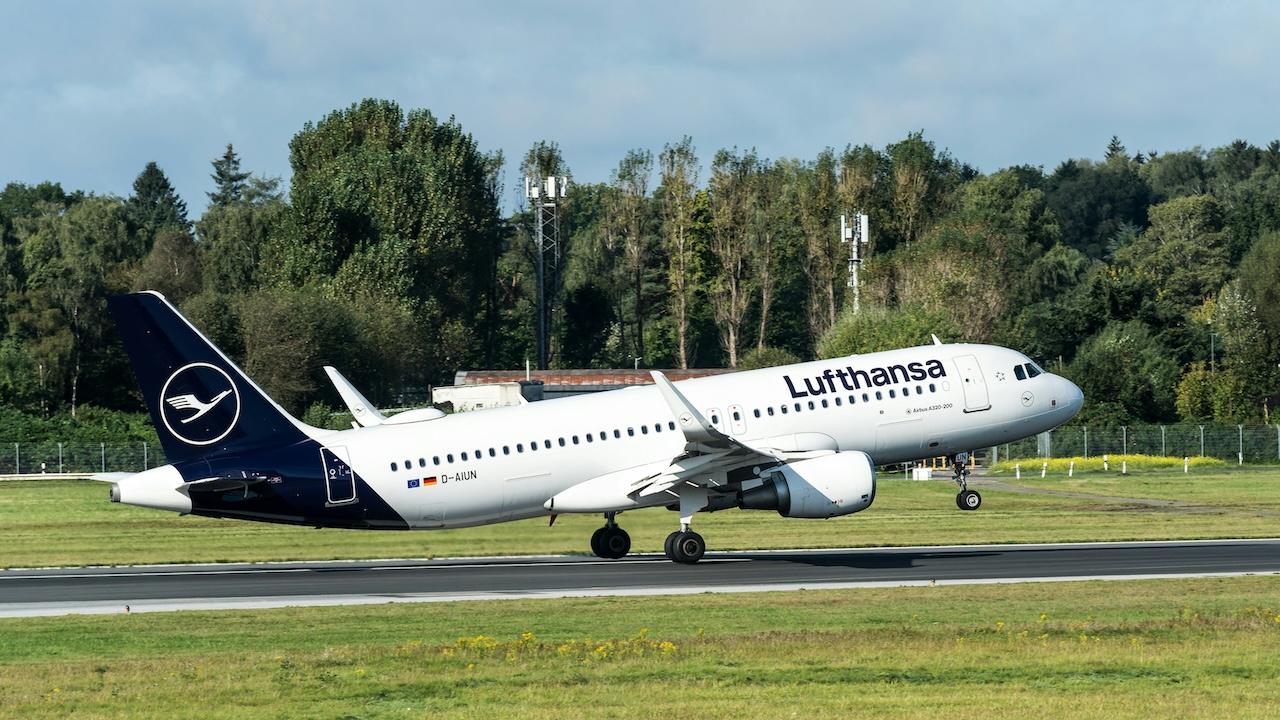



Germany’s Lufthansa has announced the relaunch of regular flights to Kazakhstan, giving mainland Europe back its links to Almaty and Astana following a five-month suspension.
The schedules will start again on 29 March 2026, departing Frankfurt five times a week to Almaty and four times a week to Astana. Aimed at both corporate and leisure flyers, operations will be served by an Airbus A340-300 where passengers benefit from a choice of three cabin classes: business; premium economy; and economy.
The suspension of services on 26 October 2025 came as a blow to Kazakh connectivity which had been steadily improving amid a surge in visitor numbers. The first half of the year alone had seen 600,000, or 8.7% more international arrivals year-on-year, taking tourist figures to 7.5 million.
With authorities aiming for at least 19 new routes to and from Asia, Europe, and the Middle East, 2025 saw work towards such major connecting destinations as Budapest (Hungary), Milan (Italy), Munich (Germany), and Prague (Czech Republic), and services to Belgrade (Serbia), Sofia (Bulgaria), and Vienna (Austria). By July, citizens of 56 countries were given the right to enter and exit the Central Asian republic without the need for a visa, following an announcement by the Ministry of Internal Affairs allowing visits of up to 30 calendar days each time, and 90 days in total, within a 180-day period.
This built upon the advent of the country’s Neo Nomad visa, introduced in November 2024, which offered professionals and digital entrepreneurs an entry route to reside in Kazakhstan while working remotely to generate foreign income. Permitting multiple entries and valid for one year, it is extendable by an additional year and allows family members and dependents of the holder to obtain a visa for Kazakhstan for the same duration.
This opening up of the world’s largest landlocked nation has been facilitated by huge investment in modernised terminals at Almaty, Kyzylorda, Shymkent, as well as new regional airports under construction in Katon-Karagay and Zaisan promoting domestic travel and tourism too.
At the time of the Frankfurt cancellation in late 2025, Lufthansa said the decision to suspend the winter’s services was due to considerations of “economic efficiency, seasonality patterns, and incorporating limited aircraft availability.” In addition, the carrier said “a stable, punctual, and reliable flight schedule is the top priority for the airlines in the Lufthansa Group. To this end, a wide range of measures were already introduced in summer 2025, such as extended transfer times and the provision of reserve aircraft.”
Now though, even as tourism to the Middle East suffers conflict uncertainty and fuel shortages, both tourism and business opportunities are back on the cards between the Central Asian republic and the major German financial hub.