

ITB Berlin is celebrating its 60th anniversary this week, reaffirming its status as the world’s leading B2B travel trade show and a cornerstone of the global tourism calendar. From 3 to 5 March 2026, nearly 6,000 exhibitors from more than 160 countries will gather in the German capital, underscoring the event’s enduring role as a marketplace for international dialogue, economic opportunity and strategic debate about the future of travel.
As I walk through the Messe Berlin halls on this first day dedicated exclusively to the international press, the atmosphere is one of anticipation. Journalists from around the world are previewing announcements, meeting ministers and CEOs, and setting the tone for what promises to be three intense days of business once the doors officially open to the industry on 3 March.
What began in 1966 as a modest trade fair has evolved into a powerful global platform spanning five events across Europe, Asia and the Americas. Today, ITB Berlin stands not only for business generation but also for innovation and responsibility, integrating global challenges into industry discussions rather than avoiding them.
“For 60 years, ITB Berlin has been the place where the international travel industry meets to understand markets, identify trends and do business,” said Dr. Mario Tobias, CEO of Messe Berlin. “Particularly in times of global challenges, we need platforms that combine economic strength, innovation and responsibility.”

This anniversary edition is fully booked, with strong demand from Asia, Central Asia and the Americas. Major exhibiting nations include Thailand, Egypt, Turkey and Italy. The prestigious ITB Buyers Circle has brought together senior buyers from 63 countries, with 43% attending for the first time, further reinforcing the show’s growing influence as a high-level B2B marketplace.

Angola takes centre stage as Host Country betting on “green oil”
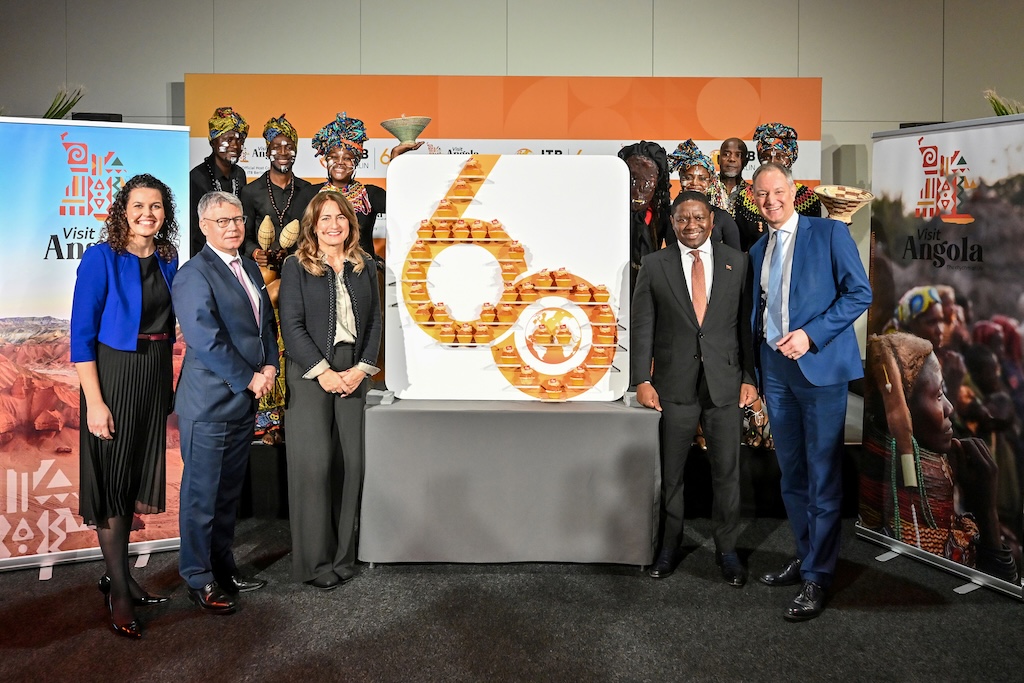
Marking a significant moment for Africa, Angola is the Official Host Country of ITB Berlin 2026. Under the slogan “Visit Angola – The Rhythm of Life”.
“We are very excited to be the Official Host Country of ITB Berlin 2026,” Minister Márcio Daniel said. “This partnership offers a unique opportunity to showcase Angola’s cultural diversity, natural beauty and uniqueness on one of the most important international platforms.”
In a conversation with Travel Tomorrow on the sidelines, the minister was clear about the country’s strategic direction. “We are betting now on green oil: tourism,” he said, emphasising Angola’s ambition to diversify its economy beyond traditional oil revenues.

Positioned in Hall 21, Angola’s presence is dynamic and confident, combining cultural performances such as kizomba workshops with B2B speed dating sessions. As the third African country to host ITB Berlin, Angola is using the platform to highlight its coastlines, deserts, waterfalls and wildlife.
Referring to Angola’s growing appeal for adventurous travellers and wildlife enthusiasts, the minister offered a striking remark: “You know, elephants don’t have passports.” The message was clear. Angola shares ecosystems and wildlife corridors with neighbouring countries such as Namibia, offering similar spectacular safari and nature experiences, yet remains an insider destination with vast untapped potential.
Stable global travel with strong South American growth
New data released at ITB Berlin by IPK International’s World Travel Monitor® indicates that international travel grew by 4% in 2025, continuing the positive momentum of recent years. Europe recorded average growth of 4%, Asia increased by 5%, while North America saw a slight decline of 1%. South America stood out with an 11% surge, driven primarily by intercontinental travel.
Holiday trips remain dominant, accounting for nearly three quarters of all leisure travel, particularly sun and beach holidays, city breaks, round trips and rural stays. Business travel and MICE segments performed above average, rising by 6% and 8% respectively. The average length of stay increased to nine nights, while travel spending rose by 5%, largely driven by accommodation costs.
Experts expect demand to remain stable in 2026, although themes such as overtourism and sustainability are shaping new strategies for destinations worldwide.
A platform for the future of tourism
As ITB Berlin marks six decades, the fair continues to act as a barometer for global tourism trends and a catalyst for partnerships. From contract negotiations to strategic alliances, the event remains a central hub for decision-makers across the tourism value chain.
Yet beyond the stands and presentations, conversations in the corridors and lobbies inevitably turn to geopolitics. The current turbulences in the Middle East are casting a shadow over parts of the travel and tourism industry, affecting air routes, traveller confidence and regional outlooks. While the tone remains constructive, the awareness of global fragility is palpable. In this context, the role of ITB Berlin as a space for dialogue, reassurance and strategic coordination becomes even more critical.