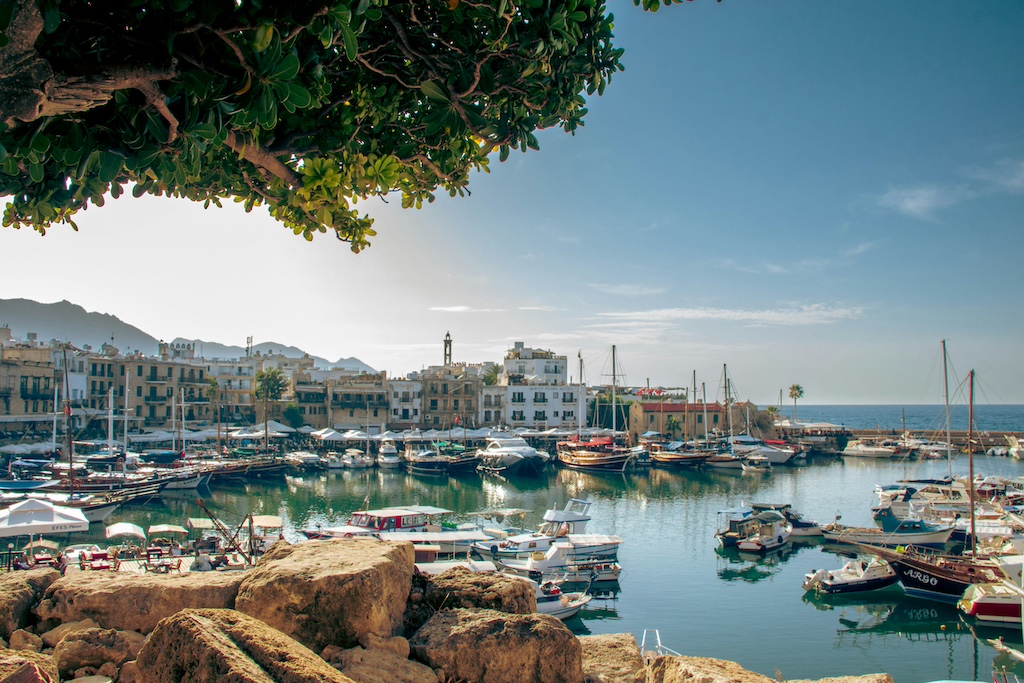



Tourism officials in Cyprus, the closest European Union territory to Israel, have emphasised that the Mediterranean island country is a safe destination for visitors, amid safety concerns and a downturn in bookings since the outbreak of hostilities in the Middle East.
Deputy Tourism Minister Costas Koumis was reported as saying the republic “was, is, and will always be a safe destination” by the Cyprus Mail. But public sentiment appears to be cautious about travel there. Sophia Efthymiou, of short-term rental firm Saaiman Stays, told Euronews that 13 guests have cancelled 50 nights between them in the last week alone, resulting in an estimated loss of 35% of business income.
Statement by the Government Spokesperson @SpokespersonCY @letymbiotis
— Προεδρία της ΚΔ (@CYpresidency) March 1, 2026
In relation to statements and media reports referring to the launch of missiles towards the direction of Cyprus, it is clarified that this is not the case and there is no indication whatsoever that the… pic.twitter.com/4ylQKyWsRf
An update to the UK’s Foreign and Commonwealth Development Office (FCDO) travel advisory for Cyprus on 5 March 2026 could be behind some of the tourism downturn. It notes that a “drone attack” took place three days earlier at RAF Akrotiri, a UK military airbase on the island. Without mentioning the situation in the Middle East or Persian Gulf specifically, where visitors and foreign residents have been affected by airspace closures due to Iranian airstrikes, the FCDO alert also points out that “regional escalation poses significant security risks and has led to travel disruption.”
The uncertainty comes as a blow to the Cypriot tourism sector, which had seen unprecedented success in 2025, with annual visitor arrivals soaring 12.2% year-on-year to reach a record 4.53 million. It had appeared that tourists had grown inured to the sight of missiles in the Mediterranean skies over the course of the recent Gaza crisis. But Fotos Kikillos, Municipal Secretary of Ayia Napa (at the far east of Cyprus, close to Lebanon and Syria), has implied that the buoyancy seen until now could be changing. The Guardian reports that he remarked at travel trade show ITB Berlin in early March how stakeholders are “hearing of cancellations, of a certain numbness.”
Cyprus: The State Department updated the Travel Advisory for Cyprus to reflect the authorized departure of non-emergency U.S. government personnel and family members of government personnel. Read the full advisory: https://t.co/xeGmqQrxI9 pic.twitter.com/mEMqAcDIZU
— TravelGov (@TravelGov) March 4, 2026
In addition to Koumis’s reassurances, the Ministry of Transport, Communication, and Works has sought to address tourist concerns and the FCDO warning by banning all drone use other than government activity.
It’s also possible that a significant proportion of the cancellations being experienced by hotels and rentals on the island could be for reasons other than sentiment. Israeli holidaymakers for example, made up 13% of visitor numbers in 2025, and with the hostilities causing closed airspace and cancelled flights between Cyprus’s Larnaca International and Paphos International airports from Middle Eastern hubs such as Haifa and Tel Aviv in Israel, the slowdown in bookings could be due to a (perhaps temporary) inability to get to Cyprus, rather than fear.
#Cyprus: Updated assessment that terrorist attacks in Cyprus cannot be ruled out.https://t.co/6VF97DCrWL pic.twitter.com/1FEZXiKKLT
— FCDO Travel Advice (@FCDOtravelGovUK) March 5, 2026
Flights are also grounded to and from Amman in Jordan; Beirut, Lebanon; the UAE’s Dubai; and the Qatari capital Doha. Oxford Economics analysts have set out two scenarios for the conflict’s impact on travel and tourism, one seeing negative sentiment fade for the wider region by the end of June, the other extending negative sentiment into September. Stakeholders in Cyprus will be hoping for the former.