Little known it may be, but the famous English university city of Oxford was once well known for something else: hosting a significant number of Belgian refugees during the First World War.
During WWI, these Belgian refugees in Oxford contributed to local industries such as toy making and the university press. The famous Belgian fictional detective Hercule Poirot was created by Agatha Christie, partly inspired by the wave of Belgian refugees in Britain during the Great War.
Victorian era figures, such as artist and poet William Morris, felt strong ties to Flanders, incorporating Flemish influences into their work.
These, and other equally off-the-radar links between the two places, make a visit here all the more enticing and fascinating for visitors from Belgium.
It is also a fact that the British, including many from the Oxford area, have long-standing historical links through the defence of Belgian neutrality, famously marked by the Battle of Waterloo in 1815 and the Commonwealth war graves in Belgium.
Christ Church and the heart of Oxford University
Any visit to Oxford is not really complete without seeing the wonderful cathedral at Christ Church, one of over 30 colleges that comprise the world-famous Oxford University.
Christ Church is located on St Aldates, an easy walk of no more than a few minutes from Oxford city centre. Said to be the most beautiful college in the city, the college quadrangle is the size of a football field, and the 12th-century cathedral is one of the most beautiful in the world. It owes its grandeur to the king of six wives, Henry VIII.
Although Christ Church attracts many thousands of visitors each year, it remains a working institution with a twofold purpose: the pursuit of learning and cathedral worship. For almost 900 years, this church has stood here as a place of worship and prayer. The cathedral is a working building, with a dual role as the cathedral for the diocese of Oxford and the college’s chapel.
Public tours are available to see this wonderful chapel as well as other on-site places such as the Great Hall, where students and senior members of the college dine, plus Tom Quad, the largest in Oxford, and Great Tom, which is to Christ Church what Big Ben is to London.
Belgian wartime traces inside the cathedral
But it is, arguably, the cathedral itself, not least its magnificent stained glass, including the first to be installed here for 130 years, that is the most memorable. It is here you will come across yet another direct link to Belgium: the banners and flags that, even while the war raged, were brought back to Oxford by two local regiments serving in WWI near Ypres in Flanders.
The names of local men reported missing or dead in the war are also remembered in the chapel of remembrance.
A Flemish mystery at Oxford Castle and Prison
Bountiful history can also be found on a tour of the nearby Oxford Castle and Prison, where possibly the most surprising story belongs to a Belgian.
It was on 6 July 1577 that one Roland Jencks, a Flemish bookbinder, was convicted for holding radical religious views. As a supporter of the Pope, he had also insulted the Protestant Queen. After spending three weeks with just rats for company in a cell, he was found guilty. Jencks erupted in anger and shouted a curse at the jury. The next day, the 300 witnesses at his trial all dropped dead, and Jencks was suspected of witchcraft. He escaped and returned to Flanders.
The Jencks curse turned out to be no legend. In 2004, archaeologists uncovered a mass grave from that period. According to scientists, Jencks was a typhoid carrier and had fatally infected the entire courtroom.

From historic streets to modern flavours
After exploring the wonders of this fine city, you may well have worked up an appetite, and there is no better place to sate any hunger locally than Dishoom Permit Room, just a short walk from Christ Church.
The permit rooms are a slightly smaller, cosier take on Dishoom, a highly successful chain of excellent Indian restaurants in the UK, which first opened in 2010 and is now scattered around the country. The permit rooms have a slightly smaller food menu but a larger cocktail card.
The concept is the brainchild of Dishoom’s Indian born owner, who was fascinated by the culture and history of Mumbai’s Iranian-style cafés.
These typically serve small, tapas-style dishes and are so popular and relatively affordable in India that they can be found on many street corners in the bigger cities.
The origins of the permit room tradition
Permit rooms in India originated in the 1970s following the relaxation of strict prohibition laws, specifically in Bombay, now Mumbai. These spaces allowed individuals with authorised, medical-based permits to legally consume alcohol, evolving from the clandestine Aunty Bars of the 1949 to 1960 prohibition era. They became iconic, informal, and accessible drinking holes and a staple of social life, particularly in Mumbai.
Today, while some traditional, dimly lit permit rooms still exist, the term has been modernised by contemporary restaurants such as those by Dishoom to evoke the nostalgia, culture, and cuisine of 1970s Bombay.
The first permit room opened in Brighton in 2024, followed by Cambridge and then Oxford. There is also one in London, with a fifth due to open this month in Liverpool.
A thriving Oxford venue with a Mumbai soul
The manager at the Oxford venue is the very friendly and welcoming Richard Fernandes, who was raised in Mumbai and moved to the UK in 2009. He explained that Dishooms normally gravitate towards thriving cities, and that is exactly what Oxford is.
He told this site, “The history of permit rooms is particularly interesting, and it was this that appealed to the Dishoom owner.”
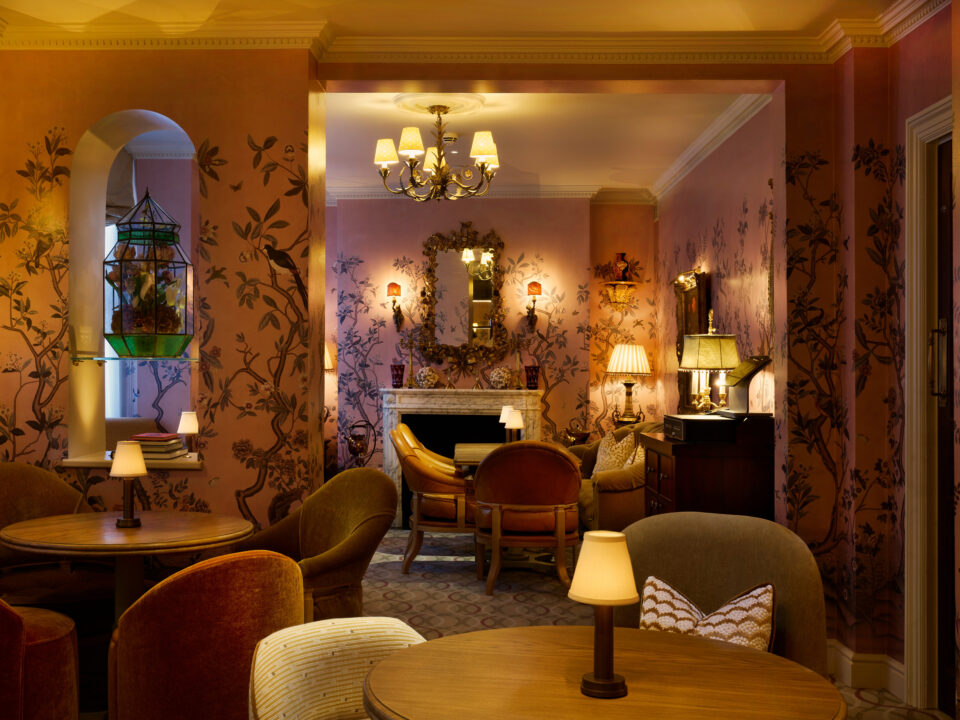
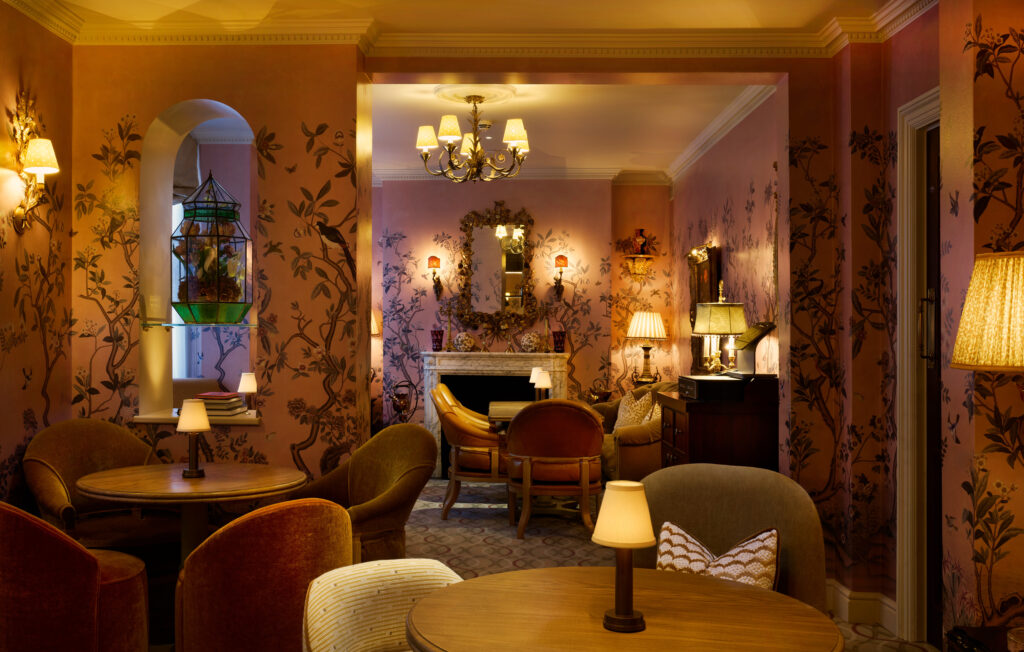
The Oxford branch is wonderfully evocative of the café culture the Dishoom owner seemingly had in mind. The food really is great, but that is not all. Every Thursday, there is live music with a DJ, and if wall art is your thing, you will be intrigued by the lovely local and South Asian art adorning the walls.
Standout dishes and flavours of Mumbai
The menu is full of wonderful offerings, such as chicken ruby, tender chicken in a rich and silky makhani sauce, and lamb Chettinad, a fall-apart lamb in a seductive South Indian coco sauce, spiced with pepper, chilli, and curry leaf.
If, as with this writer, biryani is your thing, then try the chicken berry Britannia version here, comprising chicken, ginger, garlic, mint, and rice cooked in the kacchi style.
Another equally tasty dish is the prawn Moilee, a curry of coco milk, turmeric, curry leaves, and spices.
The Permit Room special here is a half or whole chicken tandoori, priced depending on the size, which is not red, for a change, and grilled and served with fresh kachumber and tangy green chutney.
All are delightful, as are the many other dishes on the card, including chaats and salads, sides and savouries. There is also a great wine list and drinks, including selections from India.
From Portuguese pau to Parsi specialities, the savoury richness of Mughlai dishes to coco sweet Goan curries, all are ingredients that make up the food of Mumbai, and at Dishoom too.
Good value, good causes and a strong conscience
The prices, considering the very high quality of the food here, are remarkably reasonable at this 126-seat all-day bar café and will not break the bank, a serious consideration for many in these economically tight times. With the weather set to improve, there are a few tables available for outside dining.
Do not forget that they start early here, so you might also like to consider popping by for a brilliant breakfast consisting, among much else, of steaming chai and drippy egg-filled naans.
The homepage says, “Damn good, all day”, and that is an apt description.
Very commendably, the owners have a policy whereby for every meal purchased, they donate a meal to a child who might otherwise go hungry. Two charities Dishoom works with, Magic Breakfast in the UK and the Akshaya Patra Foundation in India, provide nourishing free meals to children. To date, more than 20 million such meals have been provided.
“Dishoom breaks down barriers, just as the old Irani cafés of Bombay did,” said a company spokesman.
It also goes to some lengths to reduce its carbon footprint, support nature-based activities, and is a certified B Corp.
A city of brilliance, old and new
Oxford has produced no fewer than 26 UK prime ministers, including Margaret Thatcher, and 46 Nobel Prize winners. Astronomers Stephen Hawking and Edmond Halley also attended school here, as did Rupert Murdoch and Oscar Wilde.
Unlike the castle and its university, Dishoom may be relatively new to Oxford, but this excellent restaurant is just one more reason to pay a visit to what is a fine university city.