


A new study by clean transport NGO Transport & Environment (T&E) shows that pollution from ferries equals that of 6.6 million cars in Europe’s major port cities, challenging the common assumption that travelling by ferry is a greener alternative to flying.
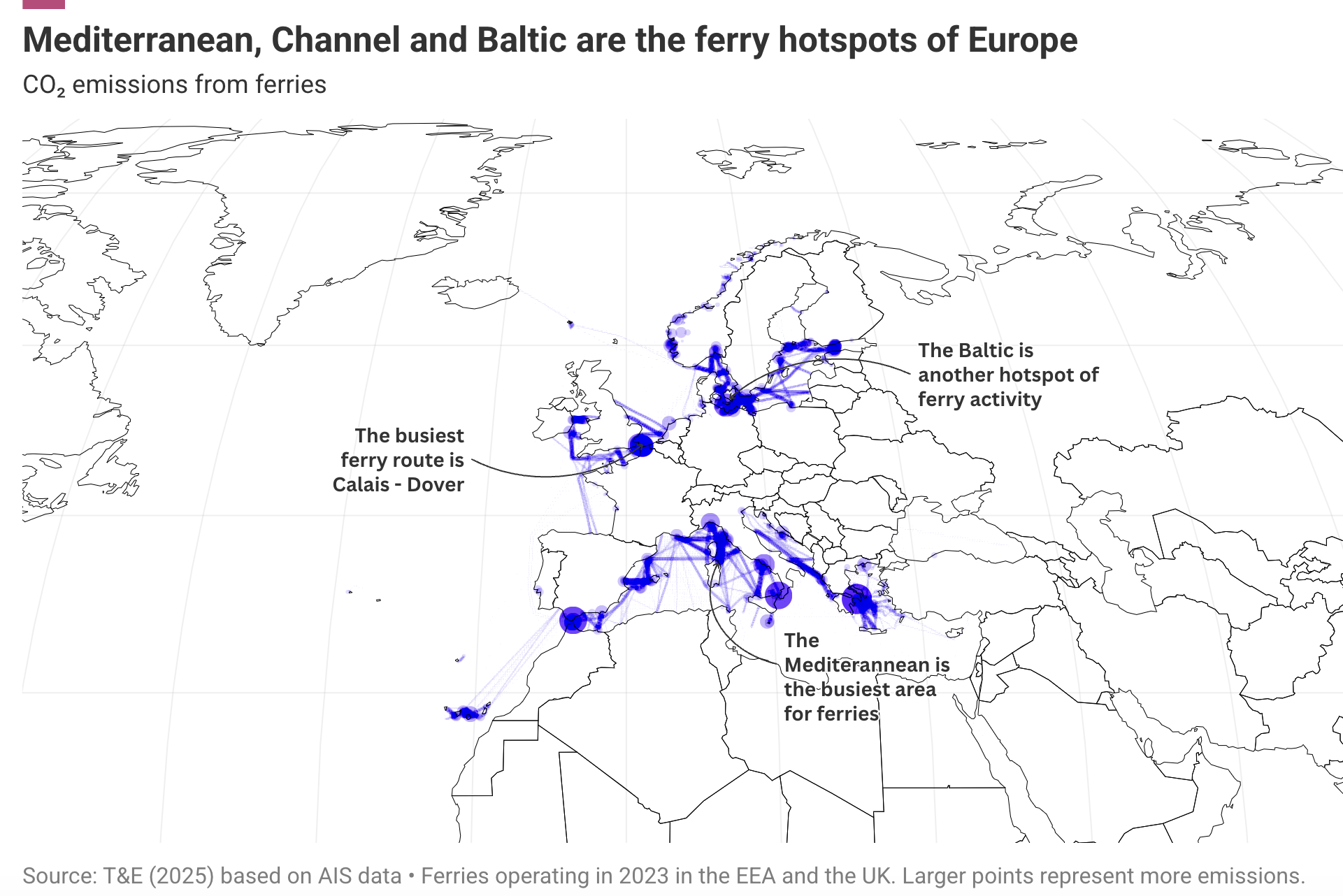
The analysis is based on 2023 maritime data and applies 2025 regulatory changes to these figures to determine current rankings. By modelling the emissions of 1,043 vessels across Europe’s 100 busiest ports, analysts found that ferries collectively emitted 13.4 million tonnes of CO2 during the year.
Dublin, Barcelona and Naples were found to suffer from more SOx pollution – known to cause respiratory diseases – than all the cars in those cities. Overall, 13 of Europe’s 15 busiest port cities were found to suffer from higher sulphur oxide pollution from ferries than from road traffic.
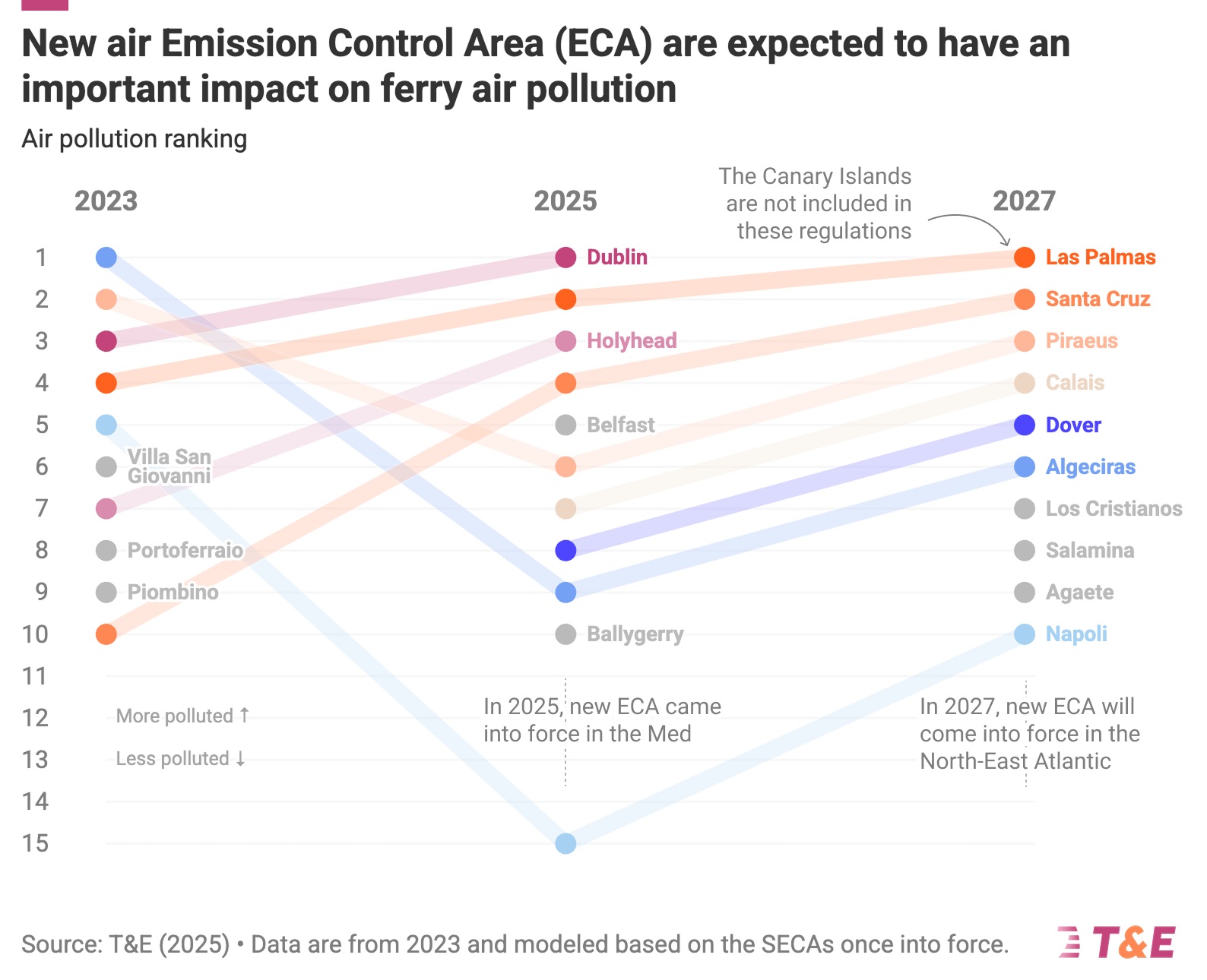
Dublin was found to be the most polluted port city in the study, followed by Las Palmas in Gran Canaria and Holyhead in Wales. However, projections suggest that Las Palmas could overtake Dublin by 2027. Meanwhile, Barcelona tops the list as Europe’s largest ferry-related CO₂ emitter.
Other heavy polluters include Marseille, Rotterdam and Valencia. The highest-emitting ferry route is Travemünde (Germany) – Helsinki (Finland), ahead of the Dover (UK) – Calais (France) crossing.
New Emission Control Areas are expected to be introduced in the north-east Atlantic by 2027, further limiting air pollution from maritime fuel. Existing controls, however, suggest that regulation alone may not be enough. Even after the entire Mediterranean became a Sulphur Emission Control Area (SECA) in May 2025, ferry emissions in Barcelona still produce 1.8 times more SOx than cars.
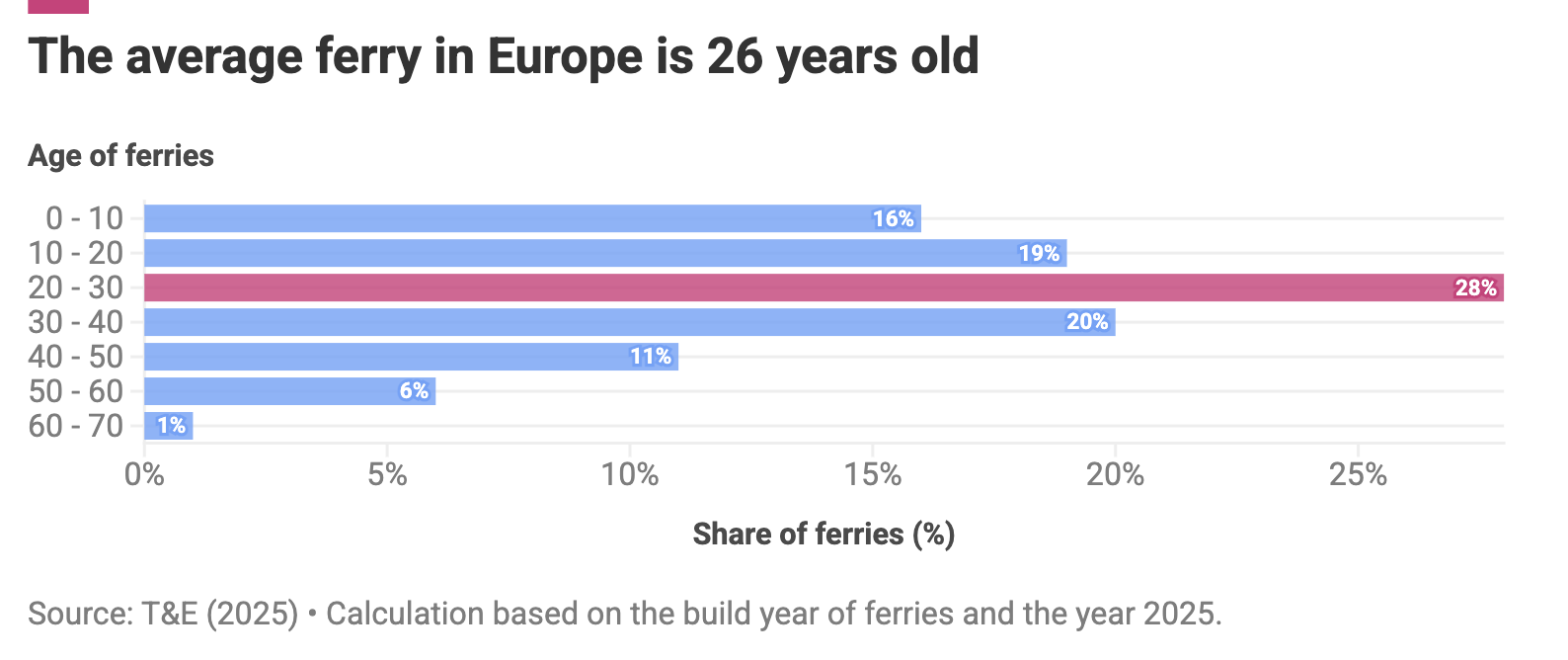
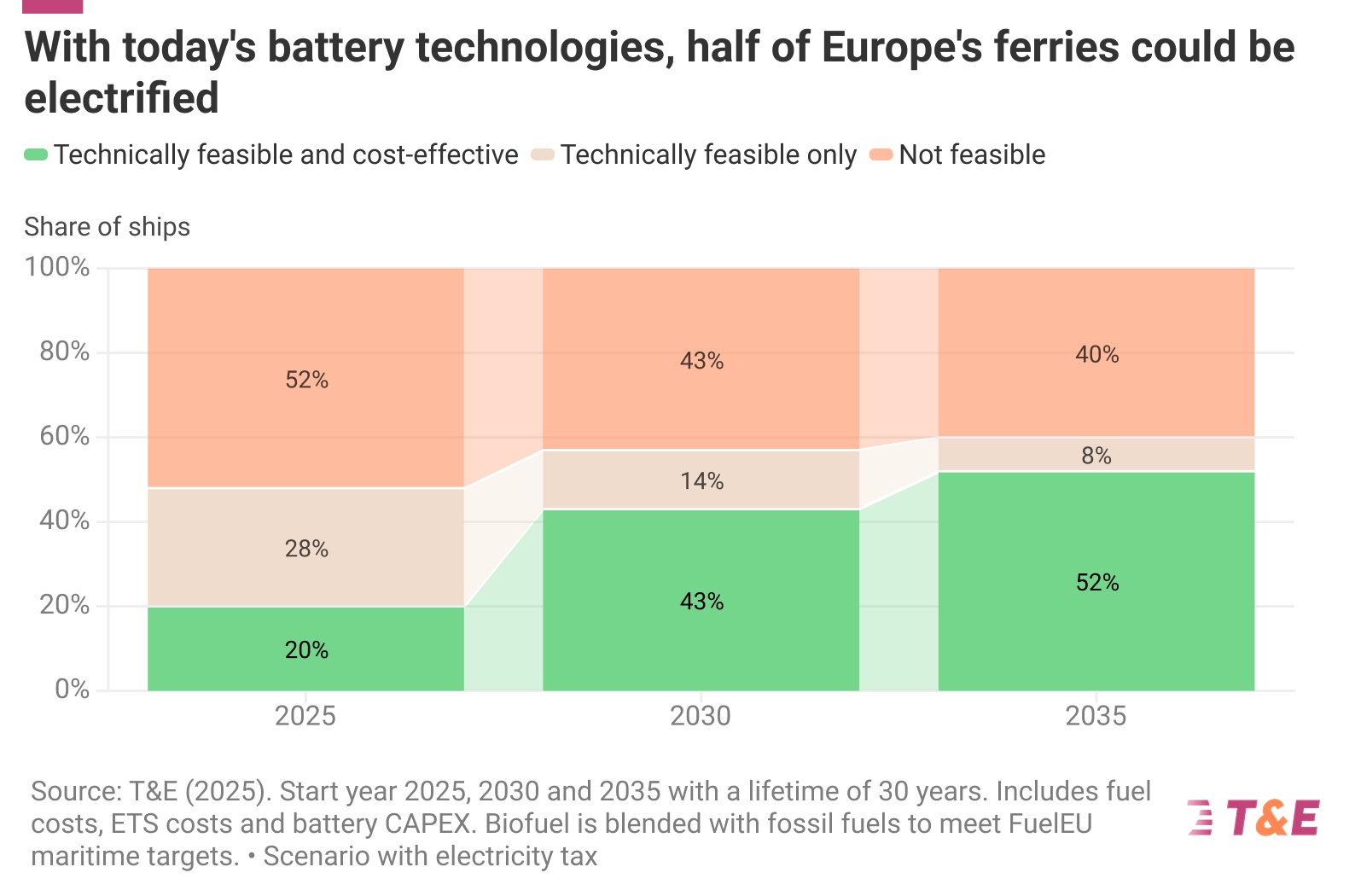
These rather bleak findings are offset by a more encouraging trend: Europe’s roughly 2,000 ferries have an average age of 26 years, meaning a major fleet replacement is on the horizon. It is estimated that up to 60% of ferries could be electric by 2035, which would make routes cheaper to operate and less harmful to the environment.
T&E’s analysis shows that electrifying and hybridising ferries could cut CO₂ emissions by up to 42%, while also improving air quality in port cities. The study concludes that electrifying 20% of Europe’s ferries by 2025 and 43% by 2030 would be “technically feasible and cost-effective”. According to the report, 57% of ports would only require small chargers below 5MW to support electric ferry operations.
Until recently, the lack of charging infrastructure was considered the main obstacle to electrifying ferries. In practice, however, this obstacle appears less daunting than initially feared. Nevertheless, Sotiris Raptis, secretary-general of the European Community Shipowners’ Association, warned that EU policies supporting the transition would require “enormous” investment.
Felix Klann, T&E’s shipping policy officer, says that “ferries should connect communities, not pollute them”. He adds that “electrifying them could dramatically cut emissions and bring a breath of fresh air to millions of people. Electrification makes sense, as electric ferries are already cheaper to run on many routes, and more will become cost-competitive in the coming years”.
@nopolluting Can this electrical ferry also be useful in your city? The ferry is also set to debut in Lake Tahoe, USA, offering a 30-minute cross-lake service that aims to decrease road traffic and emissions. To ensure you never miss our new content, enable post notifications 🔔 #Nopolluting #sustainableliving
♬ original sound – Nopolluting
A proof of concept already exists in Stockholm, where a trial of an electric hydrofoil ferry cut emissions by 94% while reducing journey time from 55 minutes to 30 minutes.
The Dublin Port Company said it had already taken steps to reduce emissions and was working on plans for shore-side power facilities.