

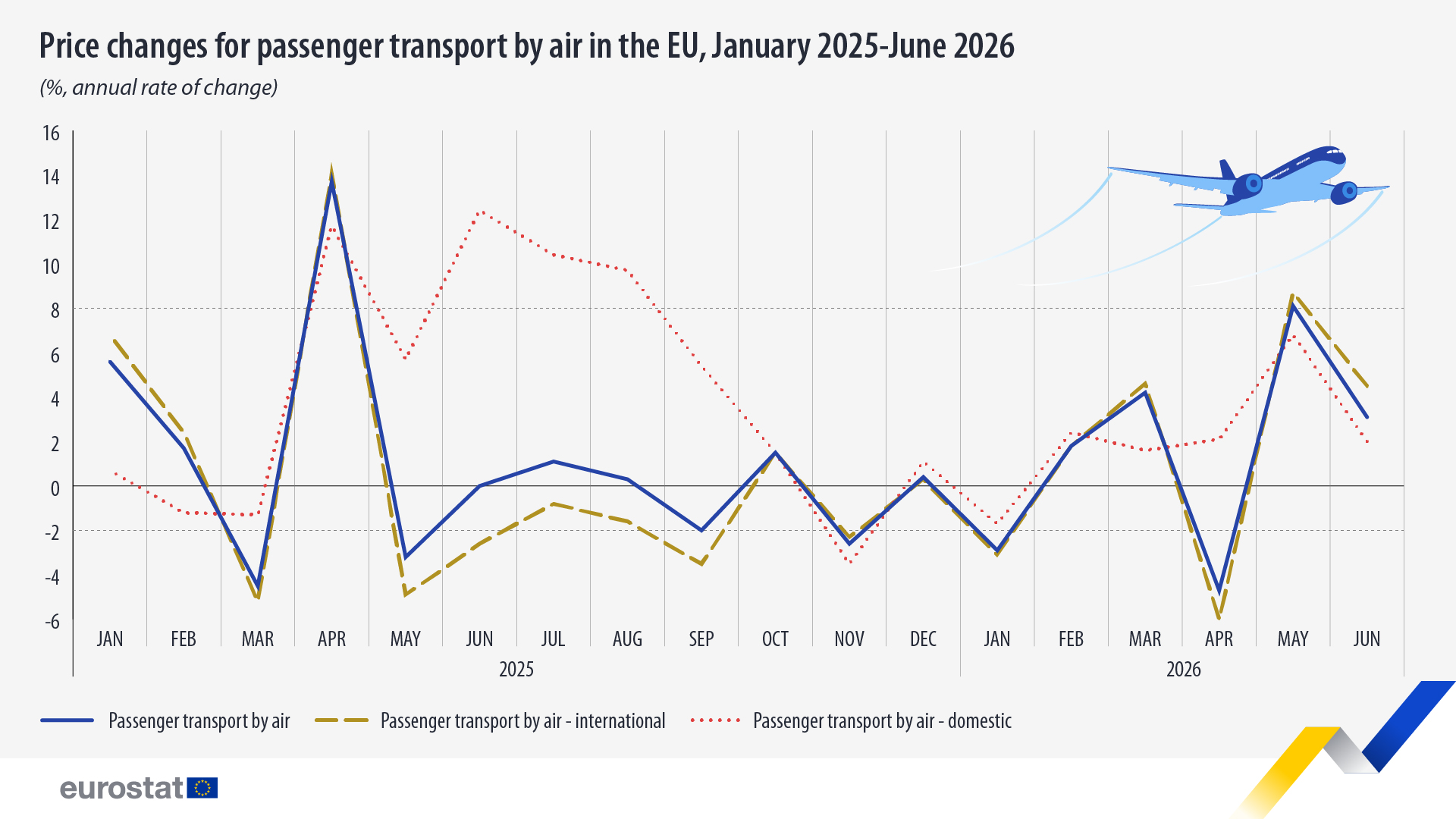
Air transport prices across the European Union continue to fluctuate significantly, with fares rising by 3.1% year-on-year in June 2026 after an 8.1% increase in May and a 4.7% decline in April, according to Eurostat.
Between January 2025 and June 2026, the strongest annual increase in EU air transport prices was recorded in April 2025, when they were 13.7% higher than in the same month a year earlier. This was followed by more modest increases during the summer months.
The beginning of 2026 brought another period of volatility. Prices initially declined year-on-year before returning to growth in February and March. In April, they dropped sharply by 4.7% compared with April 2025, before rebounding in May and continuing to rise, albeit more moderately, in June.
The fluctuations reflect several factors affecting European aviation, including seasonal travel demand and recent geopolitical developments.
As previously reported by Travel Tomorrow, the conflict involving Iran contributed to higher aviation fuel costs earlier this year, with analysts estimating an additional €29 on shorter intra-European journeys and €88 on long-haul fares.
The pressure continued into June, when the International Air Transport Association (IATA) warned that airlines faced a potential $100 billion increase in their annual fuel bill, adding further pressure to ticket prices.
More recently, however, jet fuel prices have fallen significantly. Travel Tomorrow reported in July that jet fuel prices had dropped by around 40% from their April peak, without producing an equivalent fall in fares.
International travel drives volatility
International air transport has been the main driver behind the overall price fluctuations, with annual changes proving more pronounced than for domestic flights.
International fares rose by 14.1% year-on-year in April 2025 and by 8.7% in May 2026.
In June 2026, international air travel prices increased by 4.5% compared with June 2025, while domestic air transport prices rose by 2.0%.
Sharp differences across EU countries
Price developments also varied considerably between Member States from April to June 2026.
In most EU countries, air transport prices fell year-on-year in April before rising again in May. However, substantial differences between national markets persisted.
Belgium recorded increases of 41.5% in April, 33.8% in May and 28.7% in June. Slovakia moved strongly in the opposite direction, with prices falling by 53.0%, 48.2% and 45.1% respectively over the same three months.
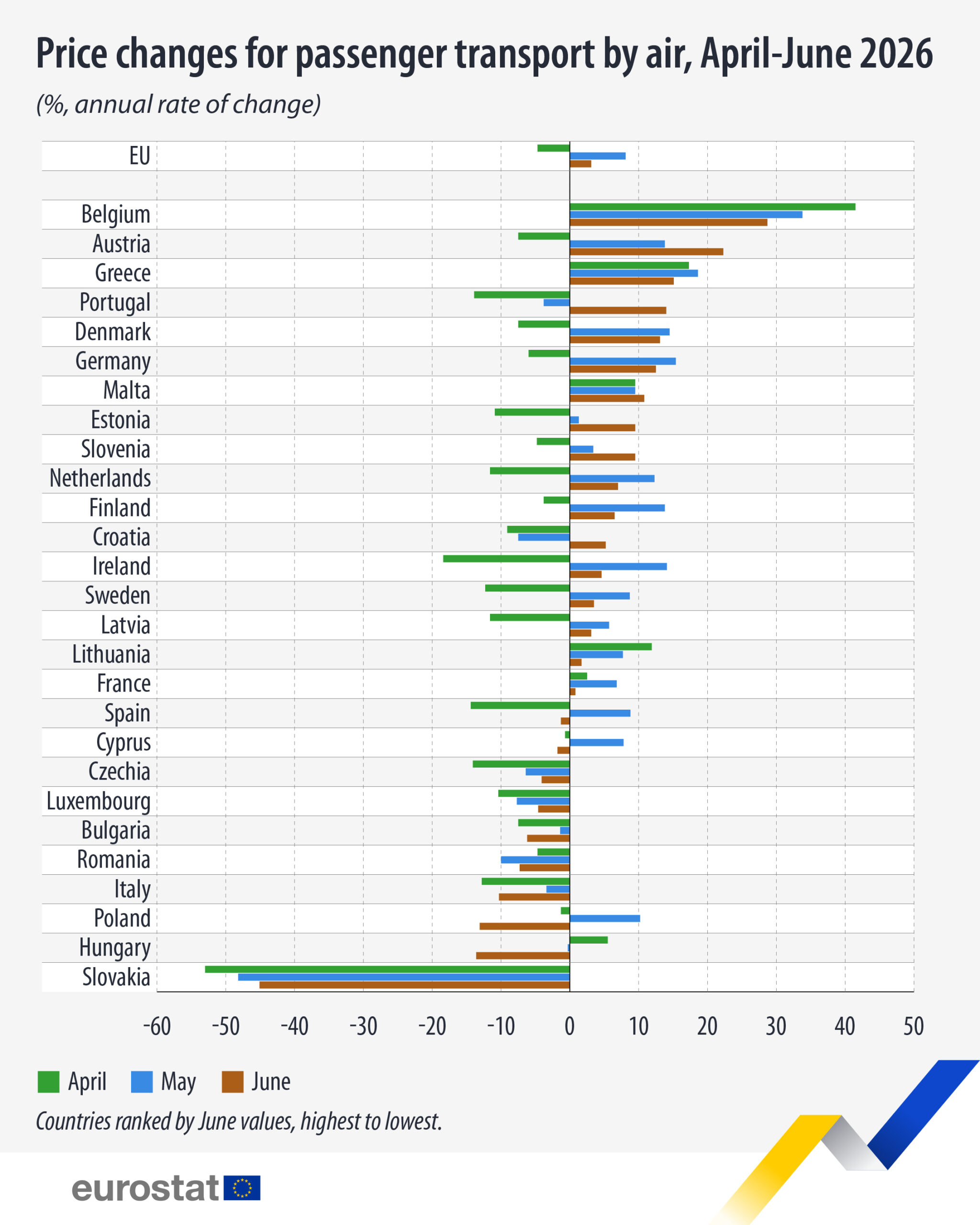
In June, Austria recorded a 22.3% year-on-year increase and Greece a 15.1%. At the other end of the scale, prices fell by 13.6% in Hungary and by 13.1% in Poland.
The figures underline how uneven air travel price developments remain across the EU, with international fares driving much of the overall volatility and passengers facing markedly different trends depending on the market.